
Japan is very proud of its seasonal offerings, as it should be. Japan’s ephemeral spring cherry blossoms are perhaps one of its most popular tourist attractions, with the country seeing a marked boom in tourism at this time. But this isn’t the only season that sees Japan’s colourful foliage take center stage.
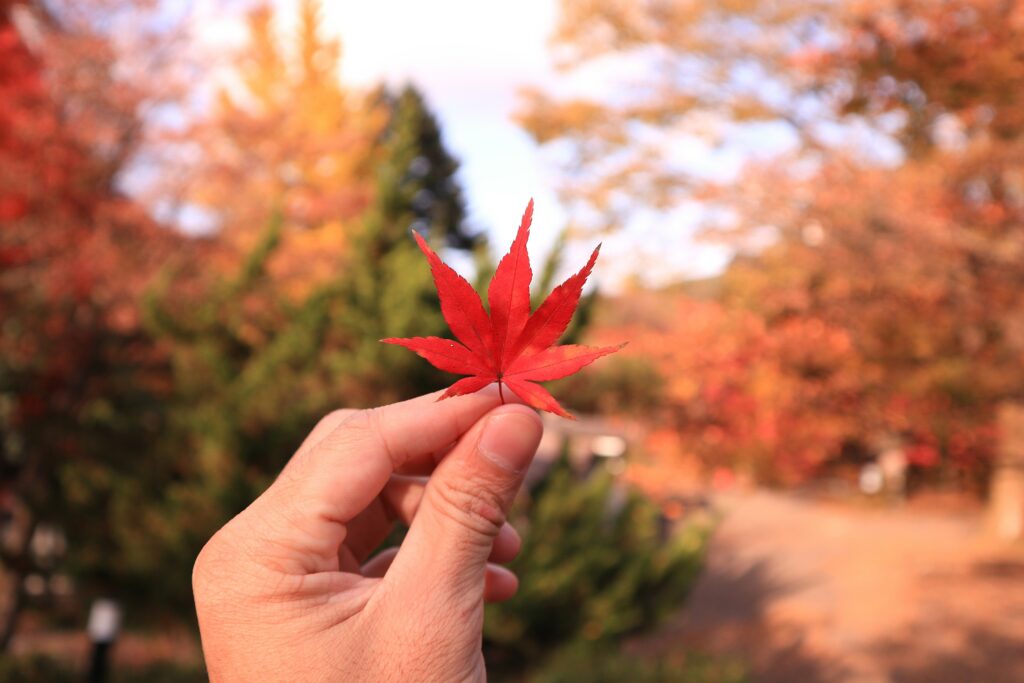
While spring may bring with it the candy floss clouds of pink, autumn offers richer, more vivid hues. Japan’s maples turn deep shades of vermillion and burgundy, while rows of ginkgo trees transform from vibrant green to gold. Across the country, the island’s deciduous trees put on one last show of the year before shedding their coats for their long winter slumbers.
This wondrous natural display, coupled with the mild and pleasant weather, makes autumn the perfect time to visit Japan. The next question is: where do you go?
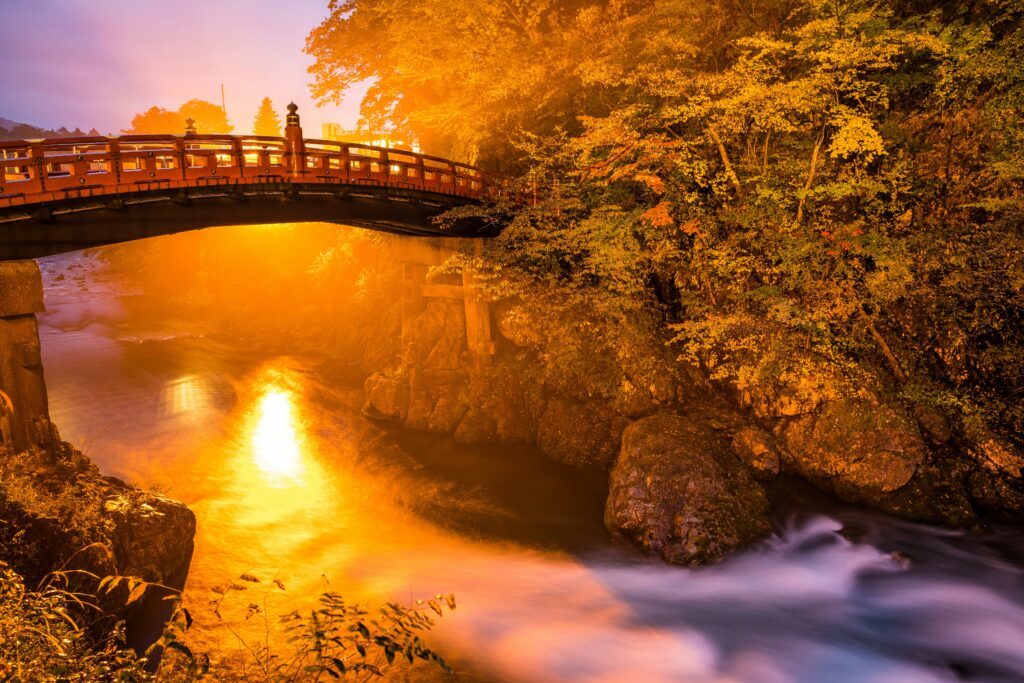
Though there are many spots in Japan that are stunning at this time of year, not all of them are easy to get to. Hokkaido is one of the more well-known autumn foliage destinations, but unless you have planned to fly up there and spend a few days travelling by rented car or public transport, it might not be ideal.
Let me then recommend Nikko. Having lived in Japan for over five years, and having wanted to visit Nikko each and every autumn, this year I finally found the time to do just that. Roughly two hours from central Tokyo by train and filled with historic temples and breathtaking natural scenery, Nikko is one of Japan’s must-visit autumn destinations.
Located in Tochigi Prefecture, Nikko is a town at the entrance of Nikko National Park. The site has been a historic place of worship for over a thousand years, with Rinno-ji Temple first erected in 766. The town grew around this temple, and in 1617, Tosho-gu Shrine was added as the final resting place of Tokugawa Ieyasu, one of Japan’s three “Great Unifiers” and the founder of the Tokugawa shogunate, which ruled the country for over 250 years during the Edo Period (1603 – 1868). It is one of Japan’s most elaborate shrines, well worth a visit not only for its historic significance but also for its architectural and decorative beauty.
I spent a day walking to all these shrines, which were made even more magical thanks to the vibrant autumn colours that surrounded them. The low clouds and fog also added a certain mystical element, as though I had walked into a world long forgotten. Mist danced around the intricate carvings on the temple walls, shrouding certain aspects of the buildings before quietly revealing them. Without the sun shining on them, the colors seemed richer, deeper.
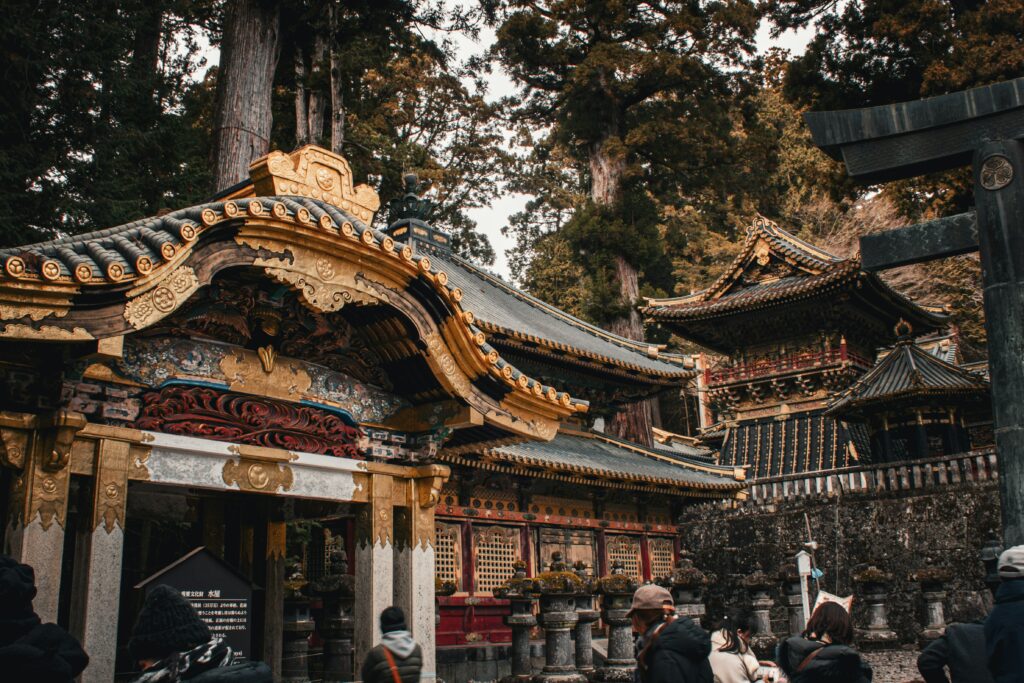
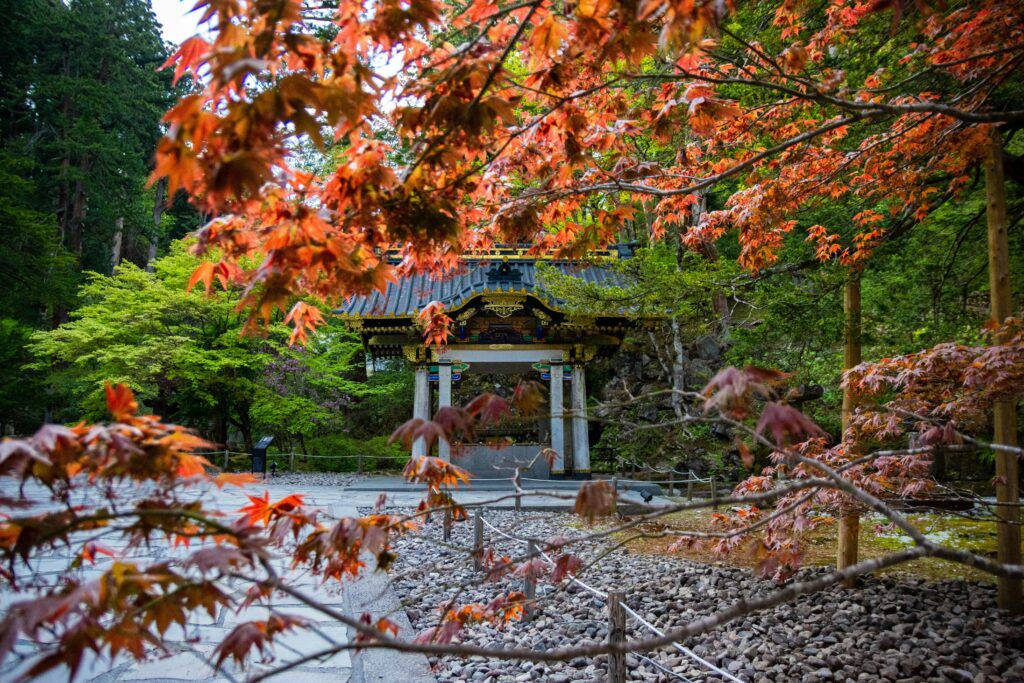
With so much to offer, walking around these temples took me all day. Though I wished I could have stayed longer, I was forced to head back close to 4 p.m., given that darkness descends earlier in the autumn months, making sightseeing a tad more challenging. If you have the opportunity to stay in Nikko for the weekend, I would recommend spending one day visiting the temples, and then another exploring the national park, something I unfortunately could not do. But if you do plan that, then there’s another thing to keep in mind.
Due to the differences in elevation, the peak times for seeing autumn leaves in Nikko change depending on when you are heading. The famous Ryuzu Falls and Chuzenji Lake are best visited in mid to late October. Given they’re on a higher elevation that feels the cold a little earlier, the leaves turn quicker. The winding road between the lake and the town is best seen from late October to early November, whereas the area around the town itself, including the temples, is best visited early to mid November. I myself visited on the second weekend of November and found the leaves around the temples exquisite.
Every year is different, though, so remember to keep an eye on forecasts and foliage predictions and plan around that. Regardless of when you go to Nikko, with so much history and a glorious national park, any time is a good time.