
“After a night’s sleep, the pure fragrance of the hot springs of Kinosaki permeates my heart.”
Such was the lasting impression the onsen town of Kinosaki left on Hiroshi Yosano, an influential Japanese poet.
Kinosaki has, for centuries, lived up to its reputation and is even hailed by Vogue as one of the best onsen towns in the country. For that reason, it draws a significant number of visitors every year. This tattoo-friendly town warmly welcomes everyone to its seven public bathhouses.
As for me, Kinosaki is a year-round haven, where time slows down, nature gently embraces, and its quaint charm transforms with every season.
Part I: A walk through the town of yukata and geta
Strolling through an idyllic landscape
Kinosaki is one of Japan’s oldest onsen towns. It is quite popular among residents of Kansai, and even attracts visitors from Hokuriku. The town is located over 150 kilometers from the major cities of Kobe, Osaka, and Kyoto, but remains easily accessible by public transport.
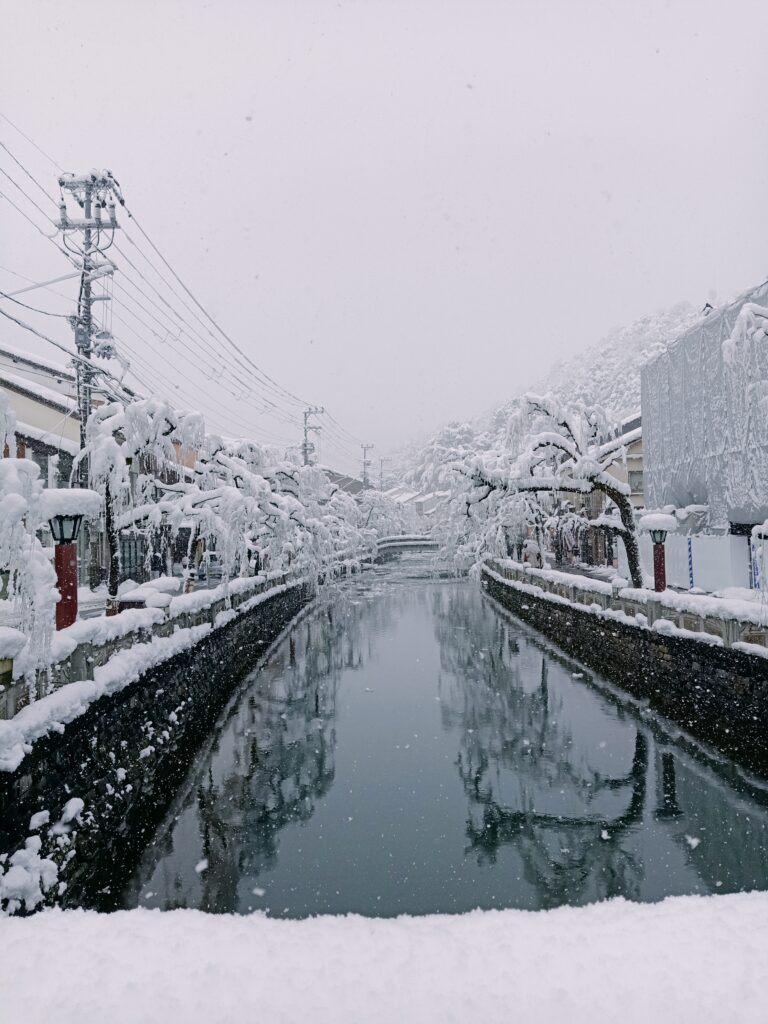
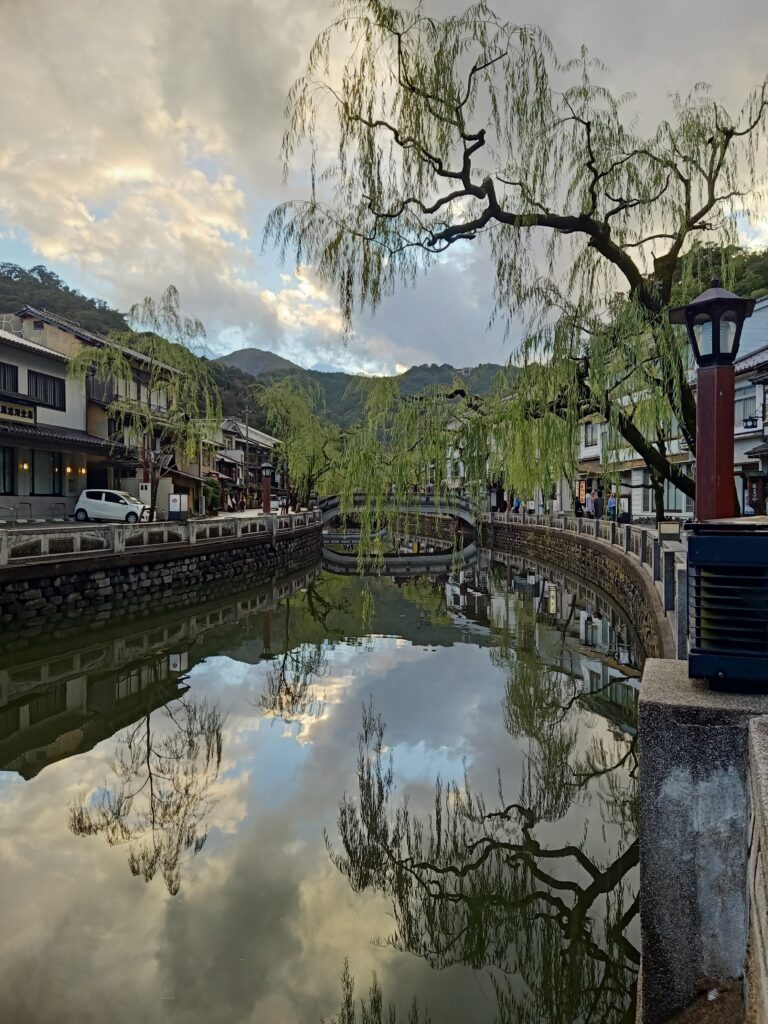
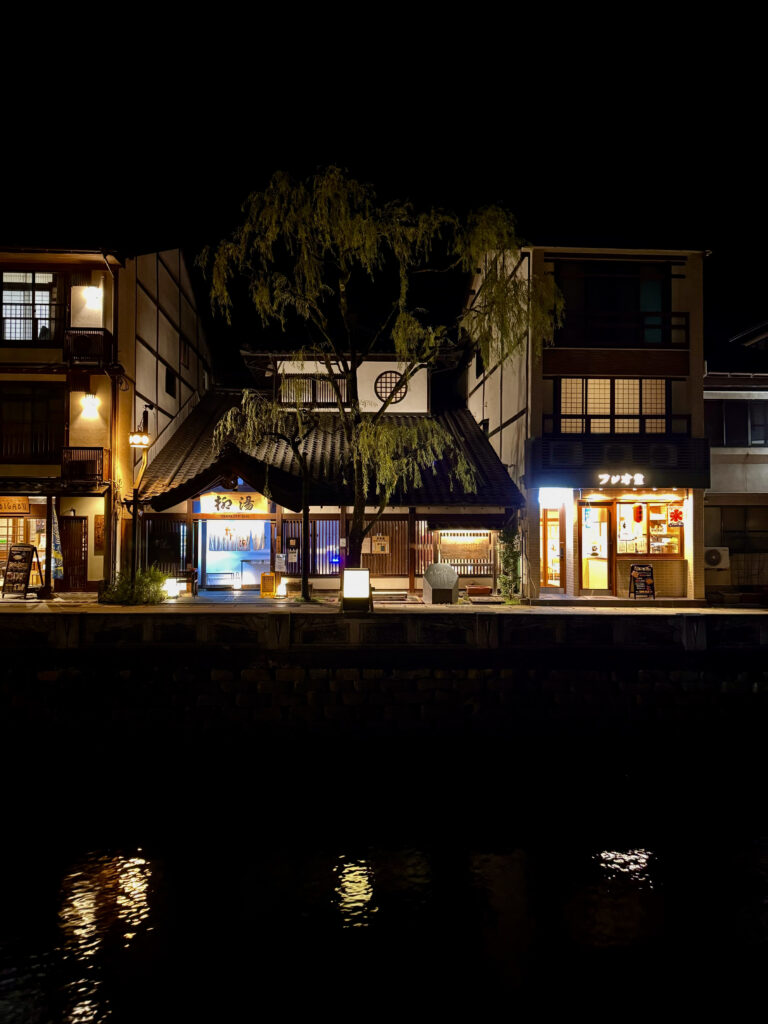
Every now and then, I find myself returning to wander in its picturesque streets lined with willow trees along both sides of the Otani River. The town’s gentle atmosphere is more than enough to soothe my restless mind, helping me forget life’s worries. A simple stroll followed by a bath is all I need to calm my senses.
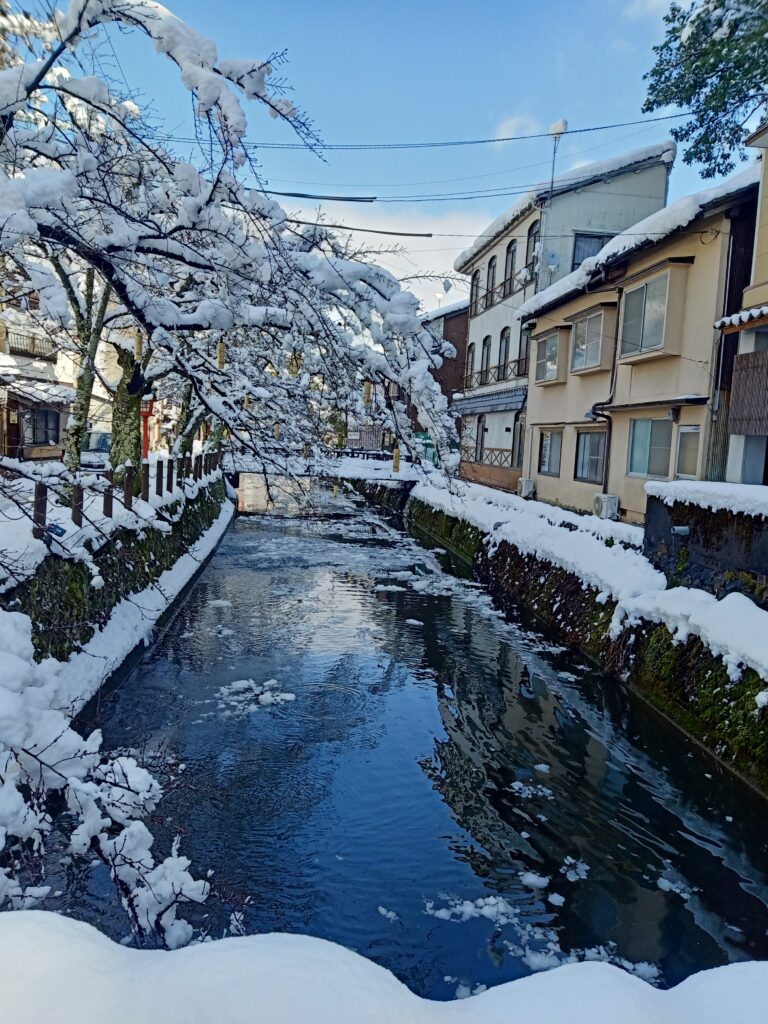
I think the best time to visit Kinosaki is in winter. Coming from the Philippines, where winter is but a dream, I find the snowy landscape of the onsen town captivating, and downright the most breathtaking winter scenery I have ever seen. It owes its wintry allure to the willow trees that have already shed their leaves but stoop toward the frozen ground, weighed down by icicles like curtains of white. Some trees have grown white feathers as frost forms on their leaves and branches. Of course, the best part is bathing in a warm hot spring with snow all around you—a balmy escape from the bitter cold of winter that makes you never want to leave.
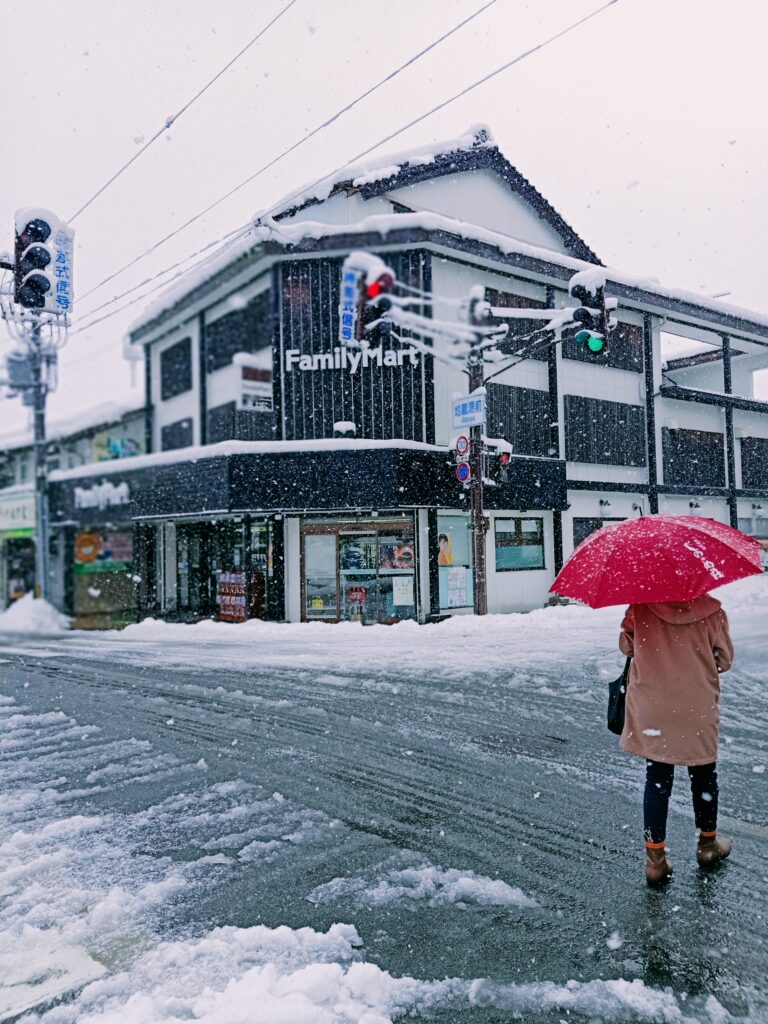
The crunch of footsteps on snow-laden paths can be heard throughout the town as guests flock outdoors to enjoy the winter wonderland. Fine wisps of steam gently billow into the air, offering a subtle hint of the smoldering warmth against the season’s biting cold. The ubiquitous sight of yukata-clad visitors throughout the town (even in freezing winter) is the quintessential onsen town scene.
It has long been a habit of mine to walk towards the east of the town, near its railway bridge, and wait for the train as it slowly crosses the gentle river. The usual chugging of the train softens into a hum, matching the tranquility of Kinosaki. All of this is a faint echo of the quiet pace of rural Japan amid its heavily industrialized urban centers.
My three favorite bathhouses in Kinosaki
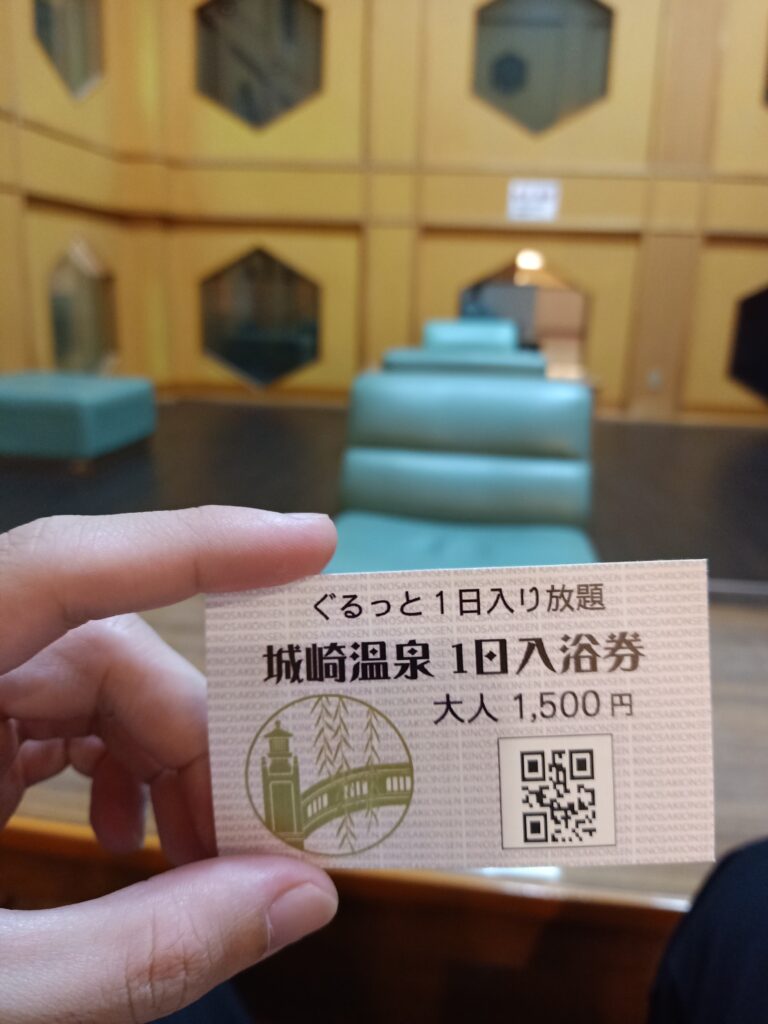
Seven baths, all within walking distance of each other, make for a great experience in Kinosaki. You can even challenge yourself to visit all in one go, which I did twice. A local friend jokingly remarked to me, “You are like an onsen tamago (literally, a hot spring egg) now!”
In Japanese, this is referred to as sotoyu meguri. It is a traditional practice of visiting multiple public bathhouses in a hot spring town, essentially onsen-hopping. This is also why visitors prefer wearing yukata as they stroll through town from bath to bath: they are comfortable and easy to put on and take off.
Sotoyu meguri is central to the onsen experience in Kinosaki. Each public bathhouse has its own distinct atmosphere and architecture, giving a uniquely memorable experience at every bath. I have tried all of them and enjoy returning from time to time. To each their own, as they say, but these three are my personal favorites.
Kono-yu was my very first bath experience in Kinosaki because it is located right next to the municipal parking lot. Legend has it that a long time ago, an injured oriental white stork dipped its foot into the water of a rice paddy. After a few days, it miraculously flew away unharmed. Curious townspeople who witnessed this investigated the site and discovered a small pool of water. Hence, it was named Kono-yu, literally “The Bath of the Oriental Stork.” Today, it is believed that a dip in its warm, relaxing waters brings longevity, and interestingly, happiness in marriage as well.
The best part for me is Kono-yu’s outdoor bath, or rotenburo. It features a garden of rock formations surrounded by lush greenery, creating the illusion of being deep in the forest, which evokes a feeling of oneness with nature.
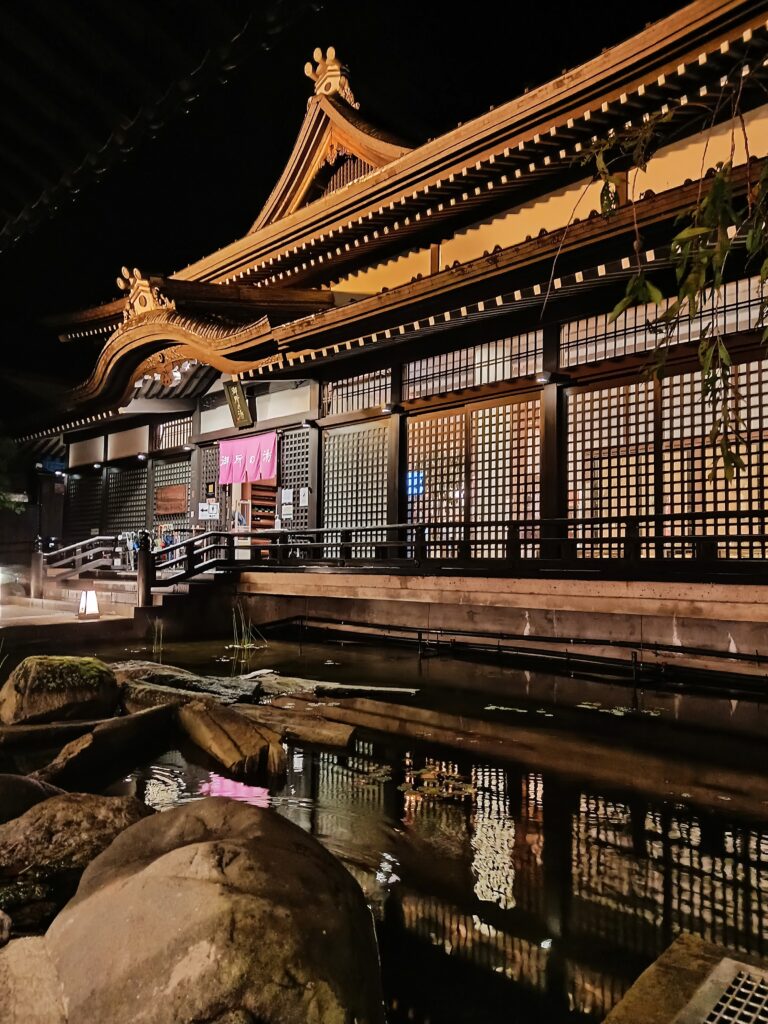
Goshono-yu stands out to any passerby with its architectural style, inspired by the Kyoto Imperial Palace. It is pretty popular, so you may sometimes see people queuing up outside to enter. While waiting, you can admire the aesthetic facade of the building, and I was particularly fascinated by the pond at its entrance. If lining up is not your thing though, no worries; at the reception of each onsen, a real-time screen shows how many people are currently using the baths, giving you a clue as to which bathhouse has fewer crowds or might be better to visit while you wait.
Satono-yu is the bath closest to the station, making it the usual first stop for visitors arriving by train. Unfortunately, it is closed indefinitely, and we are still waiting to hear when it will reopen. Hopefully, soon. There is a footbath in the huge shed at the entrance, so visitors can still enjoy a foretaste of the onsen experience. I would say it gives one of the best experiences in Kinosaki because its rooftop outdoor bath provides an amazing view of the surrounding mountains and rice paddies. There, you can soak away all your worries while breathing in the panoramic scenery of Kinosaki. Also, its Japanese-style and Western-style baths are switched daily between men and women.
The rest are also great and worth trying. Mandara-yu is the oldest building; Ichino-yu is designed like a Kabuki theatre and features a unique cave bath. Yanagi-yu is kind of small, giving an intimate bathing experience. Finally, Jizo-yu’s architecture resembles a traditional Japanese lantern. This retro design makes it a favorite among many locals.
Poring over its literary soul
It is not only travelers who are drawn to this historical town; well-known literary figures have visited Kinosaki as well, each leaving with a lasting impression. The most famous among them is Naoya Shiga, the author hailed as Shosetsu no Kamisama or “the god of novels.”
The circumstances of his stay, however, were not very pleasant. Shiga traveled to Kinosaki to recuperate from a near-fatal injury sustained in a tragic train accident. His quiet stay in the town became a time of healing and literary inspiration. As things do sometimes work out for the better, such a depressing moment in his life inspired him to reflect on life and death, eventually leading him to write his autobiographical short story, “At Kinosaki”.
The story recounts how the tiny creatures he observed struggled for survival, which then brought him to a realization of the inevitability and naturalness of life and death, and that indeed, there is peace in learning to accept them.
At the town’s heart stands the Kinosaki Onsen Heritage Museum, which features the works of Naoya Shiga and other Shirakaba-ha writers. The group was influential in the early twentieth century, particularly for its emphasis on humanism and the value of the individual. Apart from them, other well-known Japanese writers also visited Kinosaki and came to love their stay. As you bathe in its soothing hot springs, you might also awaken the literary soul within you.
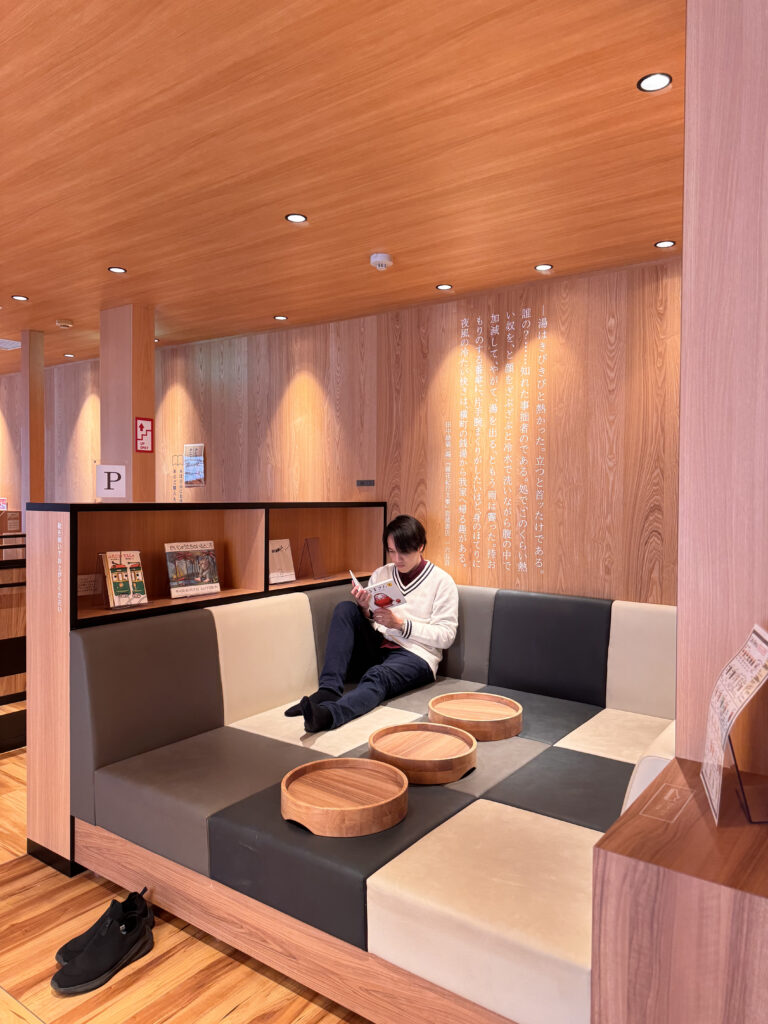
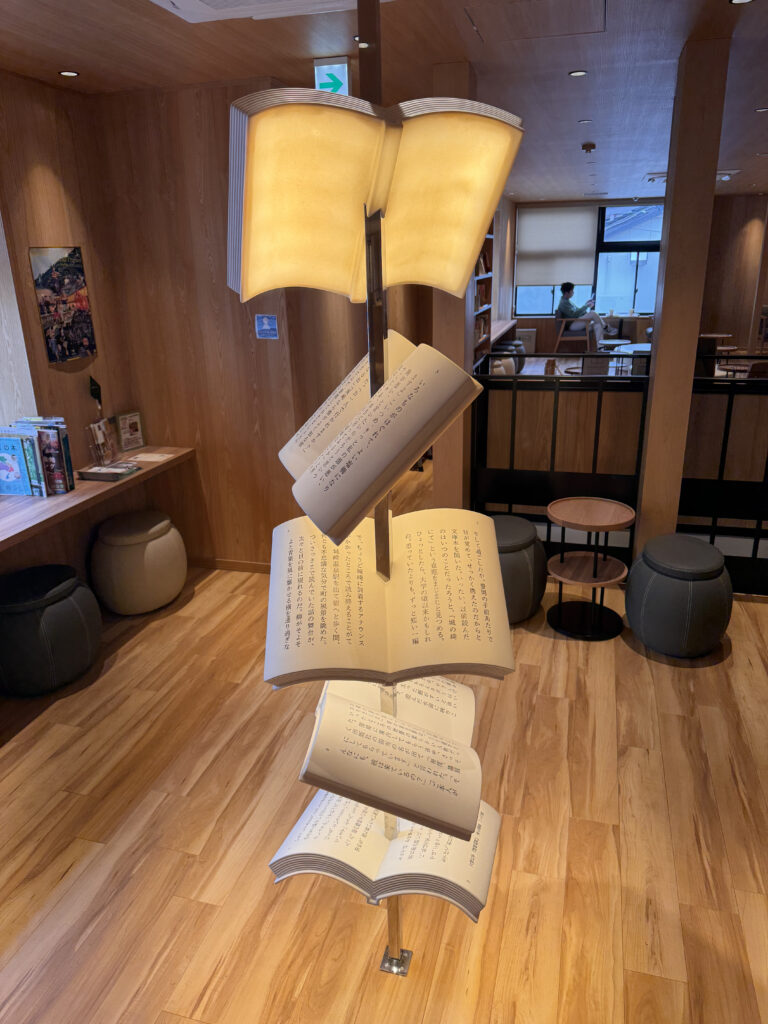
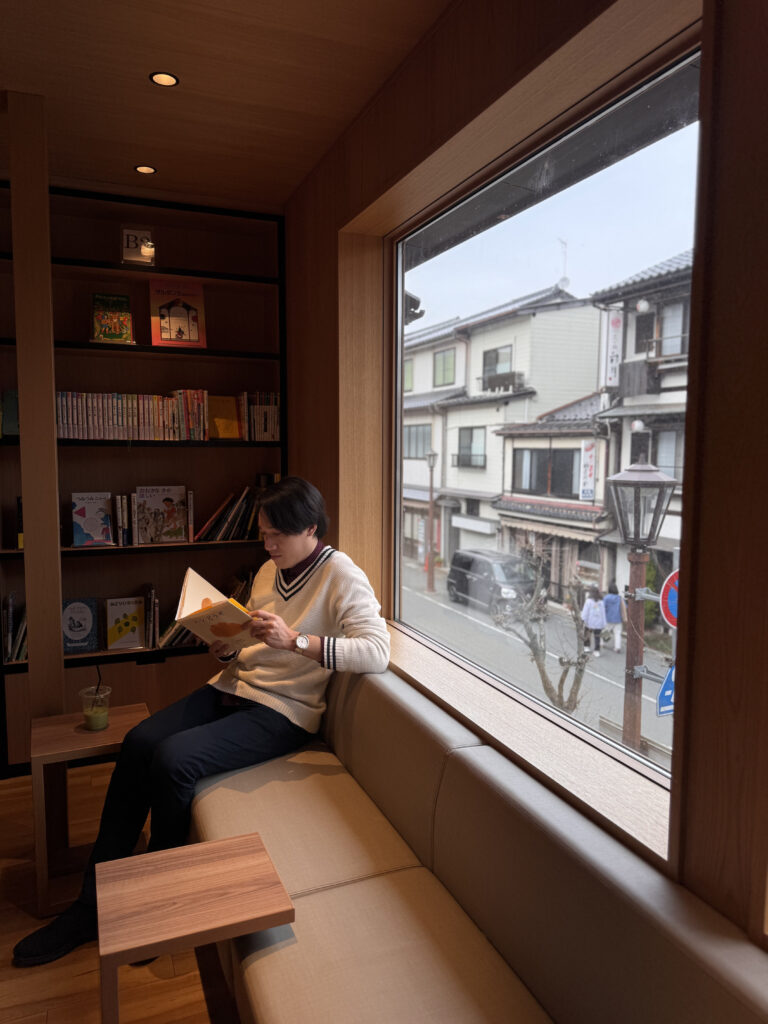
You can also enjoy Kinosaki’s literary charm at the popular Book Cafe Un, where you can pore over books while sipping coffee or tea. You can avail yourself of its Free Drink Pass for unlimited drinks, paired with a fresh butter dorayaki for a day or two. But drinks and dorayaki are not its only strong points; the cafe itself is very instagrammable. Relax on the upper floor with a feel-at-home vibe and lose yourself in great stories; you can even enjoy this in between baths.
Part II: Kinosaki Onsen essentials
Kinosaki is just so perfect that this entire article is not enough to tell you everything I love about the town. As I end this article, I am providing below some essential information about this wonderful onsen haven, including what to see, what to do, and how to get there.
Points of interest within Kinosaki
To help you plan your Kinosaki journey, this map offers a glimpse of what it feels like to stroll through town while hopping among its onsens.
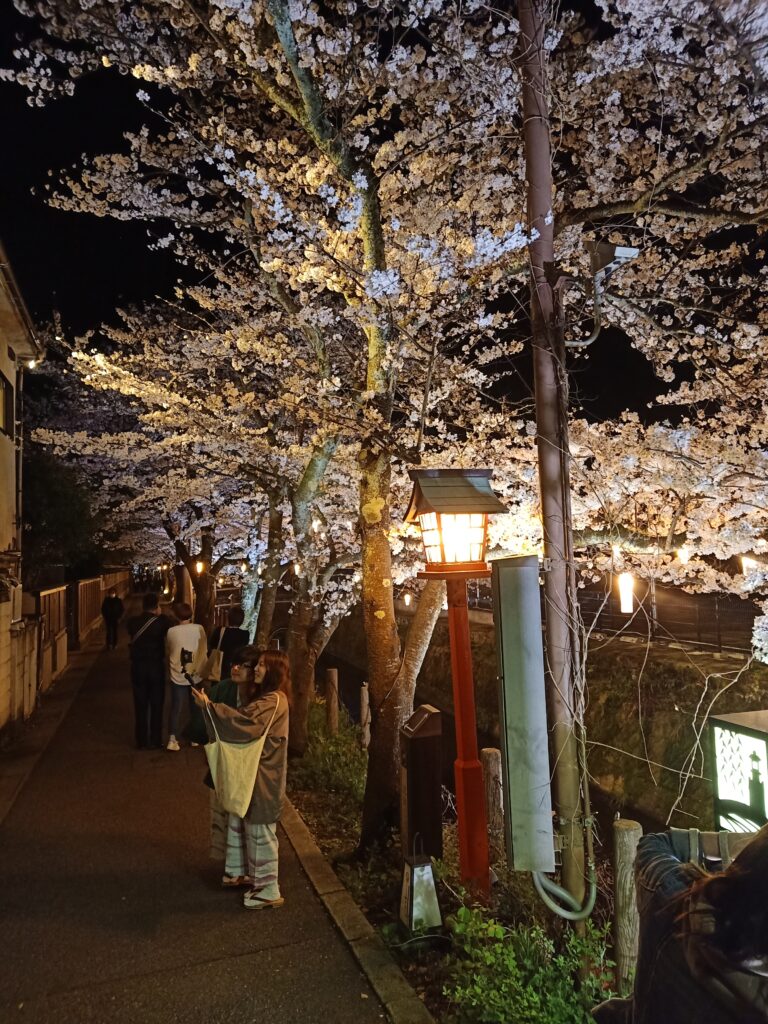
- Ohanami in the morning, sakura illumination at night: Enjoying the cherry blossoms during springtime is a quintessential Japanese experience. At night, the sakura trees of Kinosaki are illuminated, glowing as if they were embers in shades of white and pink.
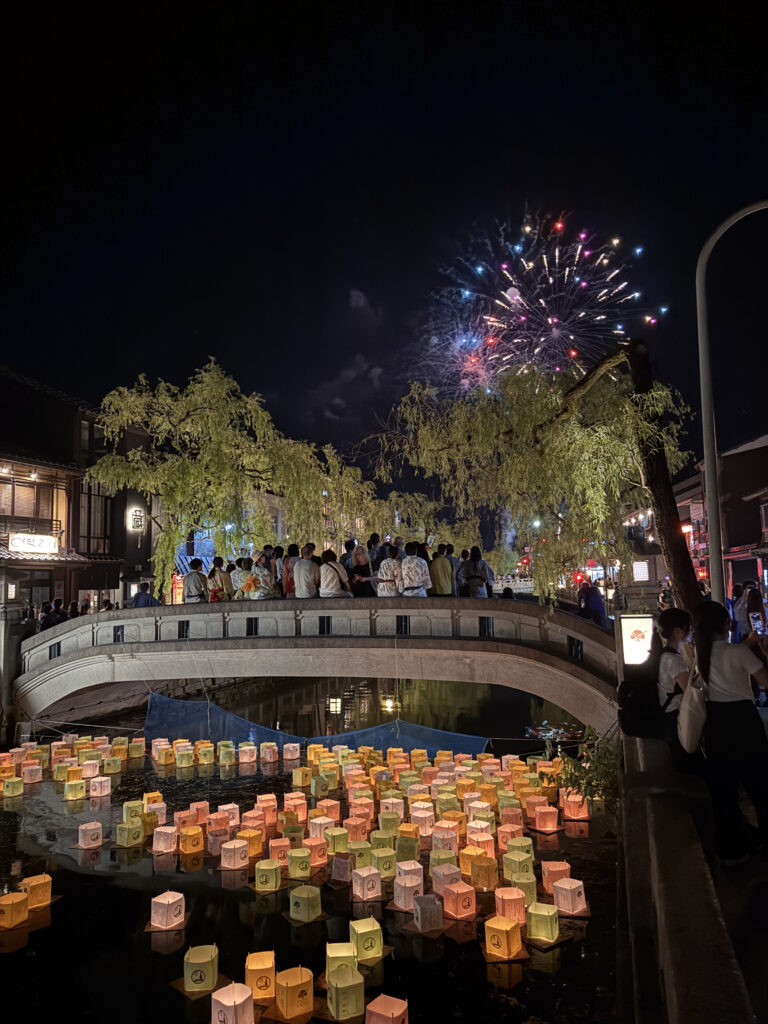
- Lantern Festival and fireworks in summer: The night skies are lit up with fireworks almost every weeknight in summer. During the Lantern Festival, one of the town’s highlights, you will be mesmerized by the sight of lanterns bearing visitors’ wishes as they flow along the river. Create a lasting summer memory on Kinosaki’s Otani River, its surface aglow beneath the willow trees.
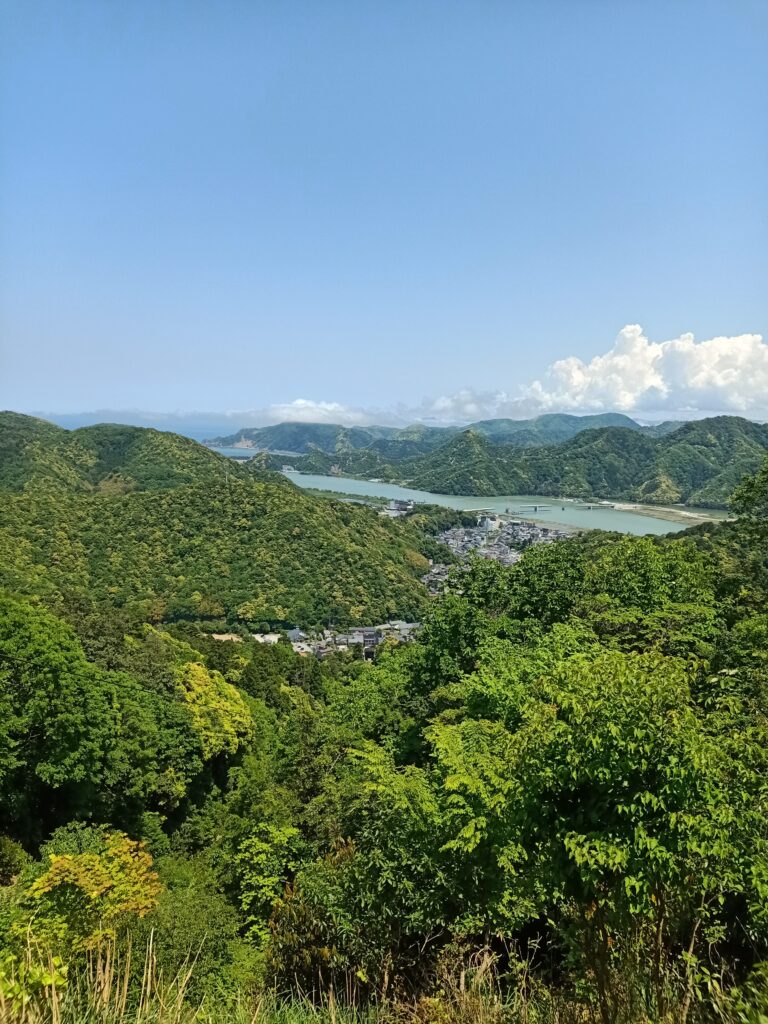
- Kinosaki Ropeway: Enjoy a breathtaking view of the entire town, surrounded by mountains and the sea. Once at the top, enjoy a cup of coffee and some snacks at Kinosaki Coffee Miharashi Terrace Cafe.
Aside from the abovementioned activities and places in Kinosaki, here are a few more you can consider adding to your itinerary: the Straw Craft Museum, Onsenji Temple, and Onsenji Temple Museum.
Local sights around Kinosaki
Kinosaki Onsen can serve as a perfect trailhead for day trips to several nearby destinations.
At Genbudo Park, you will find five stunning basalt caves that are 1.6 million years old. Every September, these natural geological formations become even more enchanting when they are illuminated at night. Just across from the park is the Genbudo Museum, the largest stone museum in Hyogo Prefecture. It exhibits a wide variety of stones, minerals, fossils, and some locally made handicrafts from Toyooka.
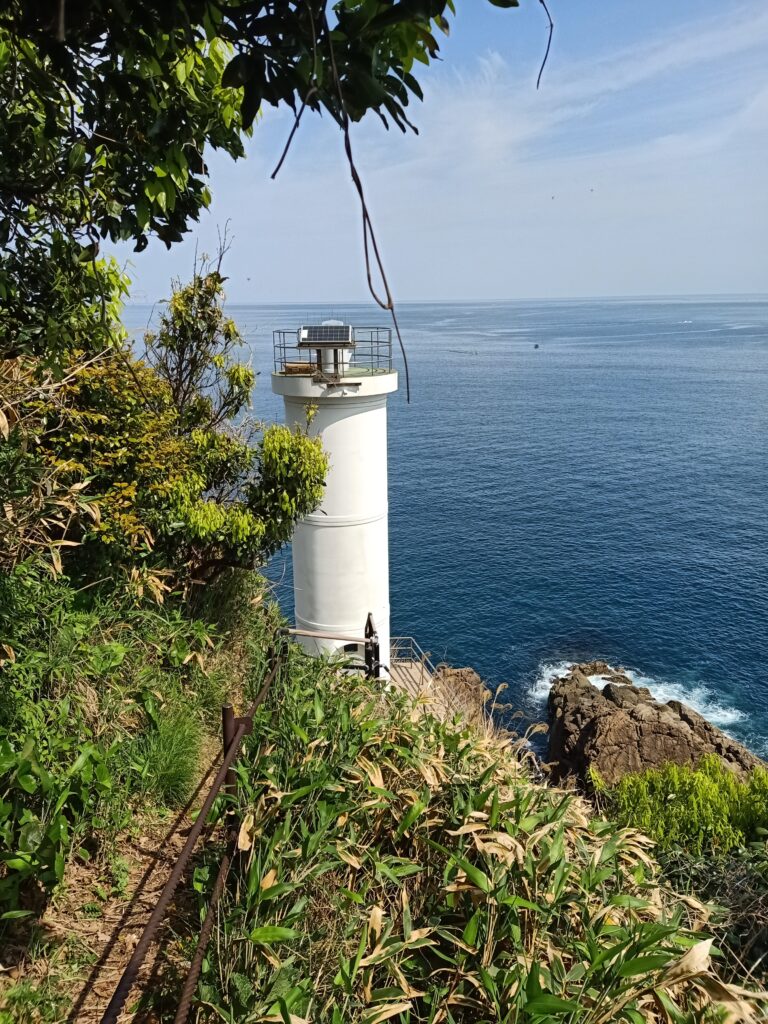
Since Kinosaki is close to the Sea of Japan, there are a lot of beaches you can visit, such as Takenohama and Kirihama. A true off-the-beaten-path destination is Nekozaki Lighthouse, which requires a short but challenging hike to the northern coast of Kinosaki. This small peninsula earned its name because it looks like a cat lying down. The view of the scenic coastline of the Sea of Japan from this hike is truly captivating, and I really really recommend it.
Kinosaki is located within the San’in Kaigan UNESCO Global Geopark, so you can expect the area to be abundant in natural scenery: waterfalls, mountains, rivers, the sea, and stargazing spots. You name it. A separate article would be needed for me to tell you everything about this majestic geopark.
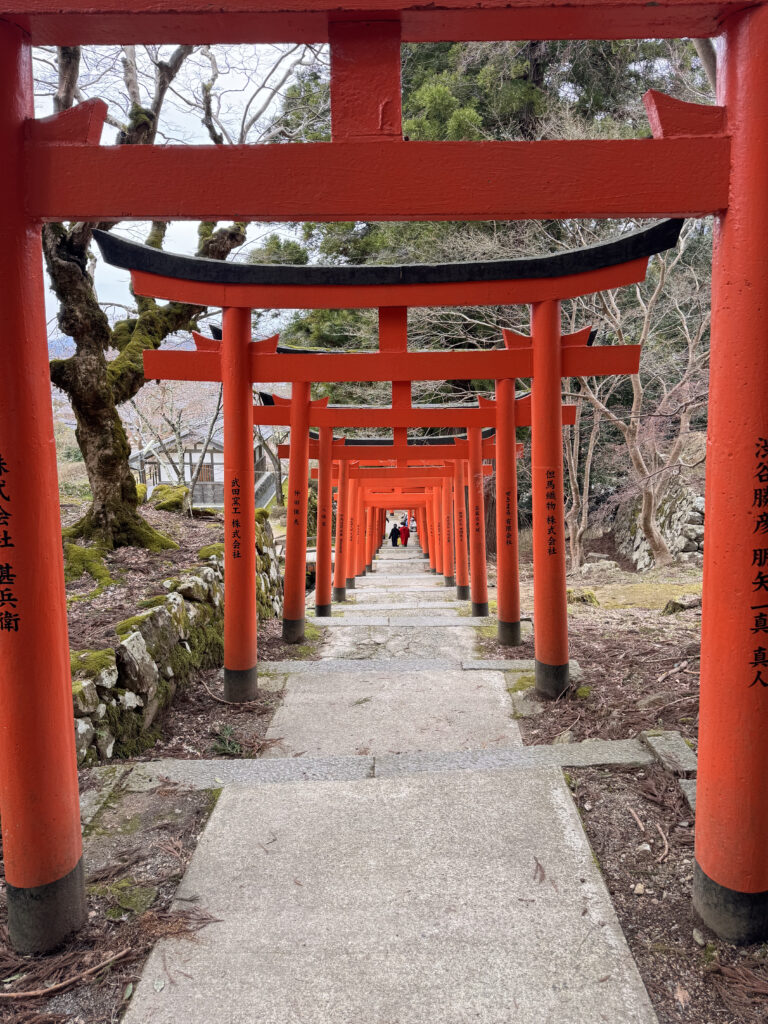
The nearby town of Izushi is also worth a visit. Often called “Little Kyoto,” it is home to Japan’s second-oldest clock tower, a row of vermilion torii gates just like Fushimi Inari, and many other charming sights.
Do you want to see the ruins of a historical castle floating on a sea of clouds? This famous spot, Takeda Castle Ruins, is situated in Asago, a neighboring city to the south of Kinosaki.
To the west is Tottori Prefecture, known for its sand dunes and the amazing sand sculptures at the Sand Museum. Every year, the exhibition is based on a different country or region, following the museum’s core concept of “Traveling Around the World in Sand.” For example, in line with the Osaka Expo in 2025, the past exhibition focused on Japan, showcasing the archipelago’s rich history and heritage.
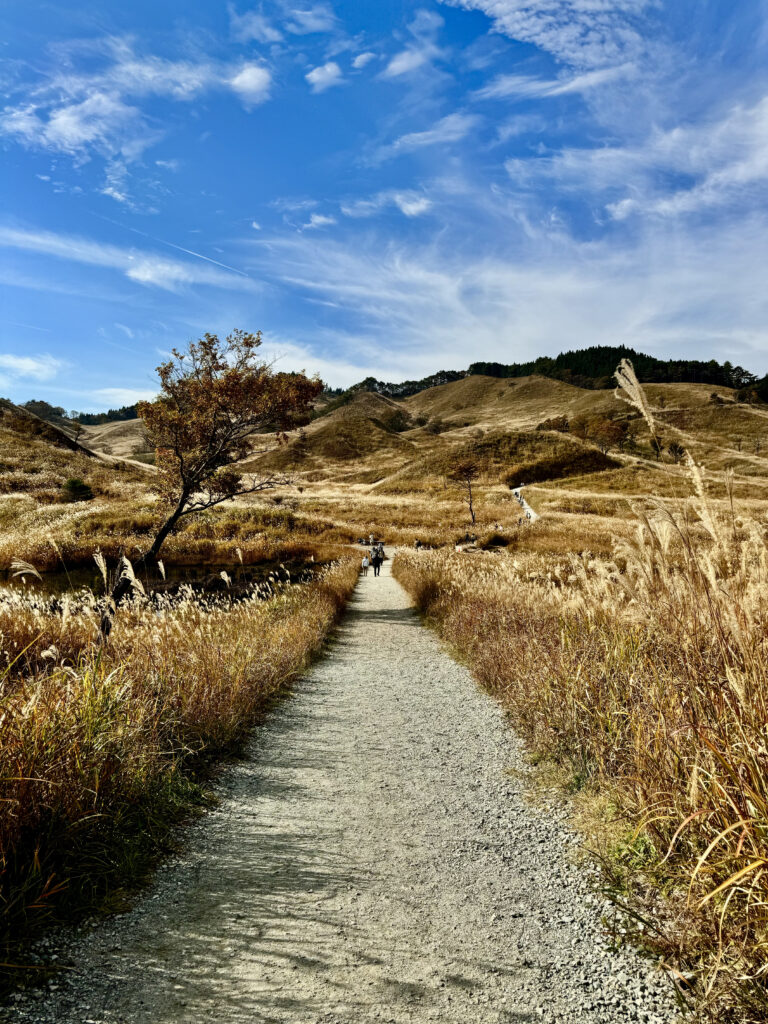
If you are a fan of Haruki Murakami, you might also want to visit one of the filming locations from the movie adaptation of his renowned novel “Norwegian Wood,” further south of Kinosaki. Though not exactly near Kinosaki, this spot is worth mentioning. Known to many locals but not so much to internationals, it offers a great escape from the huge crowds of major cities. The best time to visit Tonomine Highlands is in autumn, when the golden pampas grass blankets the rolling hills.
Access
With Kinosaki Onsen’s long history and charm, accessibility is never a problem. The town is well connected to the major cities of the Kansai region by train.
The limited express Kounotori, which runs from Osaka through Fukuchiyama in northern Kyoto to Kinosaki, takes less than three hours. Alternatively, if you take the limited express train Hamakaze, you will pass by Himeji and catch glimpses of the famous Akashi Kaikyo Bridge as well as the UNESCO World Heritage Site of Himeji Castle. The total travel time is about the same as the Kounotori.
There is also a direct bus from Osaka-Umeda that runs at least twice daily between Osaka and Kinosaki. This requires advance booking though, as tickets tend to sell out quickly.
For a more self-paced trip with multiple stops, you may consider renting a car to discover some wonderful places in the beautiful countryside of Hyogo, which are only accessible by driving.