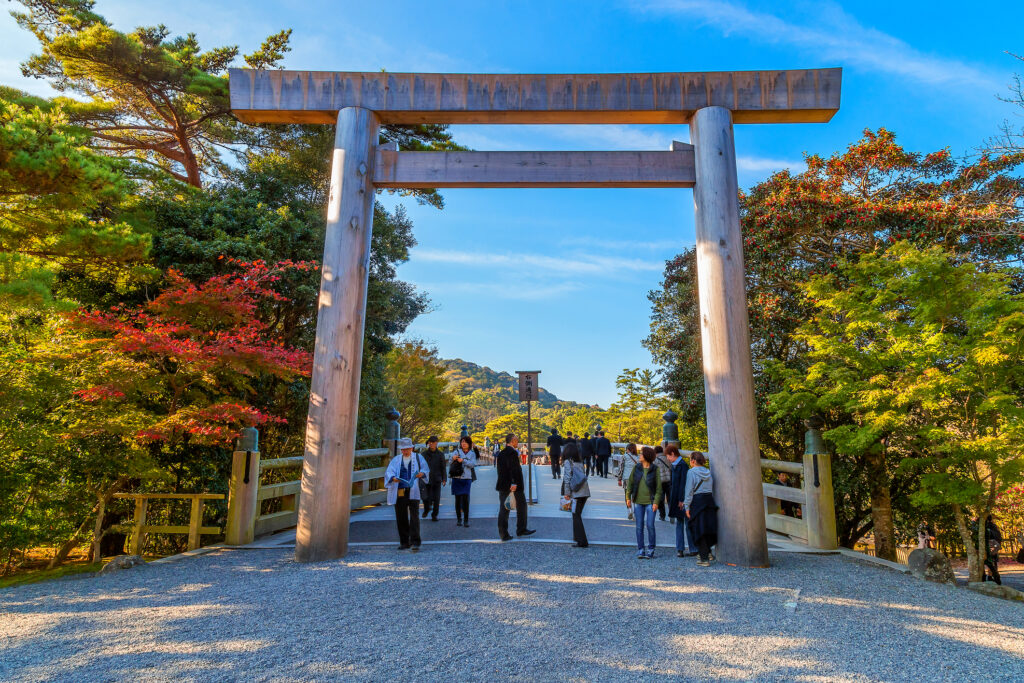
There are thousands of shrines across Japan, ranging from impressive and elaborate complexes to small, tucked-away spots hidden down alleyways and on street corners. Of these thousands of shrines, one is considered the most important — the most sacred — of them all: Ise Jingu.
Located in Mie Prefecture, the shrine is believed to have been founded around 2,000 years ago. According to the Nihon Shoki (The Chronicles of Japan), one of the country’s oldest official histories documenting its mythical origins up to 697 CE, Emperor Suinin ordered his daughter, Princess Yamatohime-no-mikoto, to find a suitable place for the Holy Mirror to reside.
The Holy Mirror was one of the most valuable objects owned by the emperor and was believed to have been made by the gods themselves. According to Shinto legends, it was used to lure the sun goddess Amaterasu, the highest deity in Japanese mythology, from the cave where she had hidden herself, thereby restoring light to the world. Notably, the imperial family is said to be directly descended from Amaterasu, as it was her grandson, Ninigi-no-mikoto, who became the founding ancestor of the imperial line.
After searching many regions for more than 20 years, Princess Yamatohime-no-mikoto is said to have received a revelation from the sun goddess herself, instructing her to enshrine the mirror, a symbol of her wisdom and divinity, in Mie. Upon arriving, the princess set up 50 bells to mark the land’s sacredness as the eternal home of Amaterasu. This led to the nearby river being named Isuzu, meaning “50 bells.”
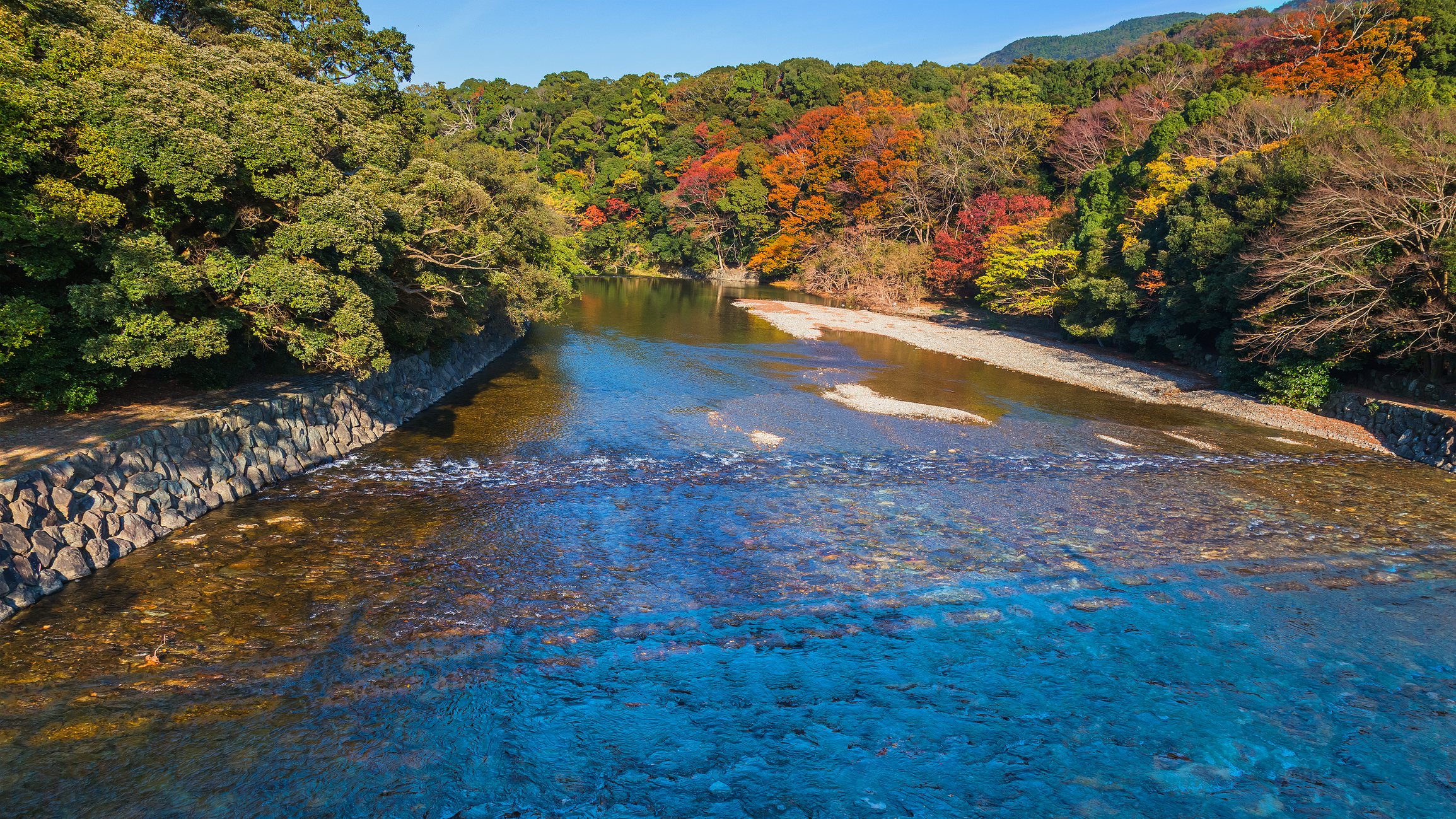
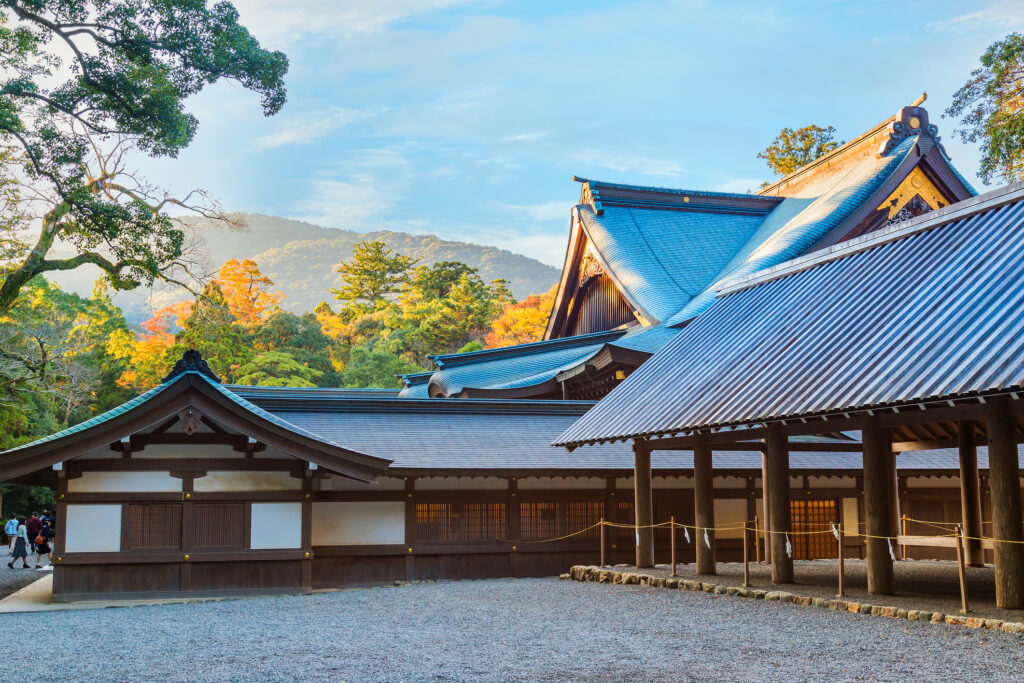
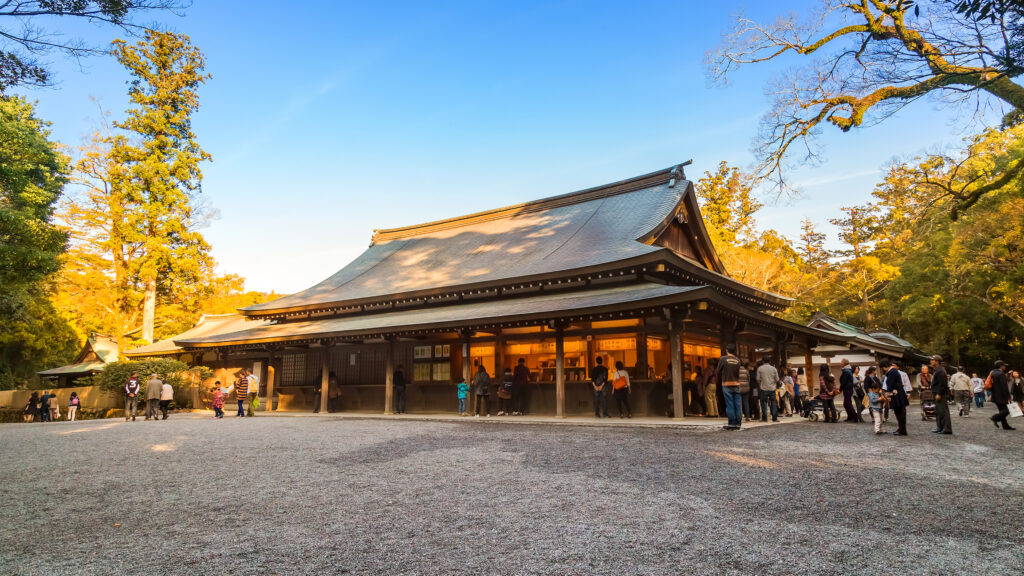
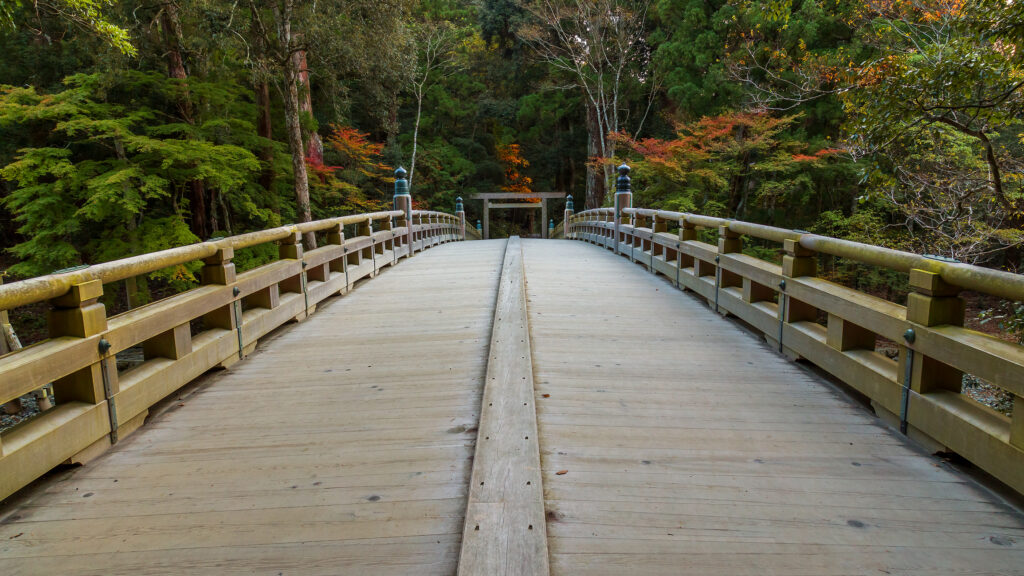
With such mythological origins, Ise Jingu has become one of the most sacred sites in Japan and has grown substantially in size. Today, the complex comprises 125 shrines and covers an area roughly as large as the center of Paris. The oldest and most revered of these shines is the one said to hold the mirror: Kotaijingu, otherwise known as Naiku, or the “Inner Shrine.”
While the shrine itself dates back approximately 2,000 years, you may be surprised to find that the wooden buildings look relatively new. In fact, they are completely rebuilt in their exact dimensions every 20 years, a centuries-old ritual called Shikinen Sengu that embodies the Japanese concept of tokowaka, or “everlasting youth,” ensuring the timeless permanence of the shrine’s divine presence. In doing so, the tradition also preserves ancient construction techniques, such as interlocking wooden joints secured with dowels rather than nails, passing them down through generations.
Today, Ise Jingu continues to attract travellers and pilgrims from around the world who come to visit and pray at the shrine of Amaterasu, whose name alone, often translated as “Great Divinity Illuminating Heaven,” reflects her supreme status in Shinto, Japan’s indigenous faith. It is estimated that the shrine receives roughly eight million visitors each year.
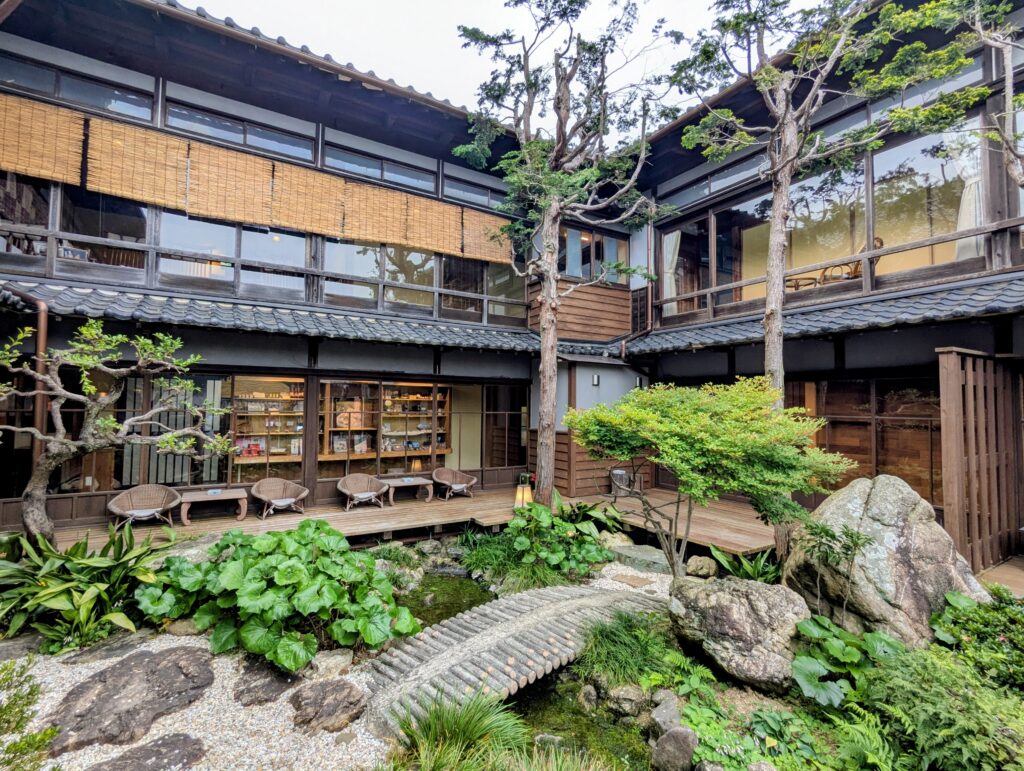
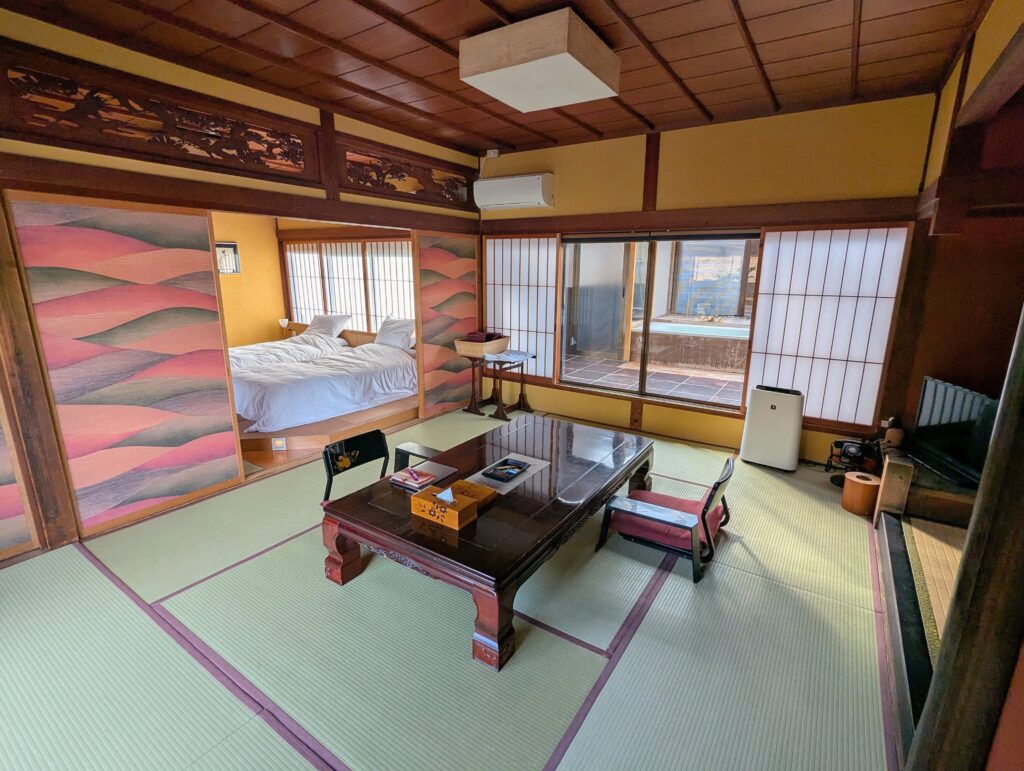
For those looking to pair a visit to Ise Jingu with a traditional stay away from the crowds, Kakujoro in Tahara City is the perfect option. Just a short ferry ride across the mouth of Ise Bay brings you to the Atsumi Peninsula in Aichi Prefecture. Here, you’ll discover the elegance of Kakujoro, a century-old ryokan that has retained all the charm and warmth of the Showa Period (1926 – 1989).
For those travelling by car, the journey from Ise Jingu to Kakujoro takes roughly two hours, including the ferry ride across the entrance to Ise Bay. This route allows you to take in the majesty of the Pacific Ocean on one side and the rugged beauty of Ise Bay on the other. After immersing yourself in the ancient history and spirituality of Ise Jingu, you can rest your feet and your soul in an authentic Japanese ryokan, complete with stunning kaiseki cuisine, with a vegan course available, and a soothing hot spring before continuing your journey.
Alternatively, if you are travelling from east to west, then you can stay overnight at Kakujoro and experience its phenomenal hospitality before heading forth to the shrine.