
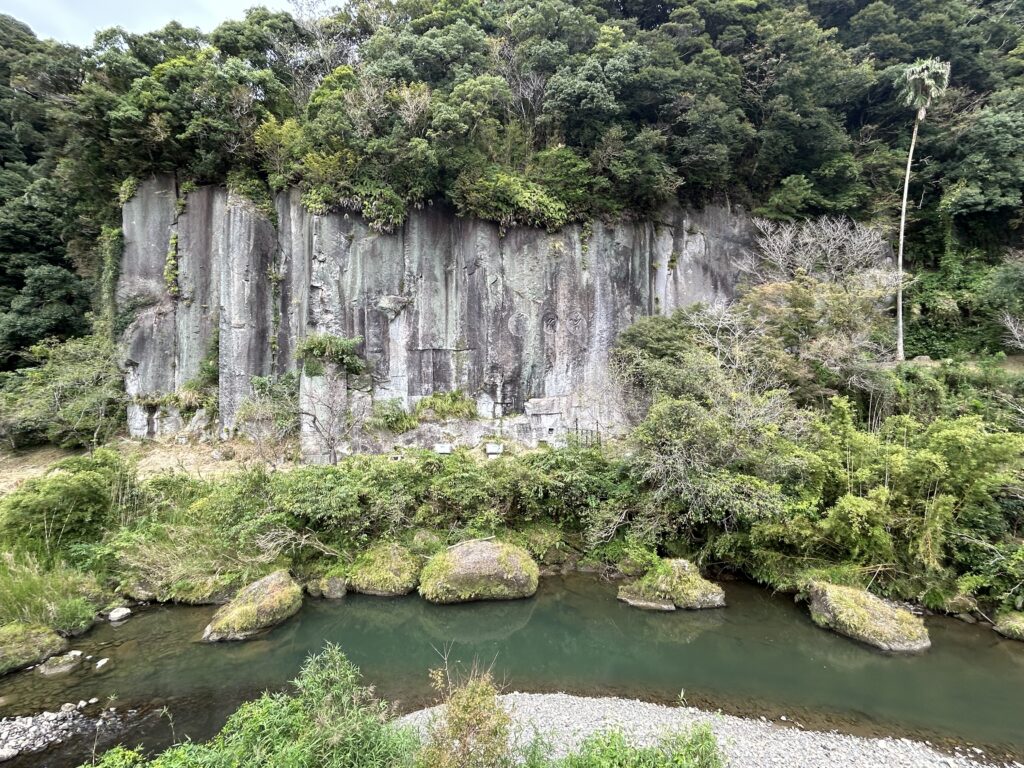
Etched into 400 meters of cliff face that define the course of the Mannose River flowing at its base is a series of mysterious Buddhist images. It feels like you’re in the middle of nowhere, which may have been the appeal of the location to the ancient monks who made these carvings.
Known as the Kiyomizu Magaibutsu (magaibutsu is the name given to any Buddhist carvings into living rock), the carvings are located in what is now Iwaya Park, nearly in the center of the Satsuma Peninsula, about 30 kilometers southwest of Kagoshima City. The park facilities include a Chinese-style stone bridge over the river, large stepping stones to facilitate the adventurous in their river crossing, a three-level viewing platform to view the carvings from the opposite side of the river, and bilingual explanation boards everywhere.
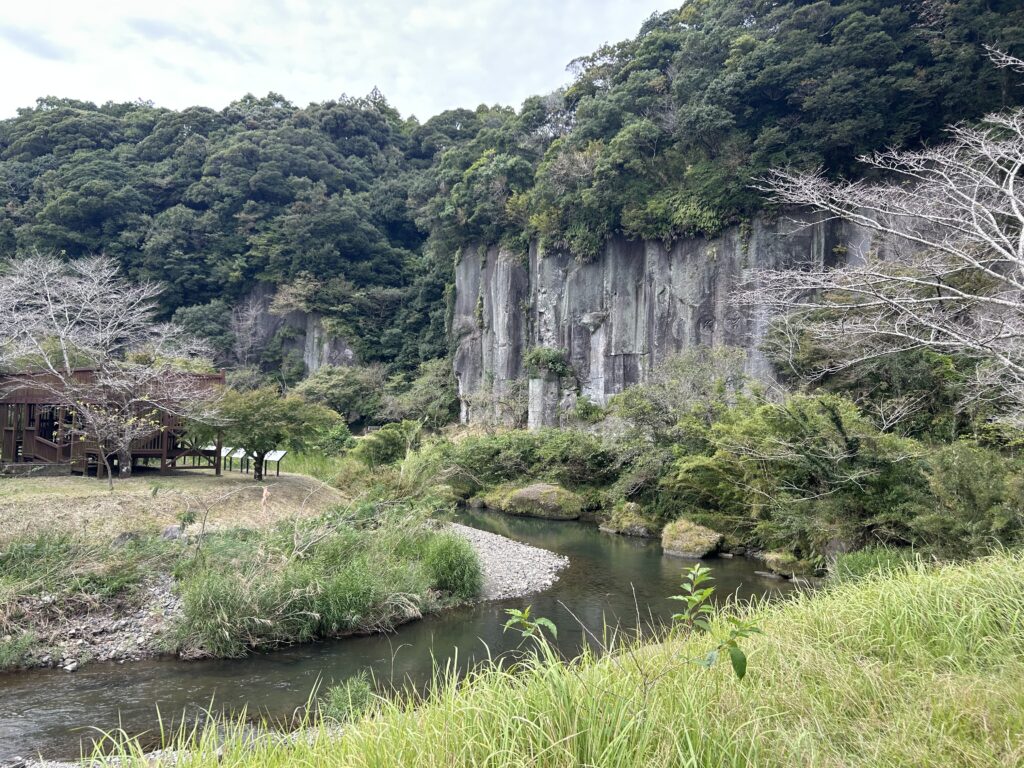
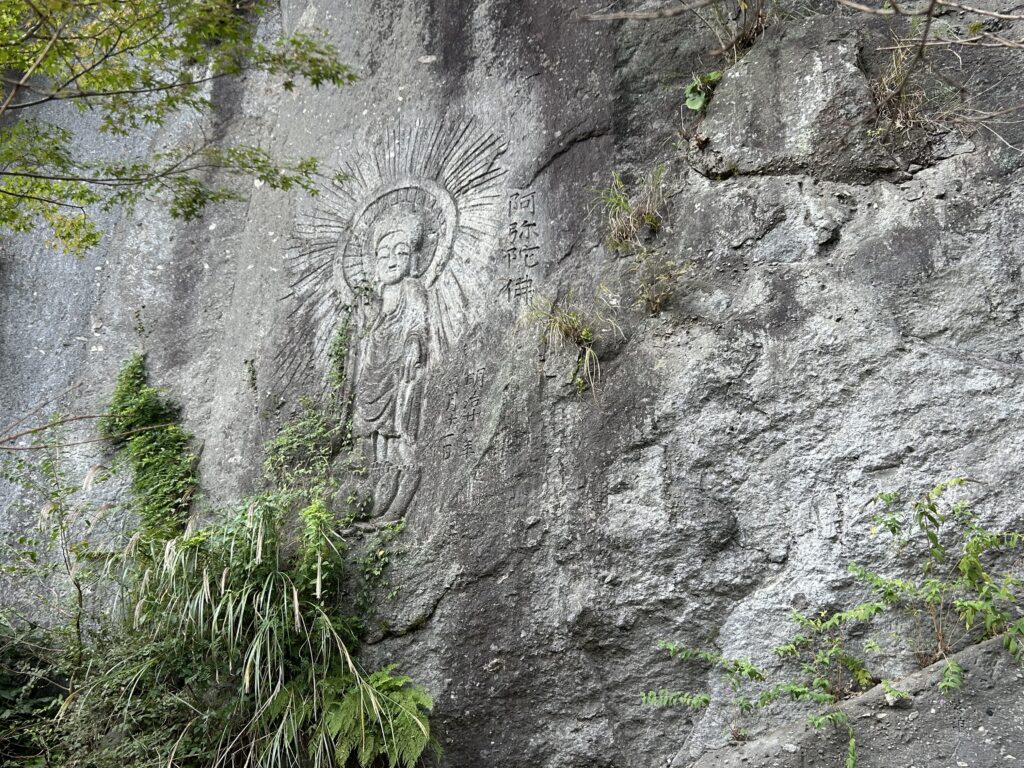
Predominantly bas reliefs and sunken reliefs, there are carvings of Sanskrit characters in medallions, gorinto stupas, and even an Amida Buddha. There are more than 200 images along the 20-meter-tall cliff, carved intermittently over a 700-year period, beginning in the eleventh or twelfth century, around the end of Japan’s Heian Period (794 – 1185). Given their age and the style of carving, many of the images have been worn to near invisibility by the ravages of time.
There is a legend that the earliest carvings were made by members of the Heike (Taira) clan, fleeing from the Genji (Minamoto) clan during the Genpei War (1180 – 1185) that brought the Heian Period to a close. Alas, such legends abound wherever cultural relics are found in remote parts of Japan, so it’s difficult to say whether there is any truth to the story.
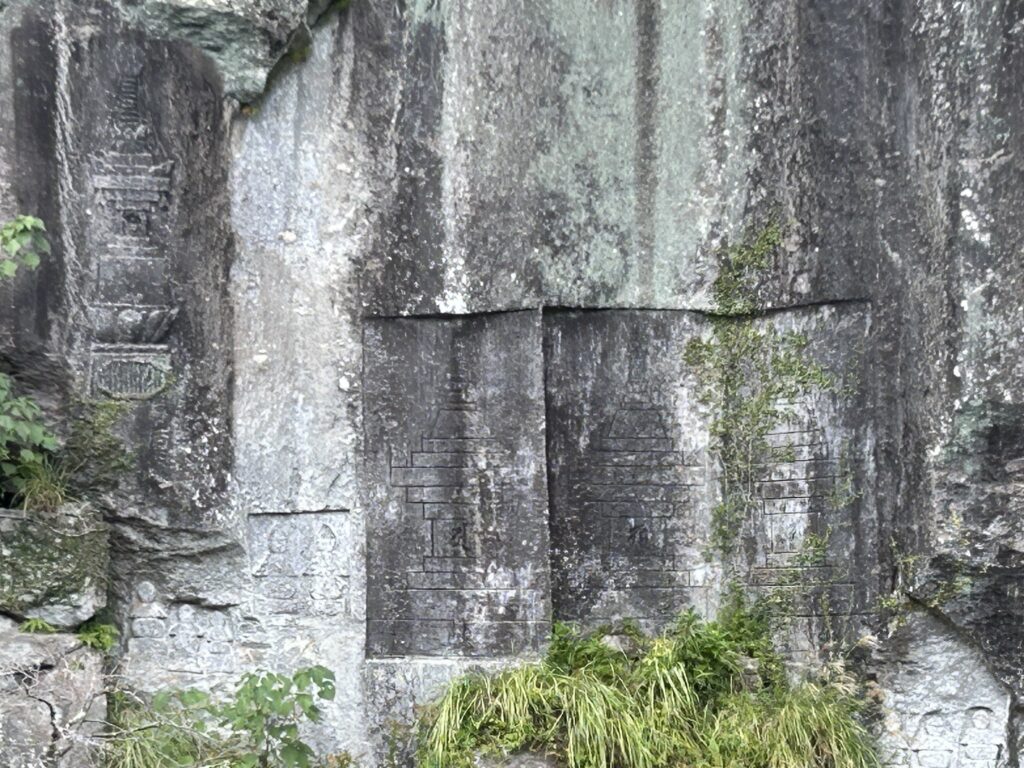
There is, however, evidence that one gorinto stupa carved into the cliff face in 1296, and now nearly obscured by trees and vines, was commissioned by a man named Taira Ieyuki. Three smaller stupas carved in the same year were commissioned by a man named Taira Shigekage. That is nearly a century after the exile of the Taira clan, but these men could be part of the Heike. The stupas were all in memory of a woman with the posthumous name of Shoujou, about whom nothing else is known.
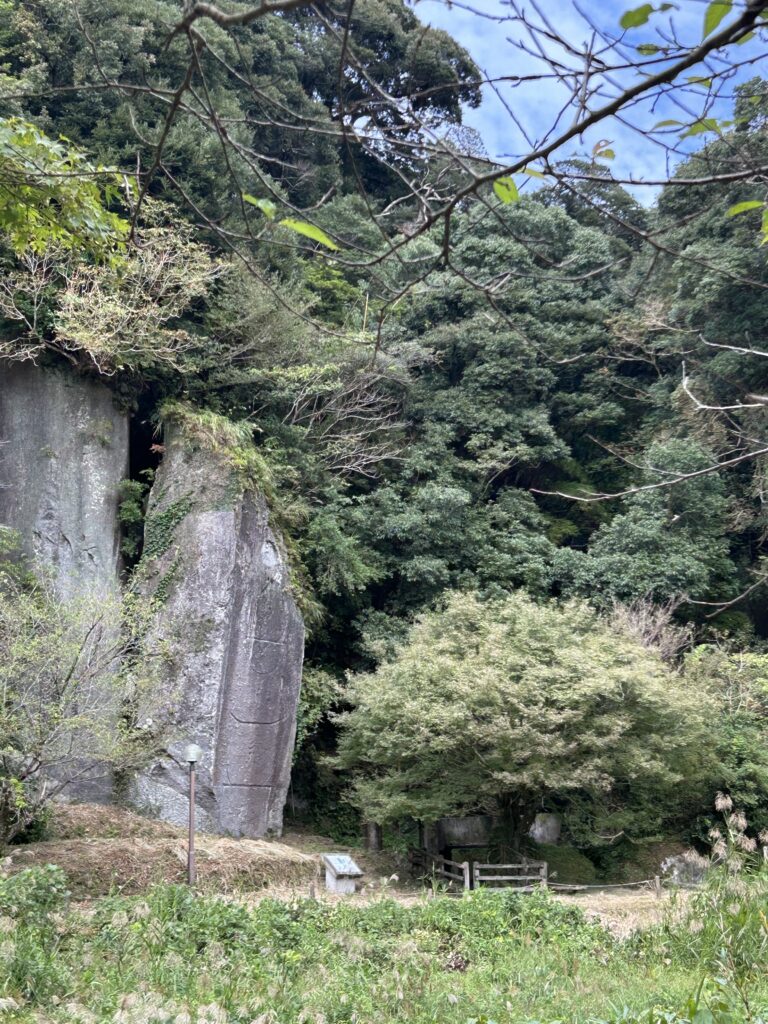
Even older than these carvings is another gorinto that stands 12 meters tall. Although its origin and purpose cannot be confirmed, it is believed to have been carved around the period of the Genpei War and is now so eroded that it is difficult to see.
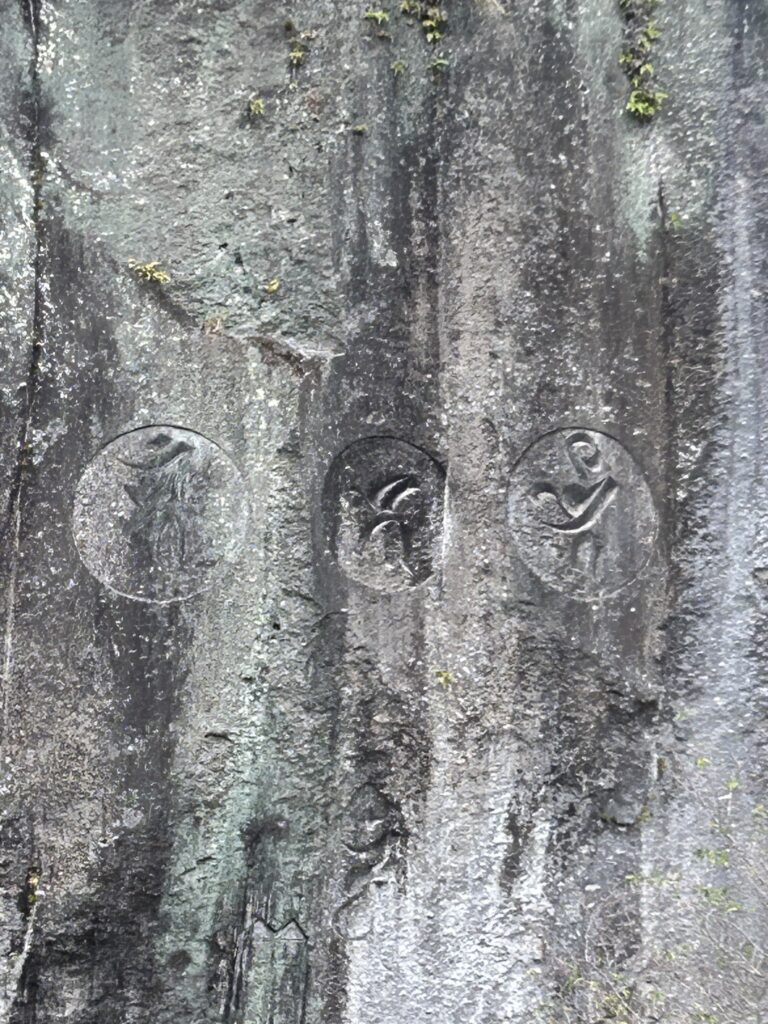
Also dating to the Kamakura Period (1185 – 1333) are three medallions containing the Sanskrit letters for Fudo, Amida, and Yakushi, three different iterations of the Buddha. As a triumvirate, they represent protection, salvation, and healing, concepts that could easily be associated with the banished Heike of this period.
While there are stupa carvings dated to the Muromachi Period (1333 – 1573), after that it appears there were no new carvings for at least three centuries. Gorinto stupas dominated the cliffside in the earlier carvings, but the last images carved into the cliff, in 1895, include an Amida Buddha and an eleven-headed Kannon in a much more modern style. These images are also the ones farthest upriver. Above one carving, the remnants of slanted indentations indicate that there was once a roof over the carving embedded into the rock.
The park is a popular picnic and recreational spot among locals, but on a weekday it is nearly deserted, allowing visitors to appreciate these ancient works of art undisturbed. The dramatic landscape makes it easy to see why those early Buddhists would choose this cliff as their canvas.