
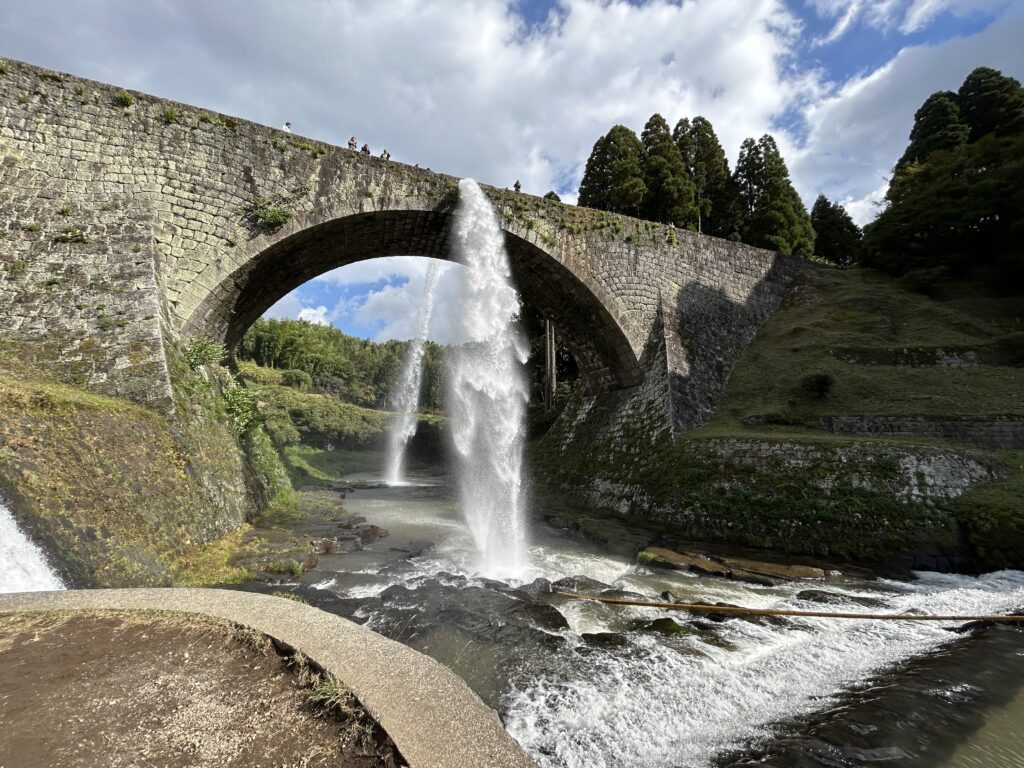
There are more major stone bridges to be found on the island of Kyushu than anywhere else in Japan. Historically, stone construction has not been favored in Japan because of the high incidence of earthquakes. But Kyushu, with its nine active volcanoes, possesses a large quantity of workable stone and, despite its volcanoes, is generally regarded as relatively seismically stable. Thus, stone became a viable material with which to build bridges crossing many of its rivers.
The majority of these bridges were built in the nineteenth century using Chinese masonry techniques, the best technology available to the Japanese at the time. The fact that many are still standing and even in regular use is a testament to the quality of the technology.
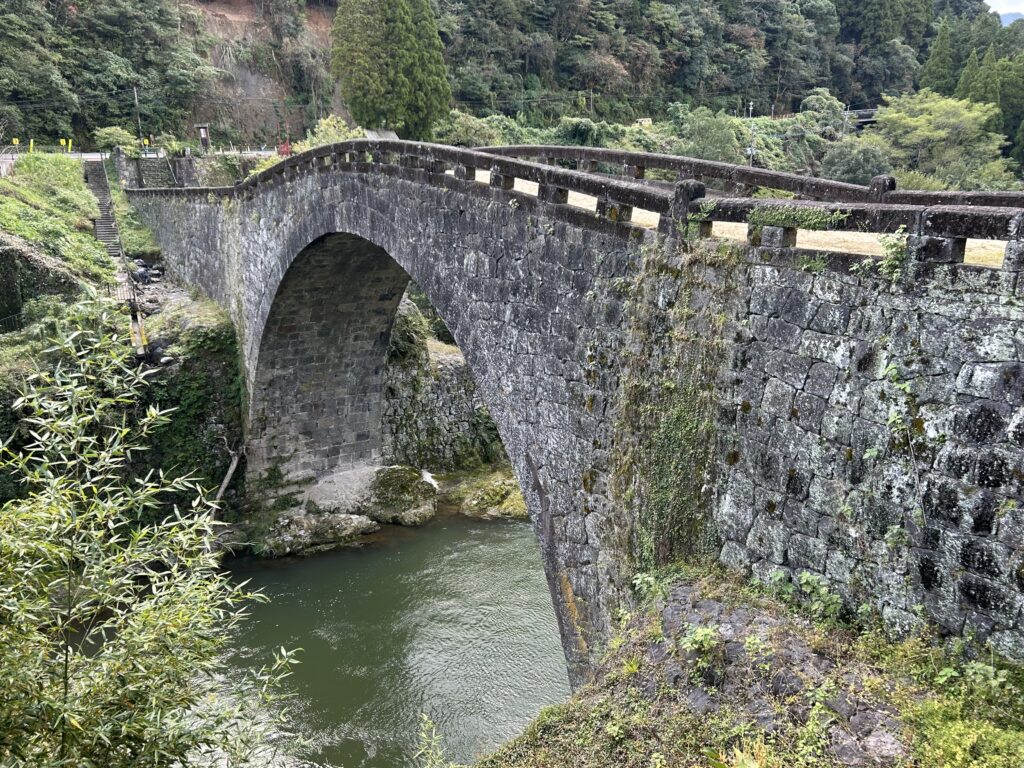
These bridges are, even today, amazing structures. But one bridge particularly stands out: Tsujunkyo, or Tsujun Bridge. Interestingly, this 76-meter span isn’t really a bridge. It is an aqueduct that carries irrigation water across an expanse more than 20 meters above the Gorogataki River in Kamimashiki-gun, Kumamoto Prefecture.
Although now more than 175 years old, and having been damaged by natural disasters and subsequently repaired a few times across its history, Tsujunkyo continues to fulfill its vital role of carrying water to irrigate essential farmland.
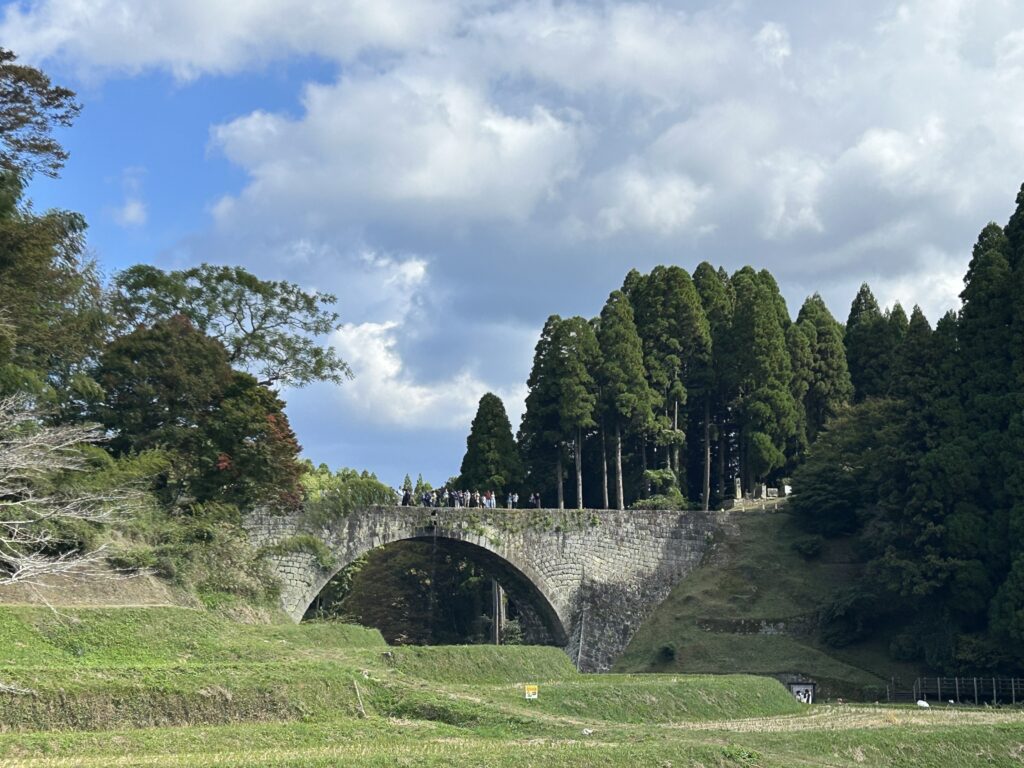
Tsujunkyo was built in 18 months between 1852 and 1854 to solve a very specific problem: how to get water to a fertile tract of land on the Shiroito Plateau, high above the Gorogataki River. The plateau’s position left it with no natural water source. But if Shiroito’s 100 hectares could receive the right amount of water, it could produce as much as 220 metric tons of rice annually. This was clearly a substantial yield, worth pursuing.
The solution was to divert some water from the Sasahara River nearby, which runs through land at roughly the same elevation as the Shiroito Plateau before tumbling down into the Gorogataki River downstream from the plateau. The problem was that the Sasahara River flows on the opposite side of the Gorogataki River from the Shiroito Plateau. So, the diverted water needed to be carried in a man-made irrigation canal and then over an aqueduct crossing the Gorogataki River.
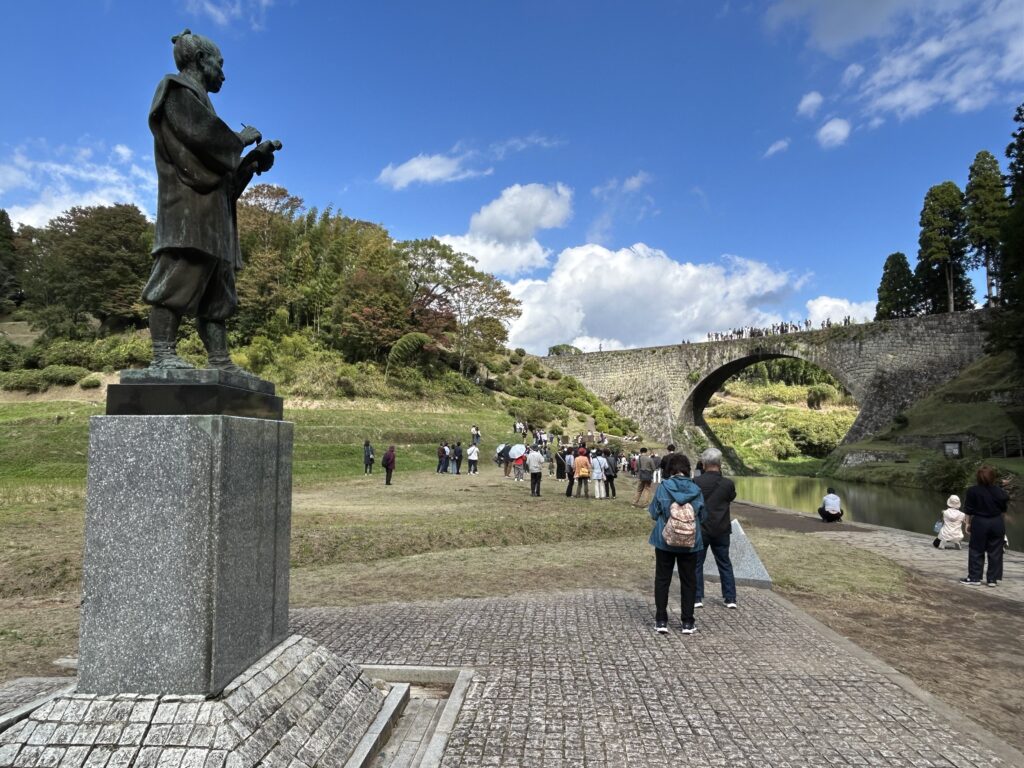
Digging a six-kilometer canal from the Sasahara River to the left bank of the Gorogataki River posed no particular issues, but crossing the Gorogataki River proved to be a bit more of a challenge. Yasunosuke Futa, the local village headman, was something of an engineer, having promoted the development of other irrigation canals and stone bridges in the region. He came up with the idea of a stone bridge-aqueduct.
This aqueduct needed a couple of very distinctive features. First of all, the only way to build a suitable stone span across the Gorogataki River left it 7.6 meters below the canal level on the left bank (the Sasahara River side of the span), and 6.5 meters below the land level on the right (Shiroito) side. To overcome this, the water needed to be forced to flow uphill after it crossed the aqueduct. This required running the water across the aqueduct in enclosed stone pipes that created pressure.
Once the water had crossed the aqueduct, it reached inverted siphon stone pipes, where the pressure of the flow forced the water upward so that it could continue its journey to the rice paddies of the Shiroito Plateau.
Needless to say, the special stone pipes added extra weight to the bridge, and castle-building masonry techniques also used in building Kumamoto Castle were employed to ensure the bridge’s viability.
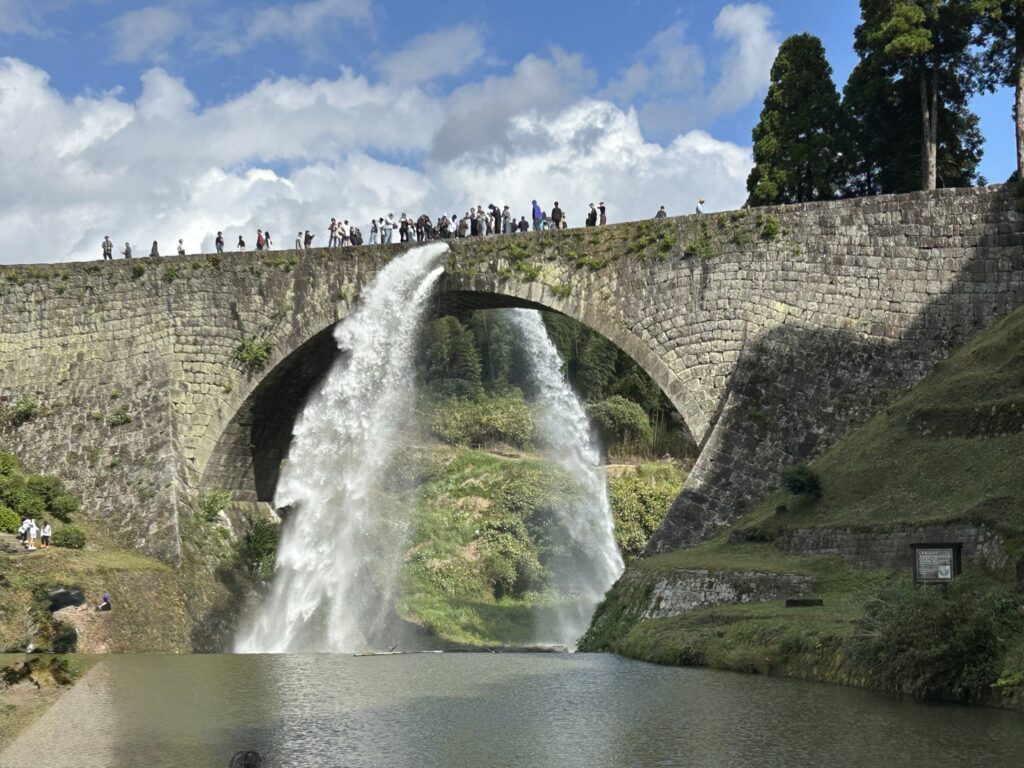
The second feature is the water-release system. Since the water flows to the aqueduct via a canal, it picks up sediments along the way. If the channels of the aqueduct itself were not regularly flushed clean of those sediments, they would soon clog the crucial inverted siphon stone pipes, completely foiling the purpose of the aqueduct. So, a water-release system was devised to create the necessary flushing action.
The most dramatic aspect of the water-release system is the pair of discharge outlets situated at the top of the bridge’s arch. Tsujunkyo is the only aqueduct like this in Japan. Although the outlets are opened for the specific purpose of flushing clear the water channels of the aqueduct, the dramatic sight this creates has also made Tsujunkyo popular among tourists.
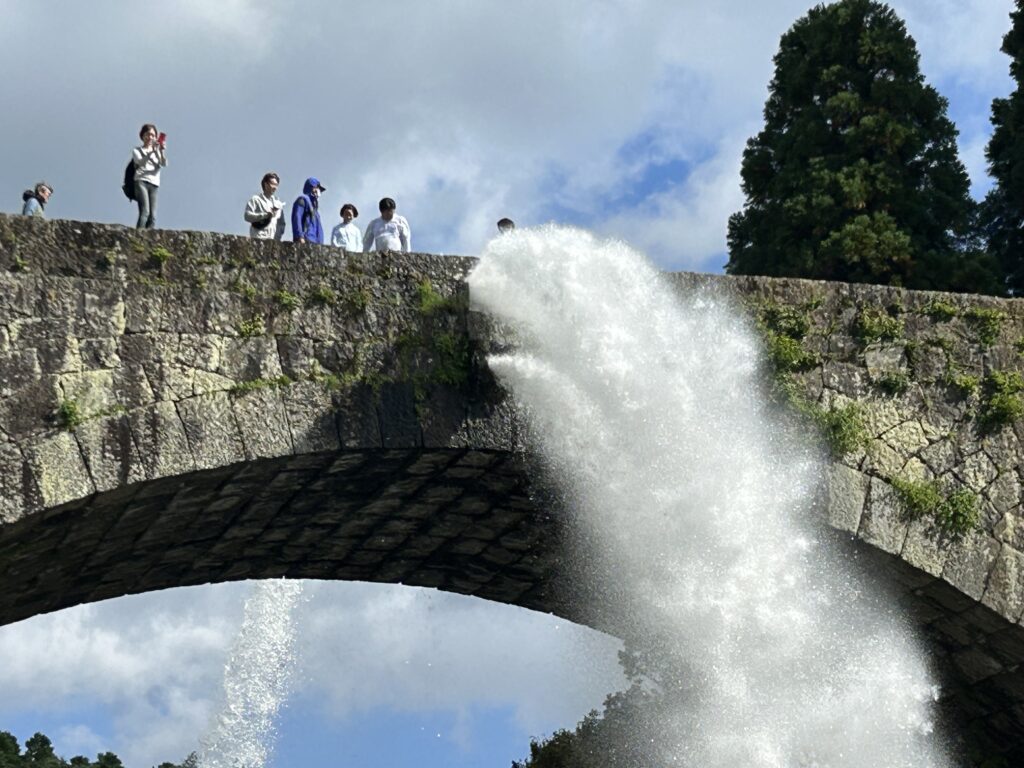
The water arches out perpendicular to its flow across the bridge, falling into the Gorogataki River some 20 meters below with such force that it creates its own arch, popularly referred to as the “rainbow of Tsujunkyo.” The release is conducted at least once a day on several days each week (especially over the weekend) on a published schedule to allow tourists to time their visit accordingly.
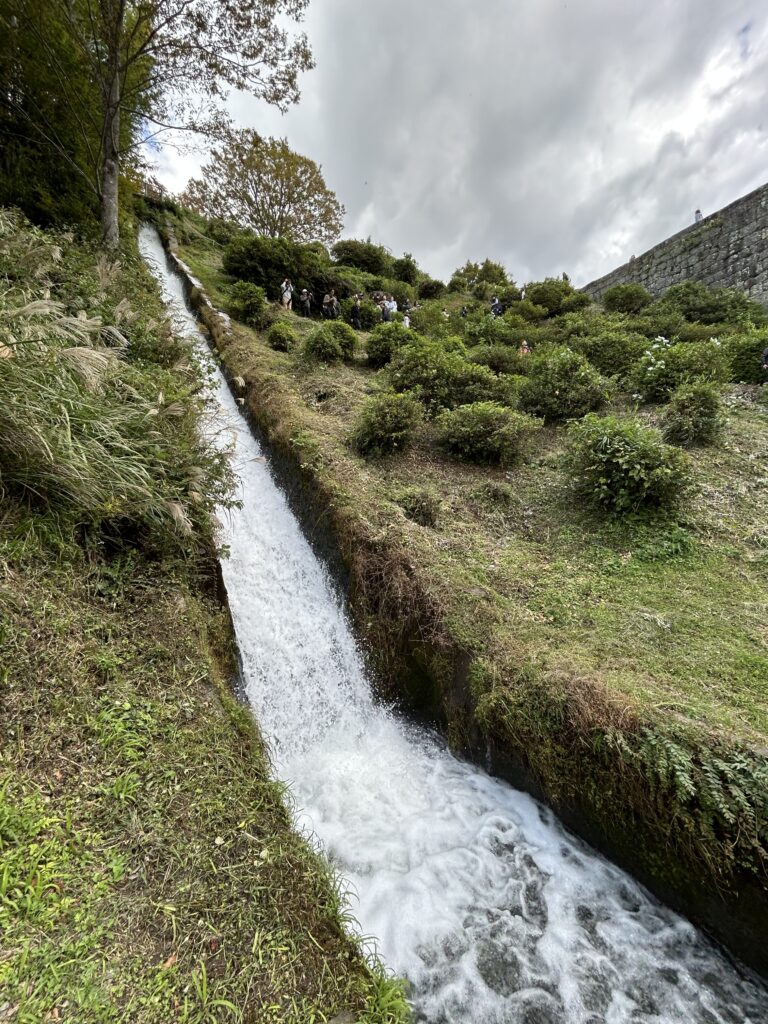
A second water-release system shifts some of the canal sediments away before the water even reaches the stone pipes of the aqueduct. This system carries water from the canal down into the Gorogataki River via a dramatic water chute popularly known as the “Abacus Falls.”
There is a small museum with exhibits on the construction and operation of Tsujunkyo next to the visitor parking lot. Viewing the bridge from below is free of charge, but climbing up the hill and onto the bridge requires a 500-yen ticket.
Watching the outlets at the top of Tsujunkyo open and the water gush out is a thrilling spectacle, worth the trip into the Kumamoto countryside.
Tsujunkyo is most easily reached by private car, being less than two hours from Fukuoka or two hours and 20 minutes from Kagoshima. There is also bus service available from Kumamoto. Catch the Kumamoto Bus M3-2 from platform 1 at Kumamoto Sakura-machi Bus Terminal and get off at Tsujunkyo-mae (about 89 minutes).