When you think of Japanese food, what comes to mind? Probably a colorful tapestry of sushi, a big bowl of ramen topped with decadent slabs of char siu (Cantonese roast meat), deep-fried tonkatsu pork cutlets, smoky yakitori skewers lightly charred at the edges…the list goes on!
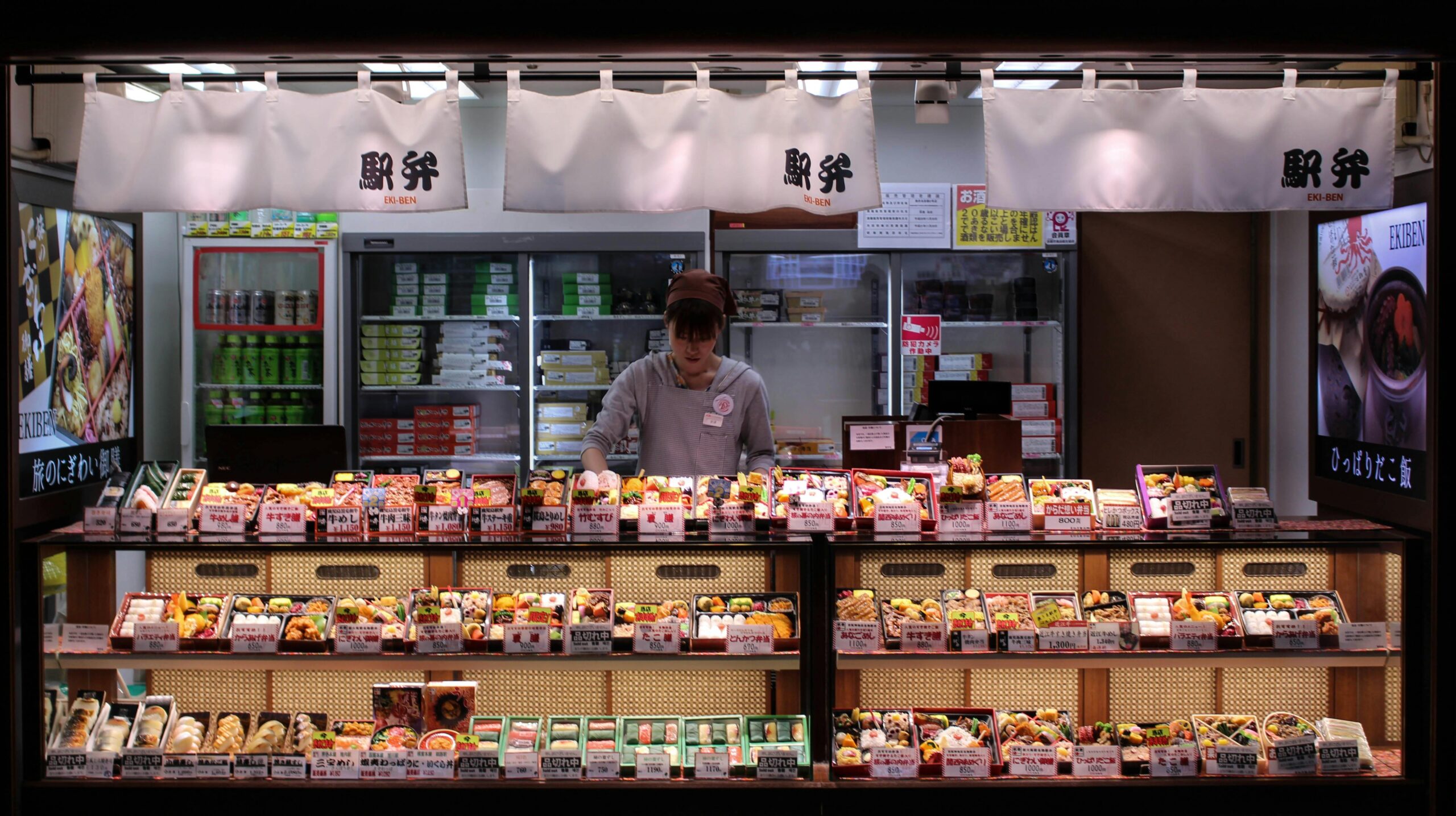
If you’re an everything-eater, you would probably feel both thrilled and intimidated by the sheer number of star-studded spots that pop up on Google Maps when you’re in Japan. The real question isn’t “where do I go?” or “what do I eat?” but “how do I pace myself to maximize the number of flavors I can devour?” Strategy and planning as a foodie 101.
In a similar yet totally opposite way, being vegan in Japan can bring its own kind of adrenaline-fueled thrill and intimidation. Water, water everywhere, nor any drop to drink…food, food everywhere, nor any vegan bite to eat. Yes, I know exactly how that feels. Of the dishes I listed at the beginning, a vegan’s options are limited, to say the least. Maybe the palm-sized portion of rice beneath the fish (if you’re okay with it having cozied up to seafood), or the mountain of finely sliced cabbage that usually accompanies tonkatsu. I love plants, but that’s a little too bare-bones even for me!
But let me tell you, in my experience as a vegan/vegetarian for over six years, Japan can be a true haven. You just need to know where and how to look. Okay, well, a big asterisk here though, because yes, it is considerably harder to find vegan options out in the boondocks. But in cities? The world is your oyster…mushrooms!!
I plan to share my favorite vegan finds in Tokyo in a future article, but today’s focus is something perhaps even more fascinating: the surprisingly deep roots of vegetarianism in Japan, dating back over 1,400 years. Curious? Same!
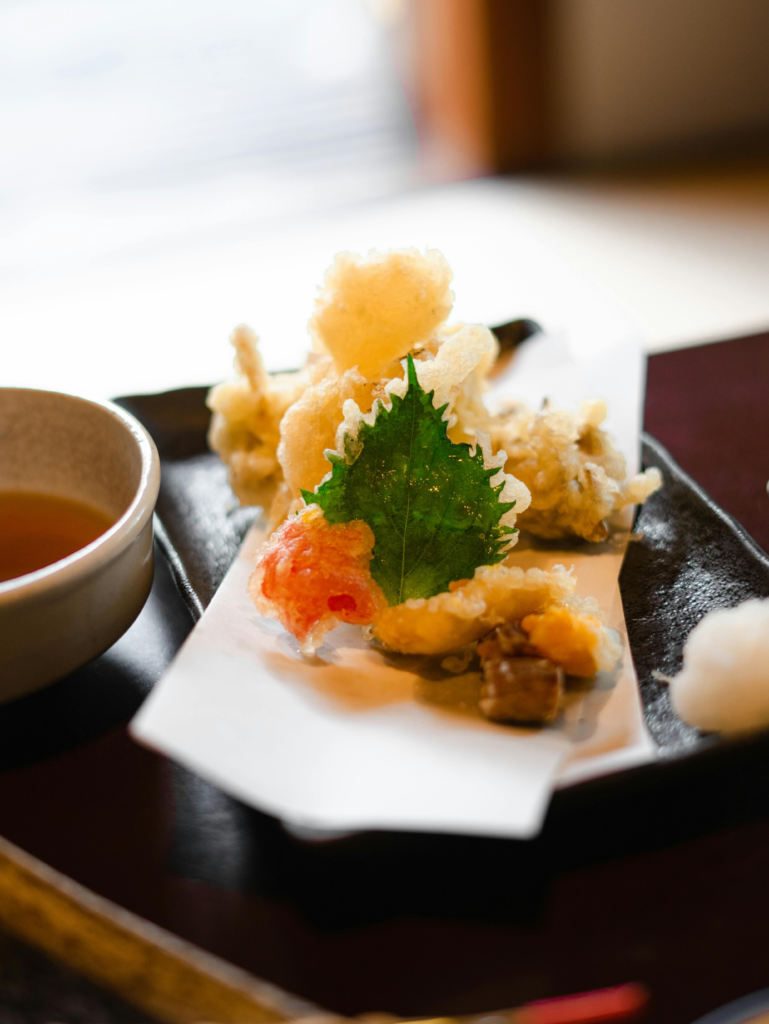
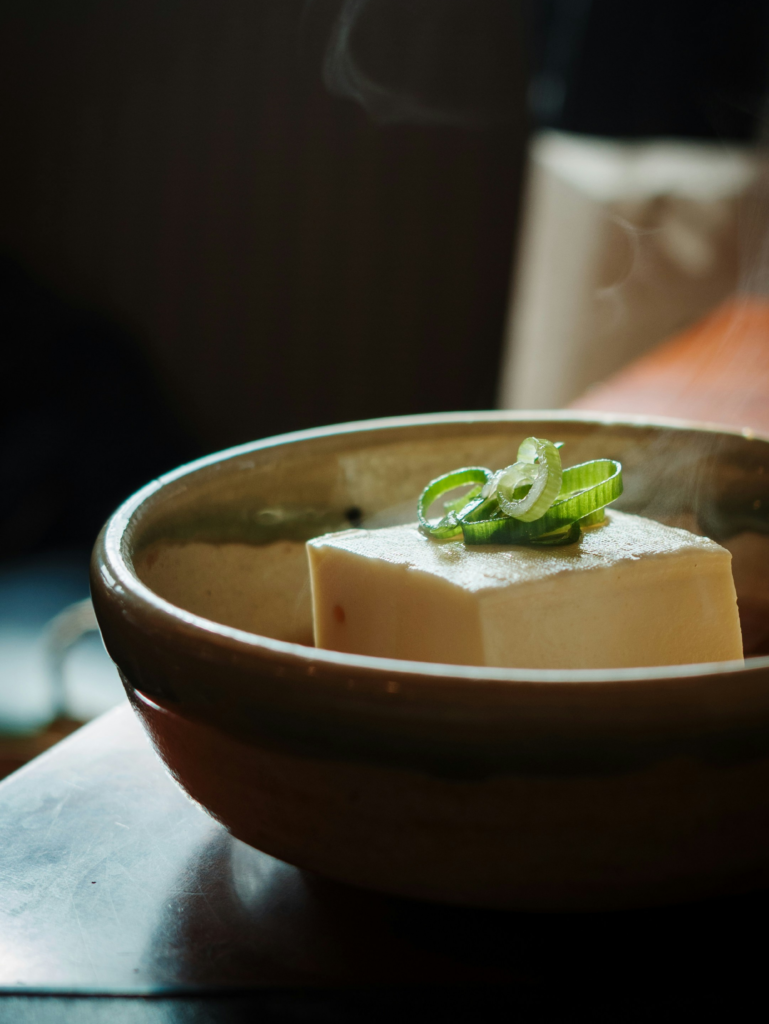
Shojin ryori: Japan’s OG plant-based cuisine
A little storytime: when I worked part-time at a conbini as a university student, I would naturally and politely refuse to take home any leftover meat products that couldn’t be sold for whatever reason, because of course, I was vegan.
This was about 10 years ago, so it’s probably different now, but at the time, all of my conbini senpai (who were quite a bit older than me) could not wrap their heads around what veganism was or why I would follow that diet. I totally understood where they were coming from, because food education in Japan (like in other places) is taught with balanced nutrition at its core, which is a great thing, but the protein element is always some form of meat or fish.
That’s how people are informed, so my senpai were genuinely worried about whether I was getting enough nutrition. I would try to explain it to the best of my ability, but then one day, I remembered shojin ryori. And as soon as I told my senpai that I basically follow a shojin ryori diet, they all responded with a synchronized “ahh, soudesuka!” (oh, I see!), and I could instantly feel the understanding settle. It wasn’t a foreign concept to them anymore, but a familiar one and, in fact, a respectable choice.
So…what is shojin ryori?
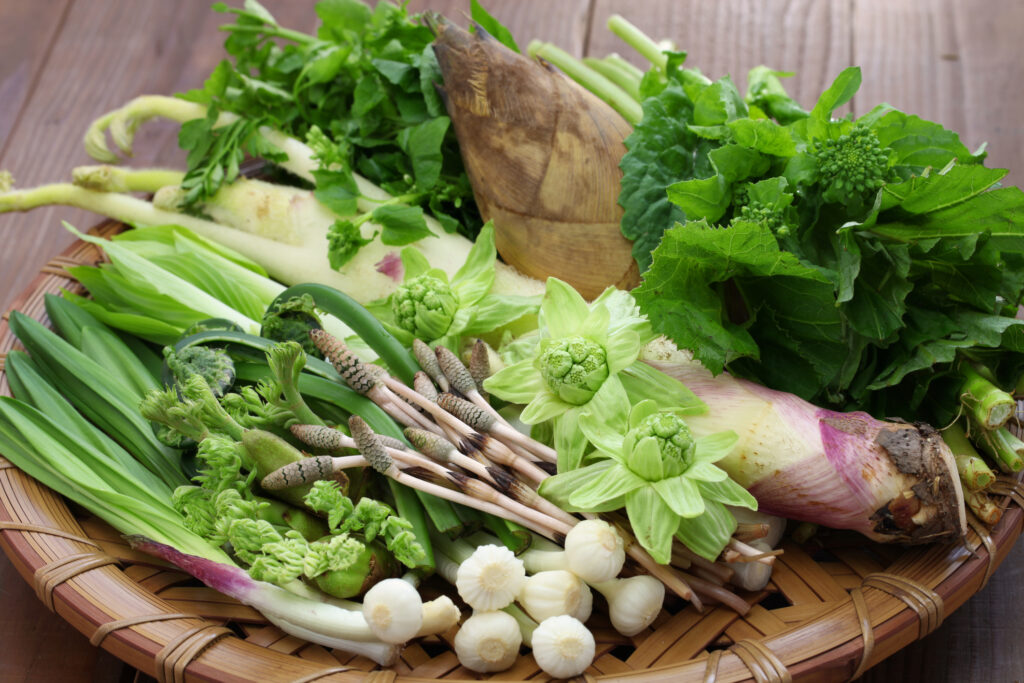
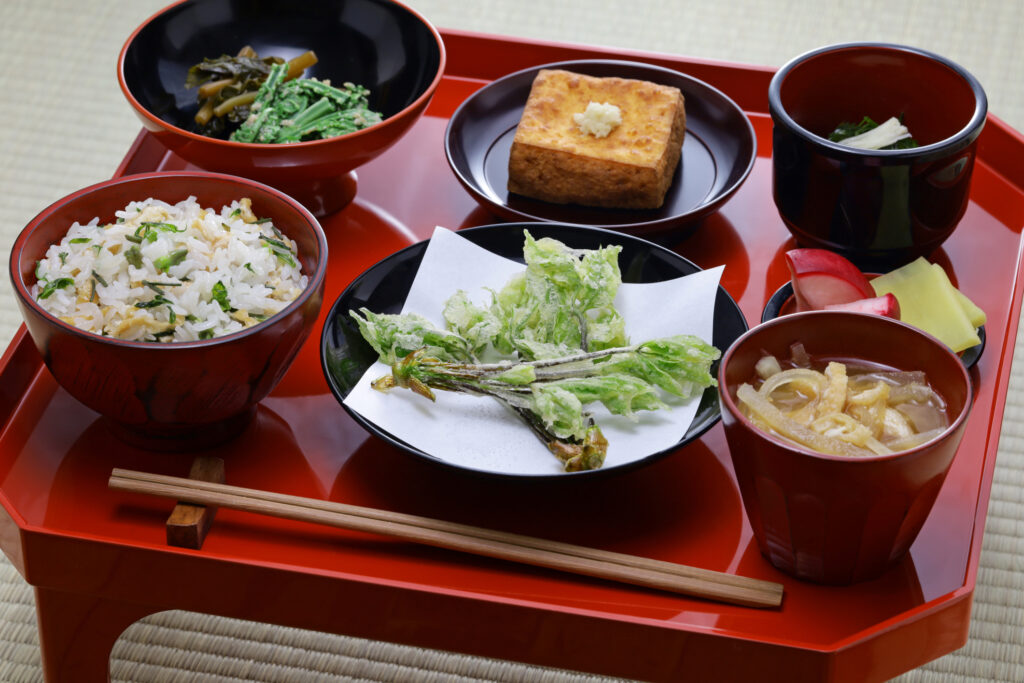
First introduced to monasteries in Kyoto from China as far back as the mid-500s, shojin ryori refers to traditional Buddhist vegetarian cuisine (modern renditions can incorporate dairy and eggs, so may not be fully vegan).
The foundation of the shojin ryori we know today, though, dates back to the 1200s and begins with Dogen Zenji, the founder of the Soto sect, one of the major denominations of Japanese Buddhism. In line with Buddhist morality, which seeks to end suffering among all creatures and views the earth and body as inseparable, he laid out rules that meat and fish shall be prohibited and that no part of an ingredient shall be wasted in his manual, Tenzo Kyokun (“Instructions for the Cook”). All ingredients are used fully, from vegetable peels to stems, and dinners would often feature porridge prepared using leftovers from lunch.
The manual also outlined the philosophy that the groundedness, respect, and humility cultivated in preparing meals are a key part of the quest for enlightenment and carry over into the rest of a monk’s life.
The spirit of gratitude in “itadakimasu”
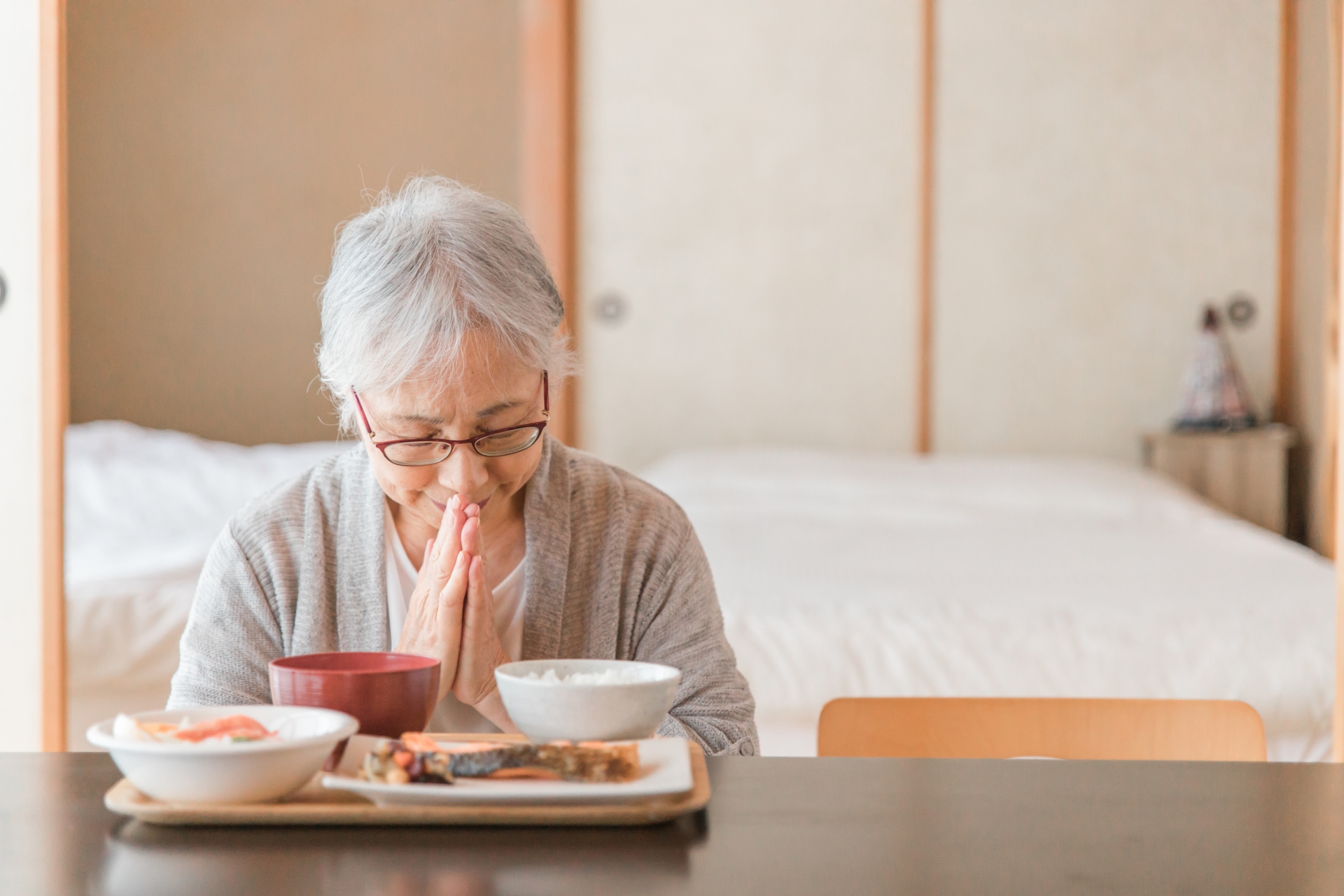
If you have had a meal in Japan or know some basic Japanese, chances are you have come across this word: itadakimasu. It means “I humbly receive.” Typically, it is said along with the simple, prayer-like gesture of placing your palms together before you take your first bite.
As with so many things in Japan, this is not just random, but very intentional. It is a moment, or as I like to think of it, a “pause” to center oneself before the meal, to honor not only the food itself, but the life that went into it and the effort of everyone involved in making it possible, from the farmers to the cooks. It ties into the central Buddhist idea that the earth and all living things are interconnected, and although most of us may not be consciously aware of that every time we say itadakimasu, I do believe that the pause, despite how brief, works in profound ways.
Kakujoro ryokan: Where vegan meets traditional Japanese haute cuisine
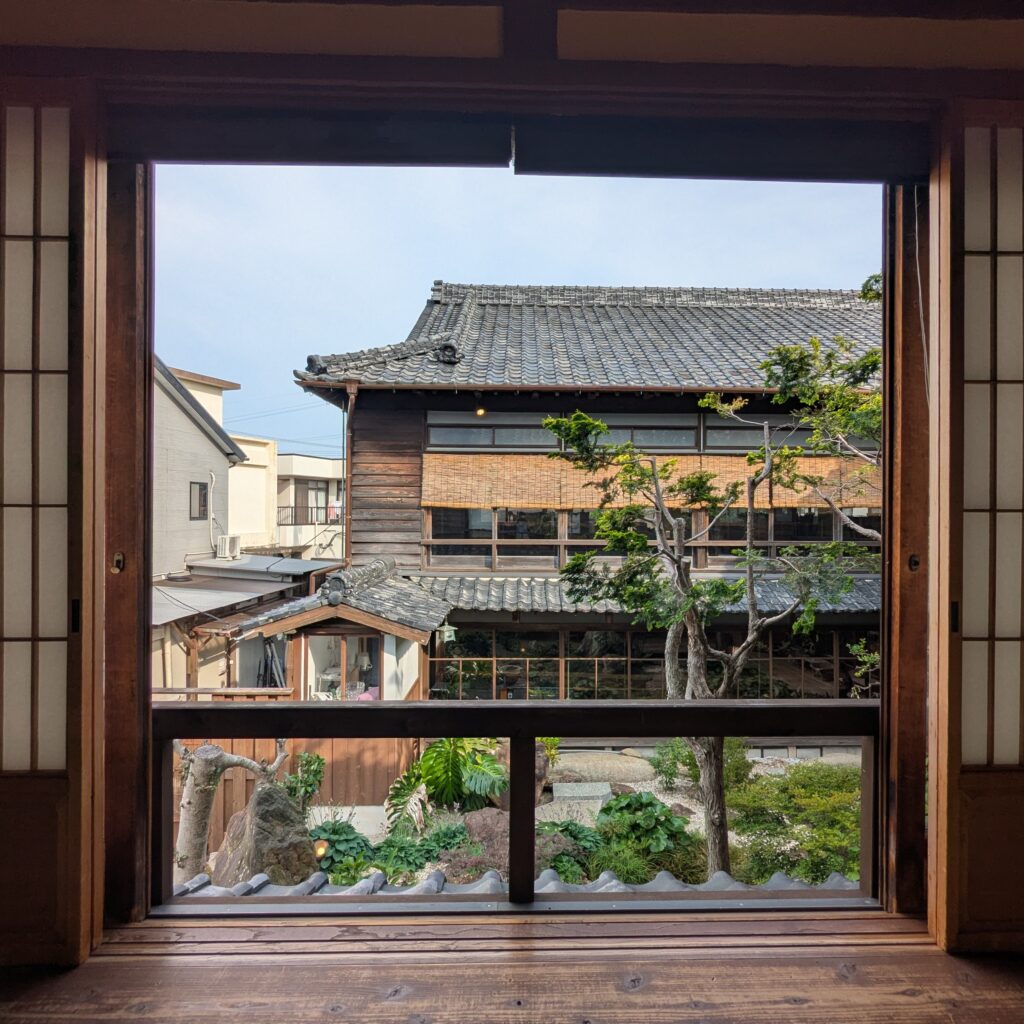
I mentioned earlier in this article that it is harder to find vegan options in the boondocks, which still stands true, but every now and then, I unearth a gem in the rough that surprises me. And double your surprise with this one, because not only is this spot located in the boondocks of Aichi Prefecture (although only about two hours from Nagoya Station by car, so not entirely rural), but it is also a traditional ryokan inn that dates back 100 years.
In all my experience traveling Japan as a vegan, I have seldom found a ryokan that not only caters to vegans upon request (sometimes accompanied by a slightly troubled tone), but has also proactively created a fixed, full-course menu.
Kakujoro is where veganism meets kaiseki, traditional Japanese haute cuisine featuring multiple courses.
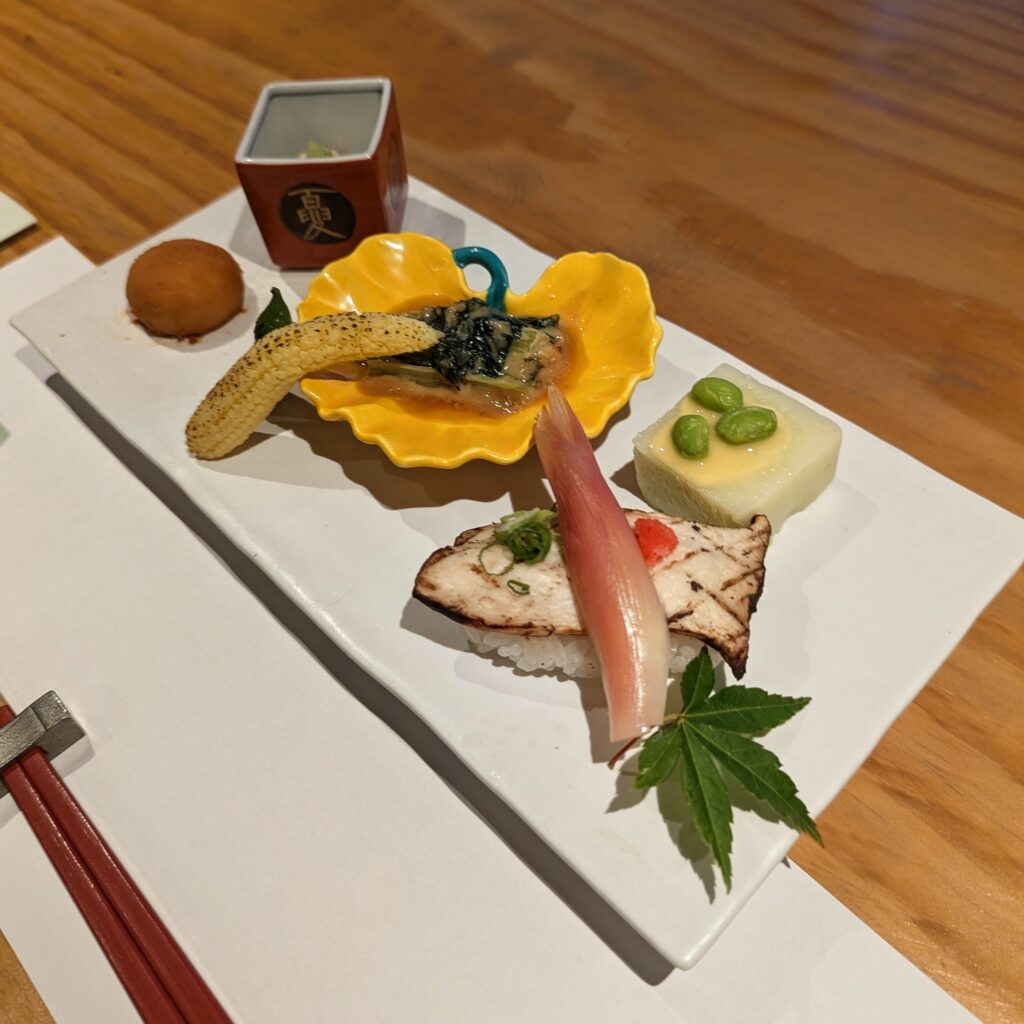
From beautiful vegan sushi spotlighting seasonal vegetables to daikon (Japanese radish) steak simmered in a savory vegan dashi broth, every detail is meticulously prepared, and there is no doubt Dogen Zenji would approve. You can read more about Kakujoro’s vegan cuisine in my previous article.
This is one of those meals that truly makes you feel the weight of gratitude for food because of how beautifully and thoughtfully it is prepared. Remember to take that “itadakimasu” pause before diving in.