Anime has been the heart and soul of many childhoods across the globe for generations. Goku’s Kamehameha energy blast, Naruto’s Kage Bunshin clone technique, Luffy’s Gomu Gomu no Pistol punch, and many more. These iconic moves continue to live on with unquenchable flames of passion, even among adults who grew up watching them. Some people have only discovered their fascination with anime past adolescence. Still, regardless of age, one thing is undeniable: anime’s enduring legacy remains a potent tool of Japan’s soft power.
But what if I told you that these fictional characters, ever alive in our imagination, could become closer to us in a way accessible to anyone visiting Japan? That is where anime pilgrimage comes in. It means visiting real-world locations featured in anime or manga. In Japanese, it is called seichi junrei.
There is even a website where you can search for your favorite anime and find the places that inspired its settings. You can feel as if you are reliving that memorable scene or episode you just watched. Thanks to the hard work of anime otaku, we can now easily locate real places that inspired anime settings with just a tap or click.
For my part, out of love for anime, I have visited some of these hotspots myself. Since I was already near the area, I figured I might as well check them out.
Free!
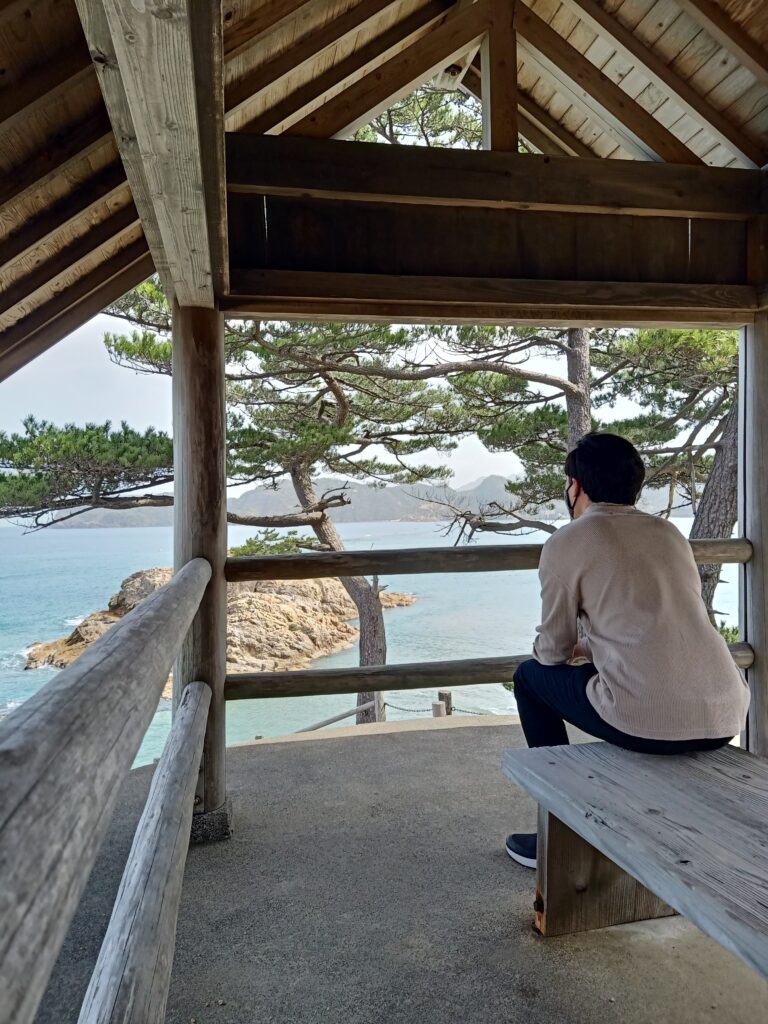
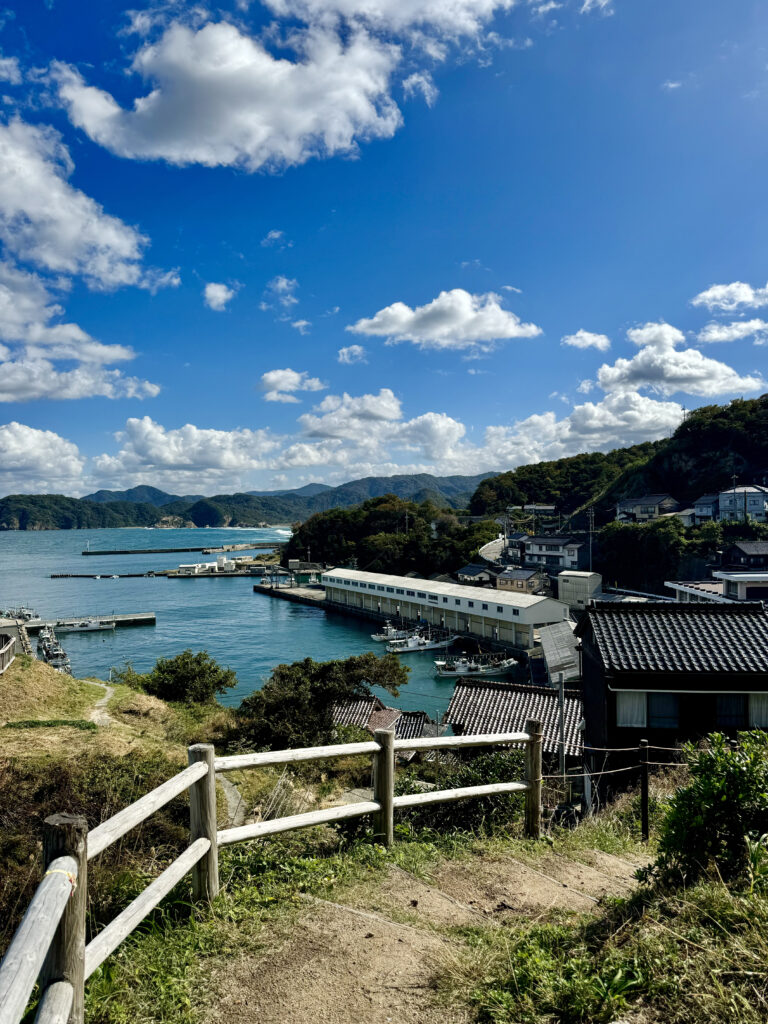
Despite being just a small, quiet town lying along the coast of the Sea of Japan in Tottori Prefecture, Iwami has become one of my favorite beach destinations in the country. The anime Free! is mostly set in the small fictional coastal town of Iwatobi, which was inspired by the town of Iwami. It tells the story of a group of high school boys whose friendships are both tested and strengthened through their rivalry in swimming competitions, and whose hard-earned dreams come to fruition because they never give up.
Visiting Iwami will not only inspire you with the same determination the boys had in pursuing their dreams, but also captivate you with the charm of the town and the vast Sea of Japan.
There, you can find the quiet Uradome Beach and the Tajiri Park Observation Deck. The area is part of an expansive UNESCO Global Geopark, and you will surely be captivated by its dramatic seascape and rugged coastline.
Bungo Stray Dogs
If you are into Japanese classic literature, you will surely love this anime. Bungo Stray Dogs features characters named after famous Japanese authors such as Osamu Dazai, Junichiro Tanizaki, Ranpo Edogawa, and Akiko Yosano. Do these names ring a bell? Certainly, most lovers of Japanese classics can name at least one famous work by each of them.
All these fictional characters and their powers reflect the works and lives of the authors they are named after. Take Osamu Dazai, for example. Known as a deeply troubled writer, he is portrayed in the anime in a similar light, but often in a comical way. His ability to nullify other powers is called “No Longer Human,” the title of one of his most famous novels.
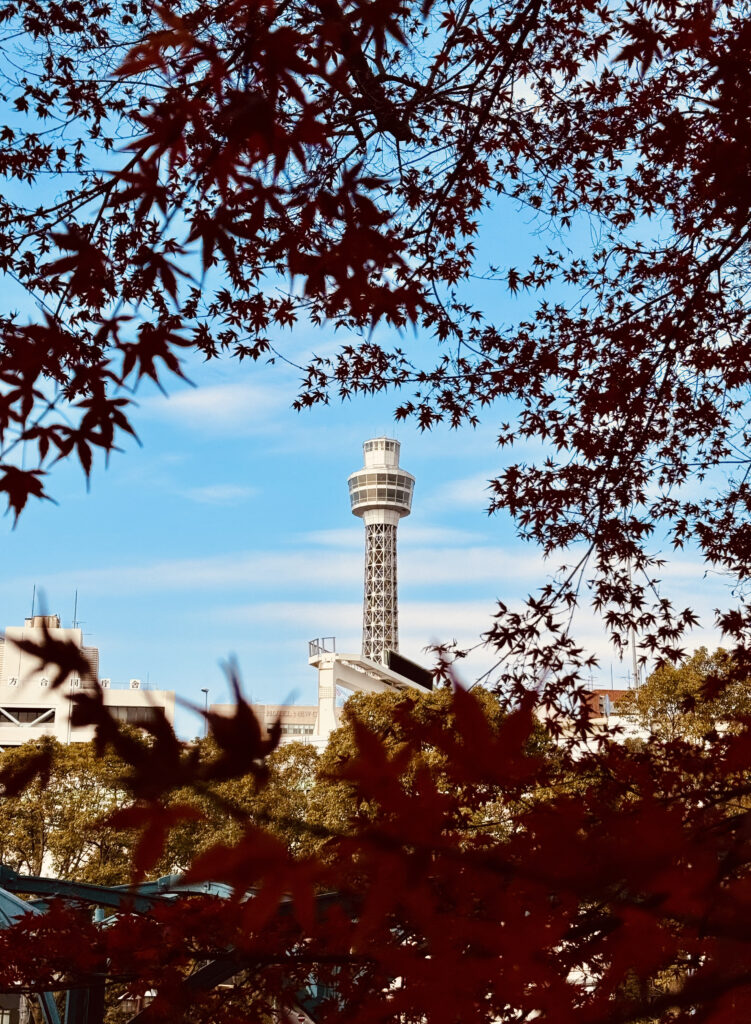
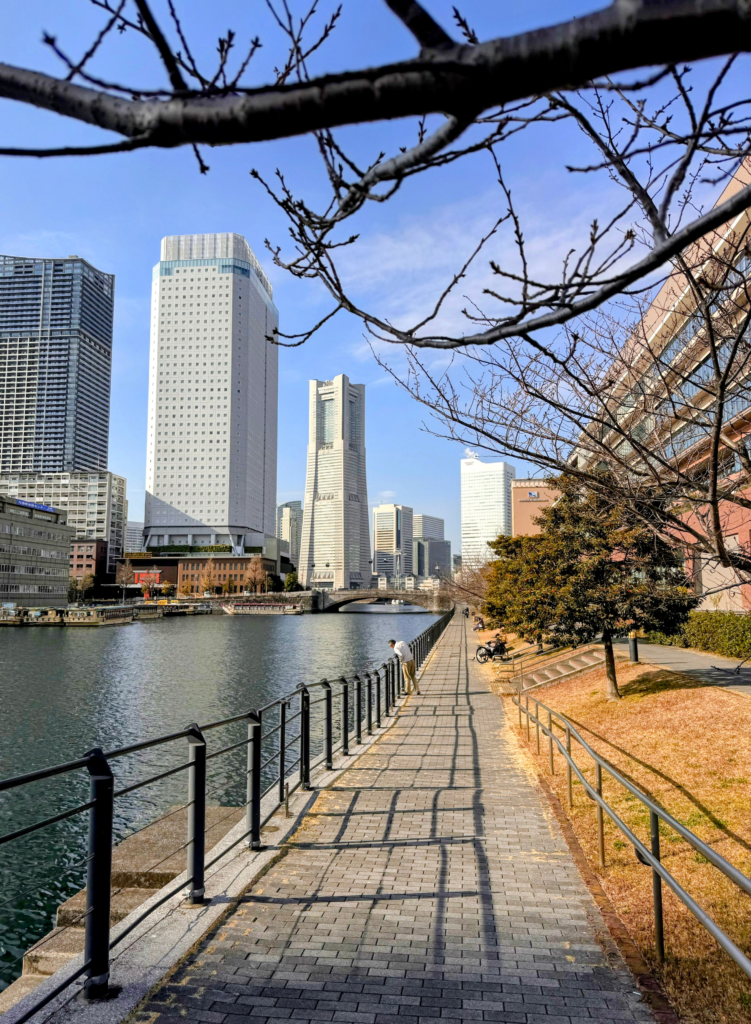
Immersing yourself in their world is not difficult, since Yokohama is a hotspot for an anime pilgrimage for Bungo Stray Dogs. It is just a train ride away from Tokyo and easily accessible from the rest of Japan.
Personally, I found the waterfront walk in Minato Mirai very soothing. There, I enjoyed the view of the busy port and its refreshing sea breeze while people leisurely walked past as I sat on a park bench. Many interesting spots in the area are within walking distance, allowing visitors to explore them one by one. These include Chinatown, Yokohama Marine Tower, Yokohama Stadium, Harbor View Park, Yamashita Park, Yokohama Red Brick Warehouse, and many more.
Hello World
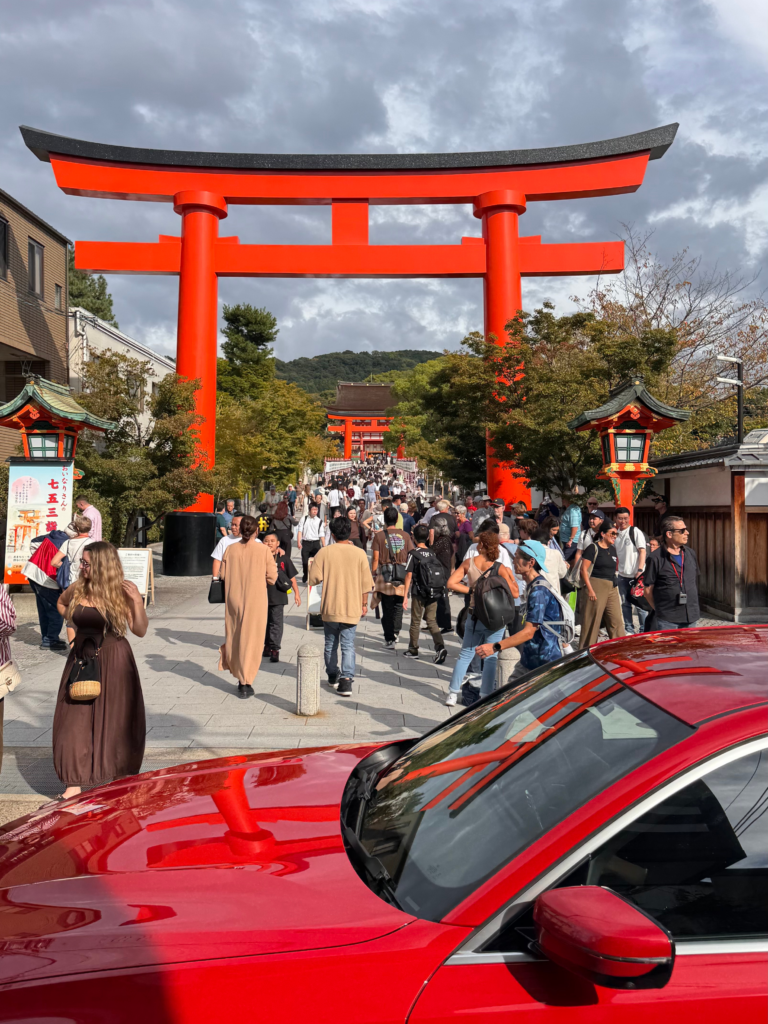
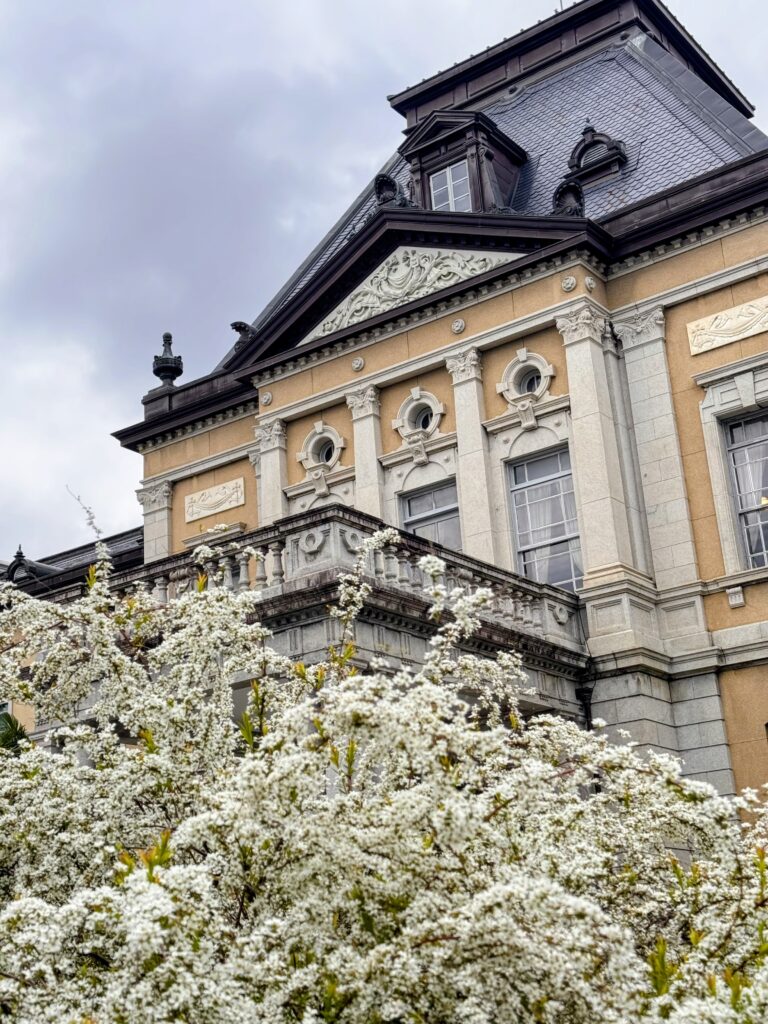
Hello World takes place in a futuristic rendition of Kyoto in the year 2027. If you have wandered through popular spots in Kyoto, you will surely recognize some of the places featured in the anime. This excellent film brings viewers on an unforgettable journey through the city’s historic landscape, blended with the cutting-edge technological developments of a virtual world.
This sophisticated anime brings to mind another film starring Leonardo DiCaprio, Inception, where the protagonists venture into multiple layers of dreams. Here, however, the characters are caught in a swirl of multi-layered digital simulations of the real world.
A stroll around Kyoto feels as if you are wandering through Alltale’s quantum memory of the city and its people.
Detective Conan
The following places are not exactly locations featured in anime, but I included them in this article because they are closely connected to anime culture and are, without a doubt, a haven for anime otaku.
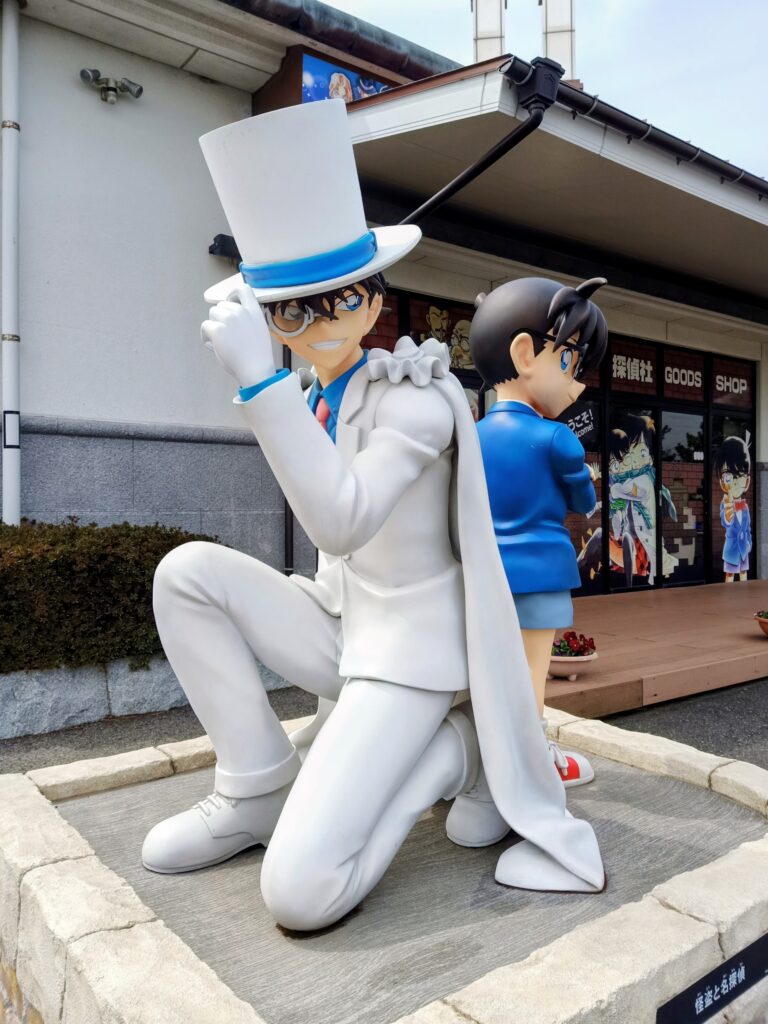
For decades, the compelling mystery behind each case in Detective Conan has led to its massive worldwide acclaim. It has become such a cultural icon that a small rural town in the western Japanese prefecture of Tottori honored its manga artist by designating his birthplace as “Conan Town.” Although the town is still officially called Hokuei, the local community has embraced this designation.
The town’s train station, Yura Station, is also popularly known as “Conan Station,” with a Conan-themed train running regularly as part of the local and express train services.
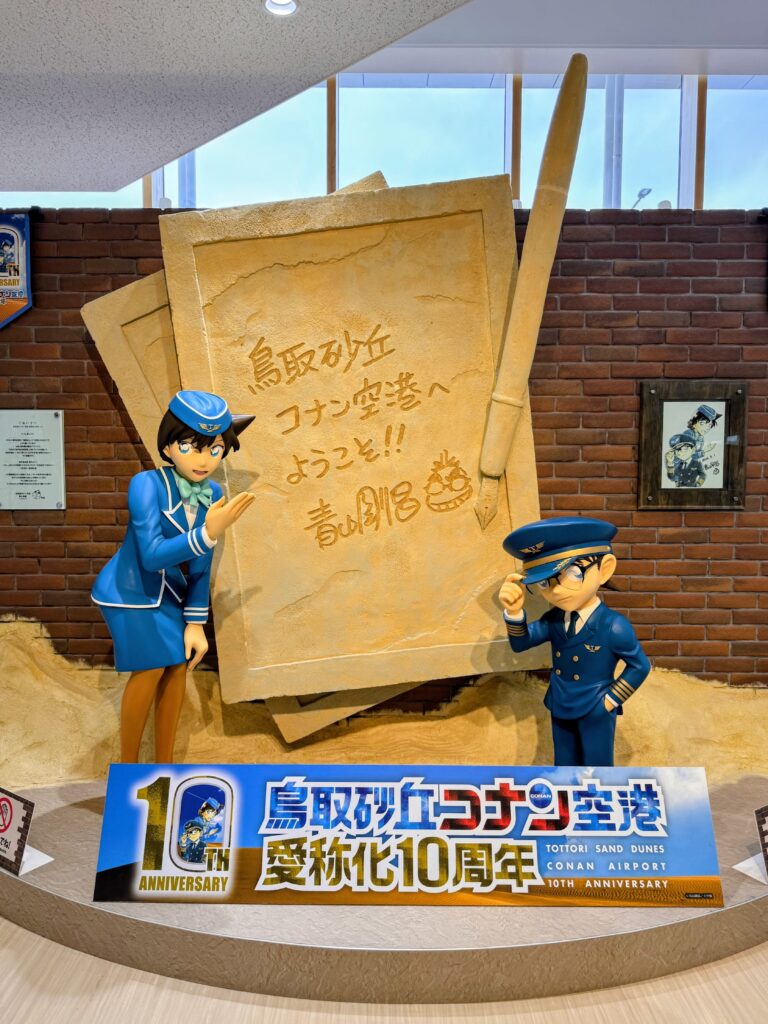
Worth mentioning as well is the main entry point to Tottori by air, Tottori Airport, also known as “Conan Airport.” On every level of the airport, you can find artworks and decorations related to the series, such as 3D murals, character walls, and illustrations. You can even spend some time at the observation deck and take pictures with some of the characters while watching planes land and take off.
In Tottori, you can never have enough of Conan and his friends.
More anime spots
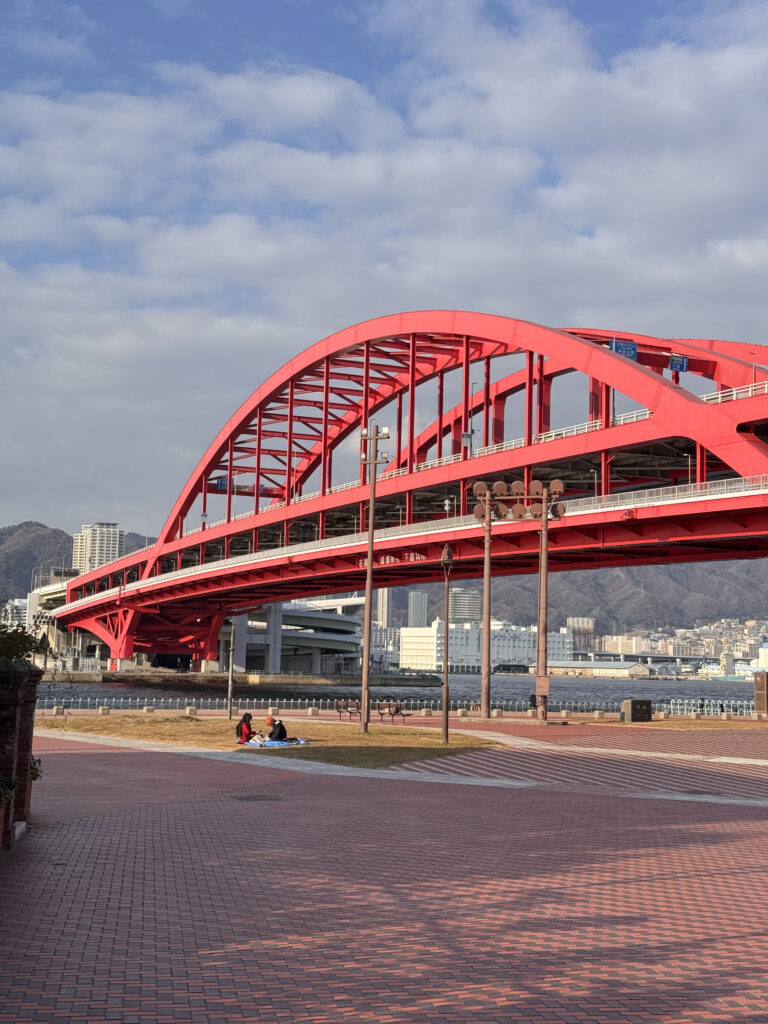
Does this brilliant red bridge (bottom right photo) look familiar to you? It connects Kobe’s man-made Port Island to the mainland. In Fate/stay night, it is called Fuyuki Bridge, whereas in real life it is known as Kobe Bridge. While unwinding in the park beside the double-deck arched steel bridge, I chanced upon cosplayers portraying the anime’s protagonists.
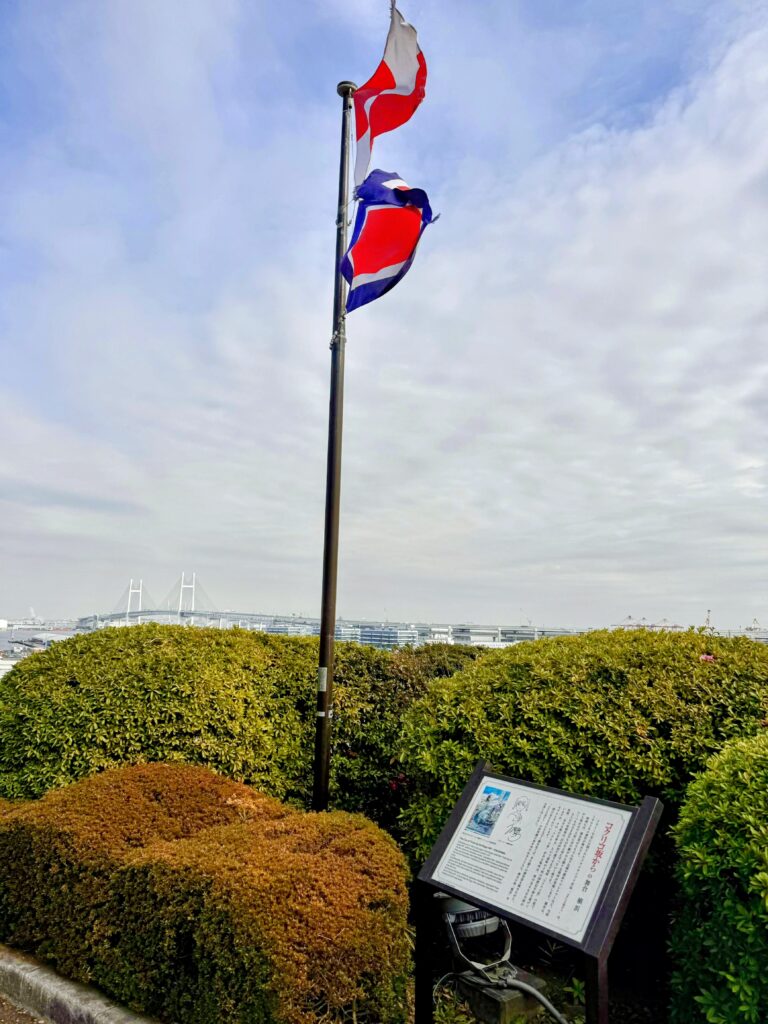
As I was strolling through Yokohama’s scenic hilltop park overlooking the waterfront, I stumbled upon these familiar maritime flags (bottom middle photo), along with a commemorative plaque describing the spot as one featured in From Up on Poppy Hill. In the Ghibli film, the flags were raised every day by the main character in memory of her late father, who died in the war.
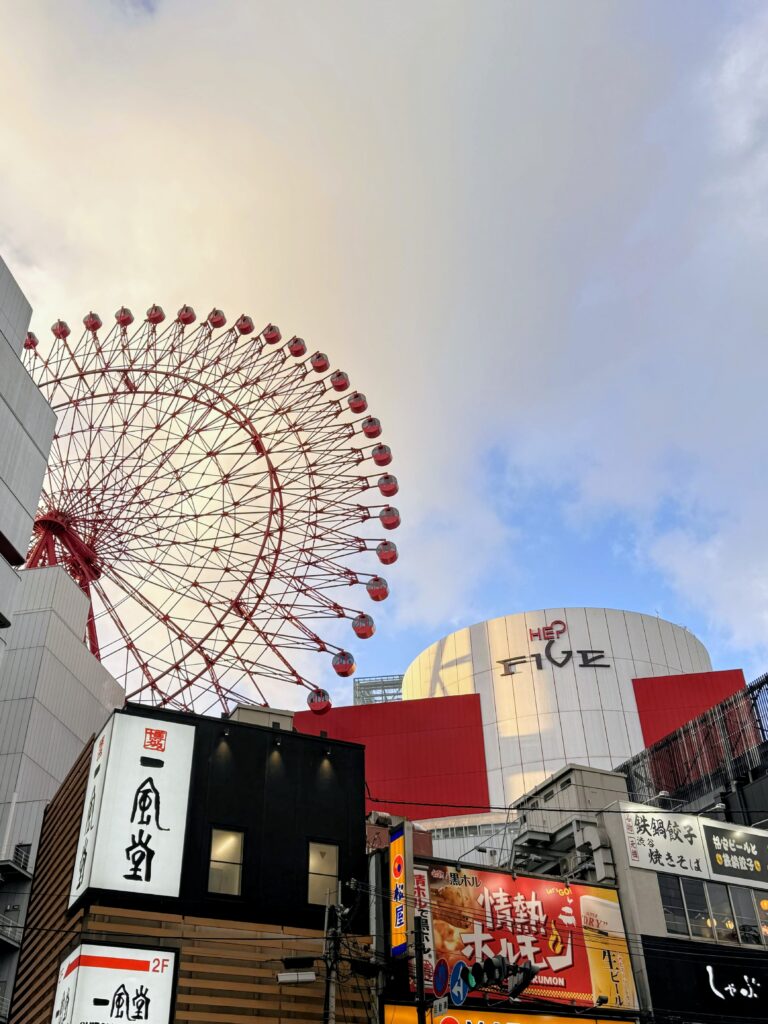
Osaka, one of the most visited cities in Japan, has a lot to offer. If you get the chance to visit this bustling city of warm and outgoing Kansai people, be sure to try the prominent red Ferris wheel (bottom left photo) on top of a skyscraper in the northern business district of Umeda. It is featured in the anime film Josee, the Tiger and the Fish. You will surely be captivated by the panoramic view of Osaka from the Ferris wheel.
Another major district in southern Osaka is Namba. Most visitors to the Kansai region have seen its iconic landmark in Dotonbori, the Glico Man Sign. Not far from it, however, is a huge shopping complex called Namba Parks, which features a stepped rooftop garden. Aside from the fact that it also appeared in a scene in Josee, the Tiger and the Fish, I love going there every now and then to unwind while gazing at Osaka’s cityscape from above.
All these fantastic places I visited made me feel as if I were part of the anime I enjoy watching—a great escape from reality, even if only for a while. Anime pilgrimage is certainly not limited to these locations. All over Japan, you can find places connected to your favorite anime and manga. Choose the ones associated with the stories you love and visit them. After all, it is your very own pilgrimage—a personal journey. Go and explore as you like.