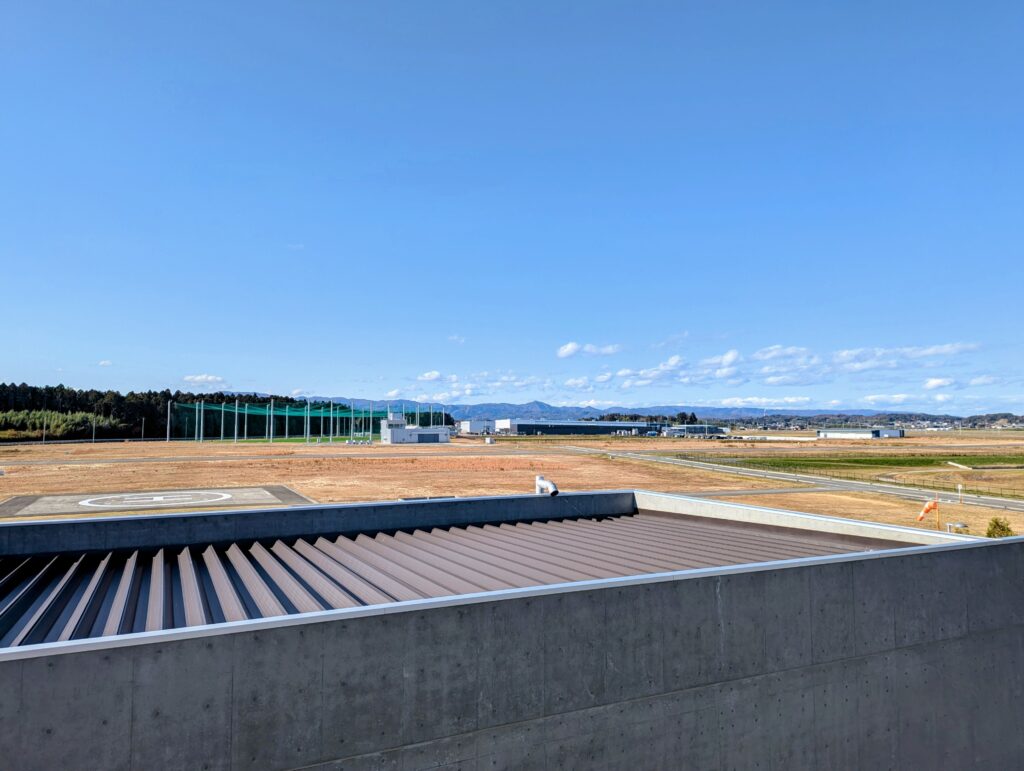
In late November, traveling north from teeming Tokyo where most trees had already gone bare, I arrived in Fukushima’s coastal Hamadori region to find autumn foliage still glowing bold and brilliant. It has been nearly 15 years since the Great East Japan Earthquake forever changed the course of the region’s history, and alongside ongoing efforts to recover what has been lost, a new movement is transforming Fukushima into an innovation hub.
During a press tour organized under the Fukushima Innovation Coast Framework national project, I had the opportunity to visit six cutting-edge companies invigorating the region through pioneering work in fields like decommissioning, robotics, energy, and agriculture. But what inspired me most, particularly through the stories of two companies, was their mission not only to revitalize the region, but also to help solve global challenges.
Zippar: Rethinking city transit from above
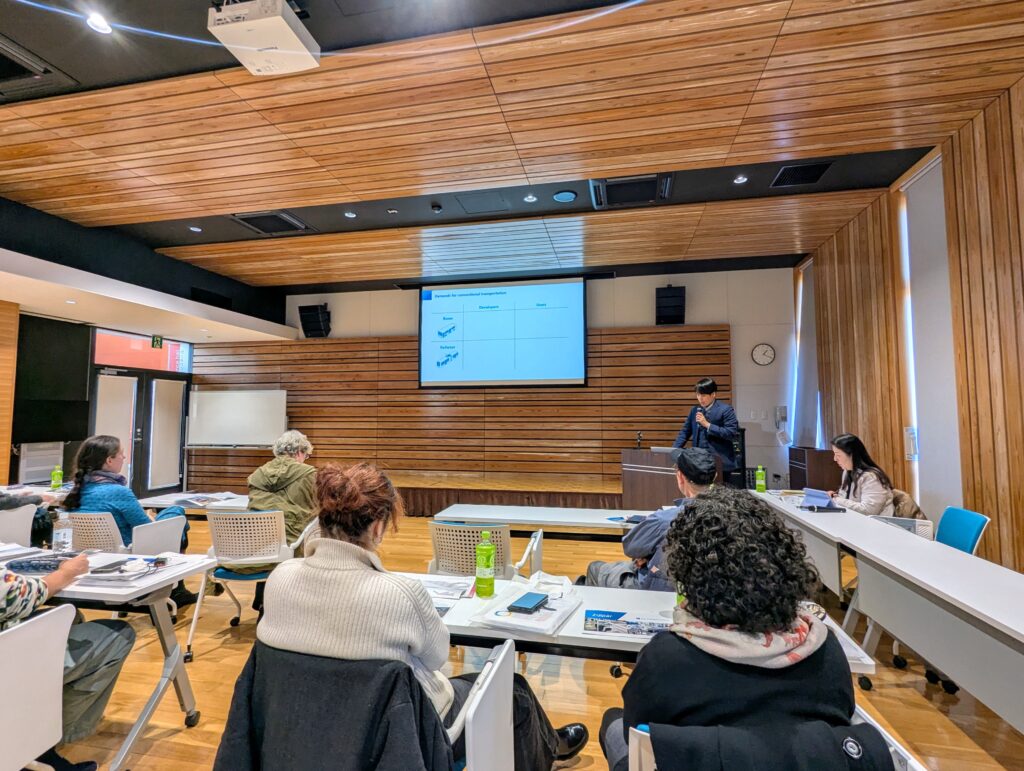
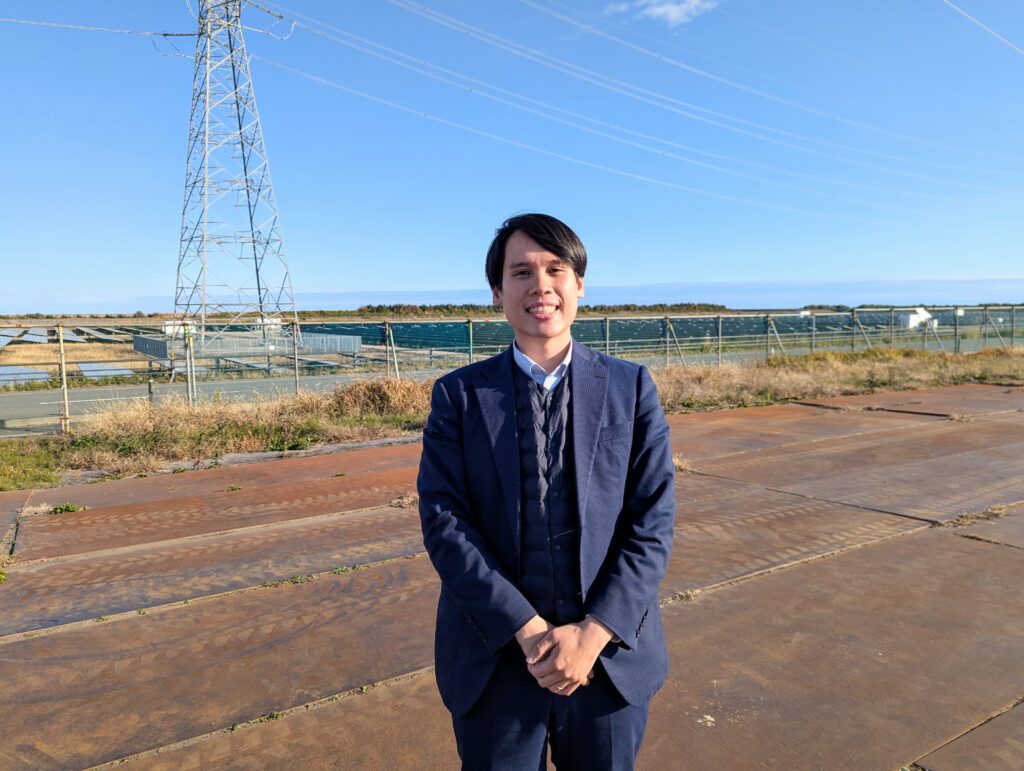
At the Fukushima Robot Test Field, inside a beautifully modern conference room with warm wood paneling, 15 of us journalists on the press tour sat down to hear from Mario Ian Carlos Ferido Rebonquin, Chief Operating Officer of Zip Infrastructure.
With poised confidence and a radiant smile, Mario began his presentation with a story. Born in the Philippines, he described how the country’s capital, Manila, is notorious for having some of the worst traffic congestion in the world. Despite the looming “carmageddon,” locals still opt for their cars because public transportation is unreliable, while lax traffic enforcement perpetuates a “free-for-all” driving culture that fuels chaos on already overcrowded streets. Recognizing that the root of the problem is entrenched in poor infrastructure, Mario’s eyes lit up as he smoothly segued into the company’s vision for Zippar, an innovative urban ropeway system.
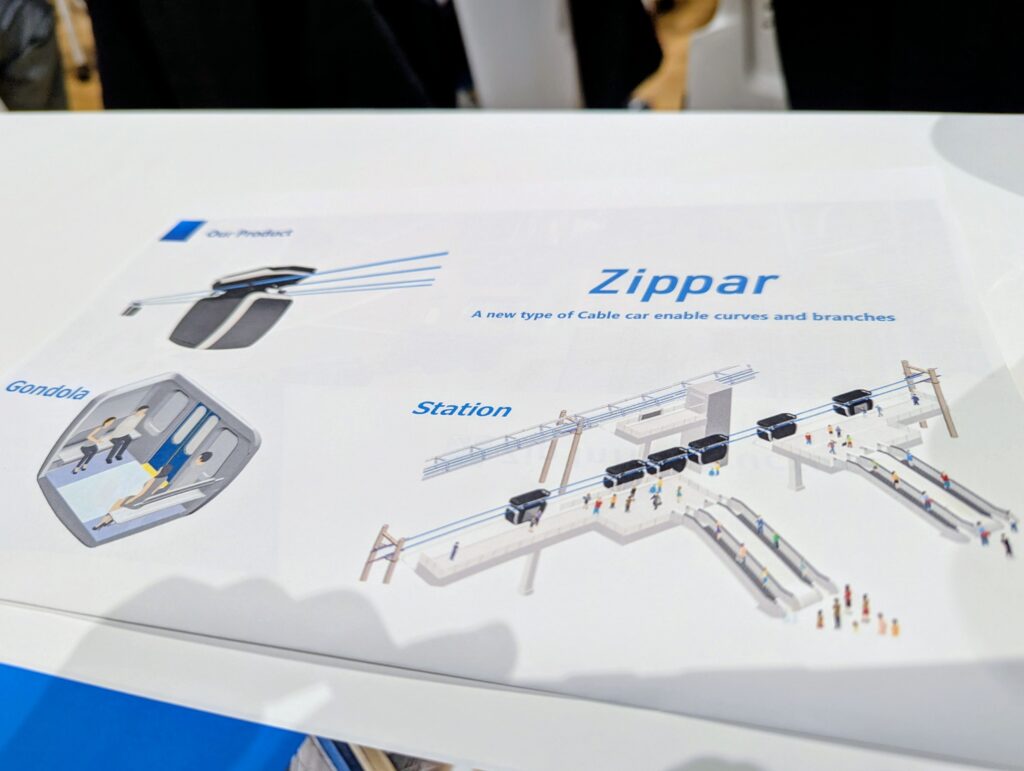
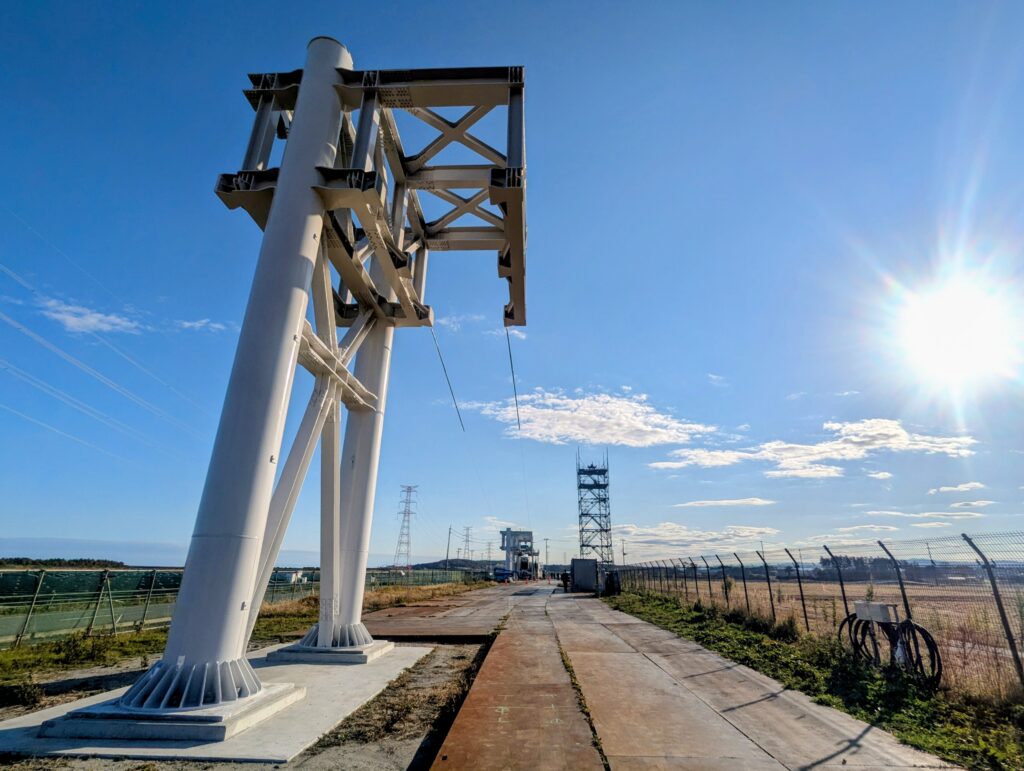
The concept is that Zippar, with its self-driving, electrically powered cabins, could be installed throughout cities along existing sidewalks and median strips, offering a convenient, low-cost, and space-efficient solution for city transportation. Unlike conventional ropeways, which typically move only in straight lines, Zippar uses a combination of cables and steel rails to enable navigation around turns and curves, allowing routes to be more easily adapted to different cityscapes.
Mario later showed us the 12-passenger Zippar prototype and test line on-site, and I remember feeling that this was one of those simple yet genius ideas that makes you think, “I wish I had thought of that!”
The only reference point I had for something similar to Zippar was Japan’s first urban ropeway, which has been futuristically hovering over central Yokohama (shoutout to my hometown!) since 2021. But the Yokohama Air Cabin primarily serves a touristy function, so it was exciting to imagine Zippar’s potential as a practical, real-world solution to a headache familiar to too many of us…being stuck in traffic!
Rice Resin: Fighting climate change with the power of rice
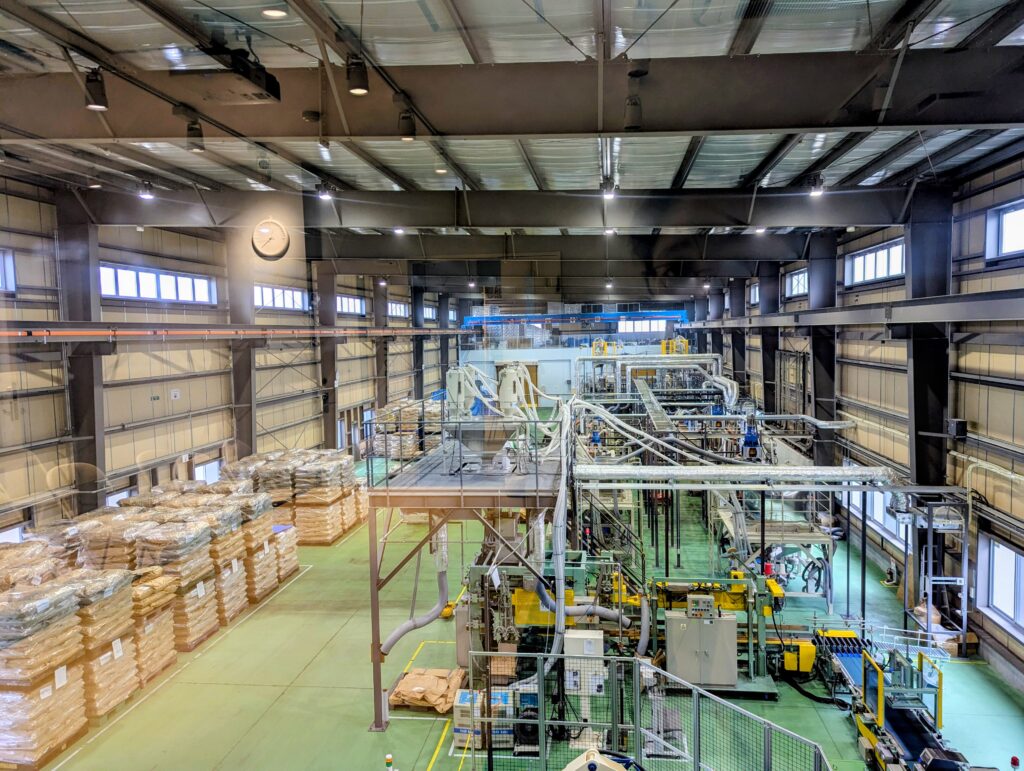
Mochi, senbei, porridge, sake, vinegar. We all know and love how rice can be transformed into so many different products. But what about…plastic? Just a 20-minute drive south from the Fukushima Robot Test Field, we arrived in Namie Town at the headquarters and factory of Rice Resin, where this impossible-sounding magic happens.
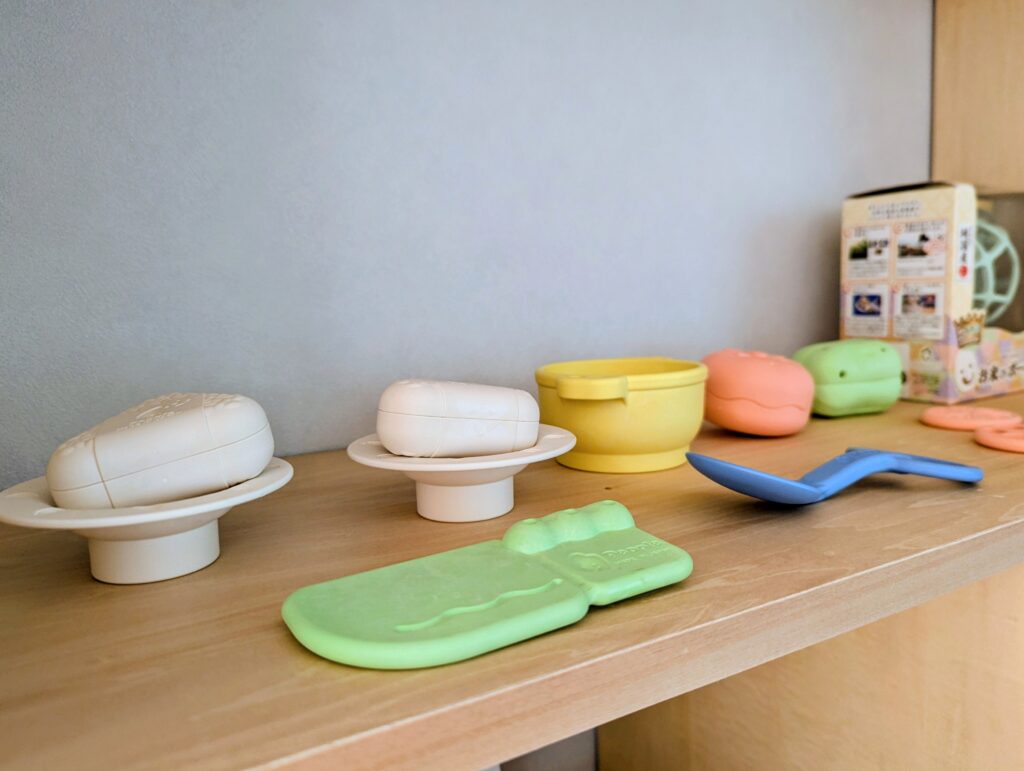
We stepped into a cozy meeting space where bold blues accented light-colored wooden furniture, giving me an impression of professional warmth infused with a sense of playfulness. This was definitely reinforced by the pastel-colored selection of children’s toys displayed on the shelves (I promise this will make sense later, please keep reading!).
Representative Shohei Iida felt like a lovely personification of the room’s warm energy as he welcomed us in with a big smile. Behind him, the first slide of his presentation was projected onto the screen, reading, “A future for all, reimagined with rice.” Color me intrigued.
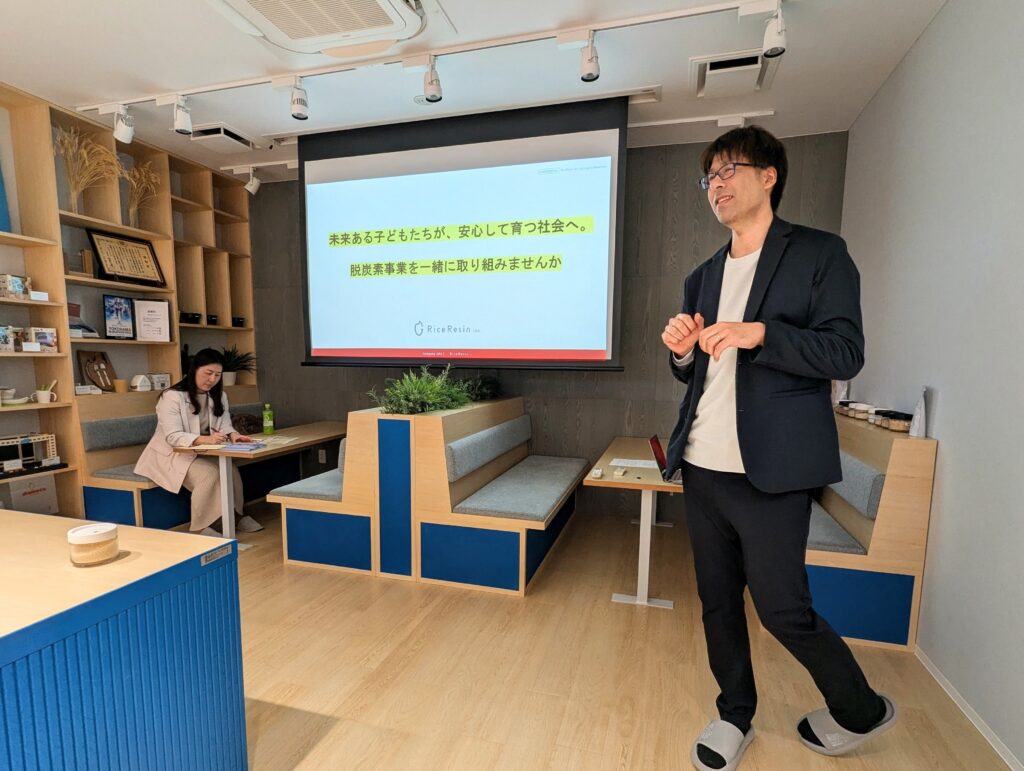
With the company’s story inextricably tied to the 2011 disaster, Shohei explained its lasting impact on the local Namie community. As of 2022, only about 10% of the original population had returned, and 80% of the farmland remained fallow. Shohei spoke tenderly and candidly about the stigma Fukushima continues to face: “I want to help dispel the preconceived narrative that is often cast over Fukushima, dismissing the region as harmful and unsafe. I want to spread the truth that there are meaningful, positive initiatives happening here.”
Rice Resin is undoubtedly one of those meaningful initiatives, tackling multiple environmental challenges, including plastic waste and carbon emissions, by upcycling old or damaged inedible rice that would otherwise be discarded. So far, the company has developed an array of products, from chopsticks to shopping bags and children’s toys (hence the selection!), composed of up to 70% rice. By significantly reducing the use of petroleum-based plastics, these products cut carbon emissions by as much as 57%.
At the end of his presentation, Shohei shared the company’s ambition to expand beyond Japan and help reduce emissions worldwide. “I think about how we can all work together to protect the futures of our children and ensure they can grow up in a safe environment and with hope.”

From Fukushima to the world
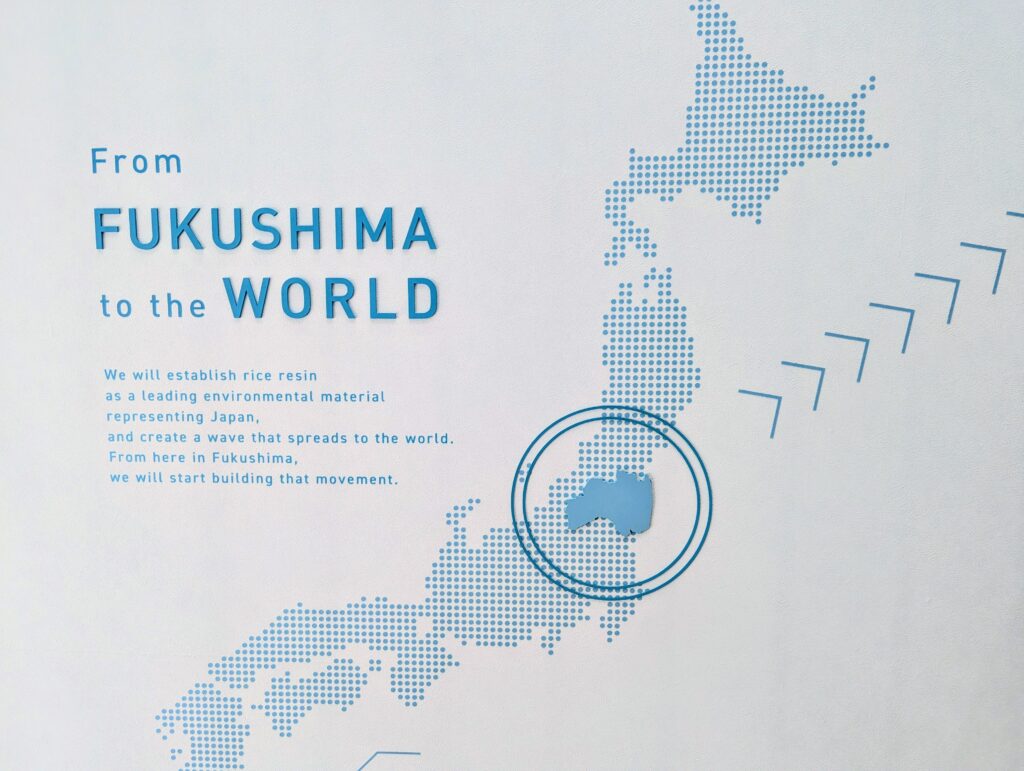
As I was leaving Rice Resin’s building, I noticed a display on the wall that read: “From Fukushima to the world. We will establish rice resin as a leading environmental material representing Japan, and create a wave that spreads to the world. From here in Fukushima, we will start building that movement.”
I thought back to what Shohei said about the lingering stigma and prejudice that Fukushima continues to grapple with both domestically and abroad. Despite this, without disdain or hesitation, he passionately shared how he hopes the company’s technology can extend far beyond Fukushima and make life better and safer for all people everywhere.
In a world that feels increasingly fragmented and out of touch, it was so nourishing to my mind and heart to be reminded that there are good people out there trying their absolute best, like Shohei, who still hold that kind of pureness in their eyes and an unwavering clarity to help others, simply because it’s the right thing to do.