Let’s face it, early spring is Japan’s peak tourist season for one reason, and one reason only: the cherry blossom. The iconic sakura, appearing like soft clouds painted pink in the early morning sunrise, has become one of the country’s true pride and joys. Tourists, both domestic and international, flock to cherry blossom hot spots across the country to take in their ephemeral beauty and capture the fleeting magic through photos and film.
This, however, has created somewhat of a bottleneck for travel within Japan. Tourists arrive en masse, hotels are fully booked well in advance, and transportation becomes jammed with travellers and their luggage as they move through the country. All in all, it’s just an extremely busy and expensive time. So, if you are determined to see the cherry blossom but would like to avoid Japan’s busiest season, then there is a perfect alternative.
Not all sakura are the same. There are many varieties across the country, with the most common being Somei Yoshino, Shidarezakura, and Yamazakura. These all tend to bloom from late March to early April. But the one we will be discussing today is Kawazuzakura, named after Kawazu Town in Shizuoka Prefecture, where the tree variety was first discovered.
The beauty of Kawazuzakura
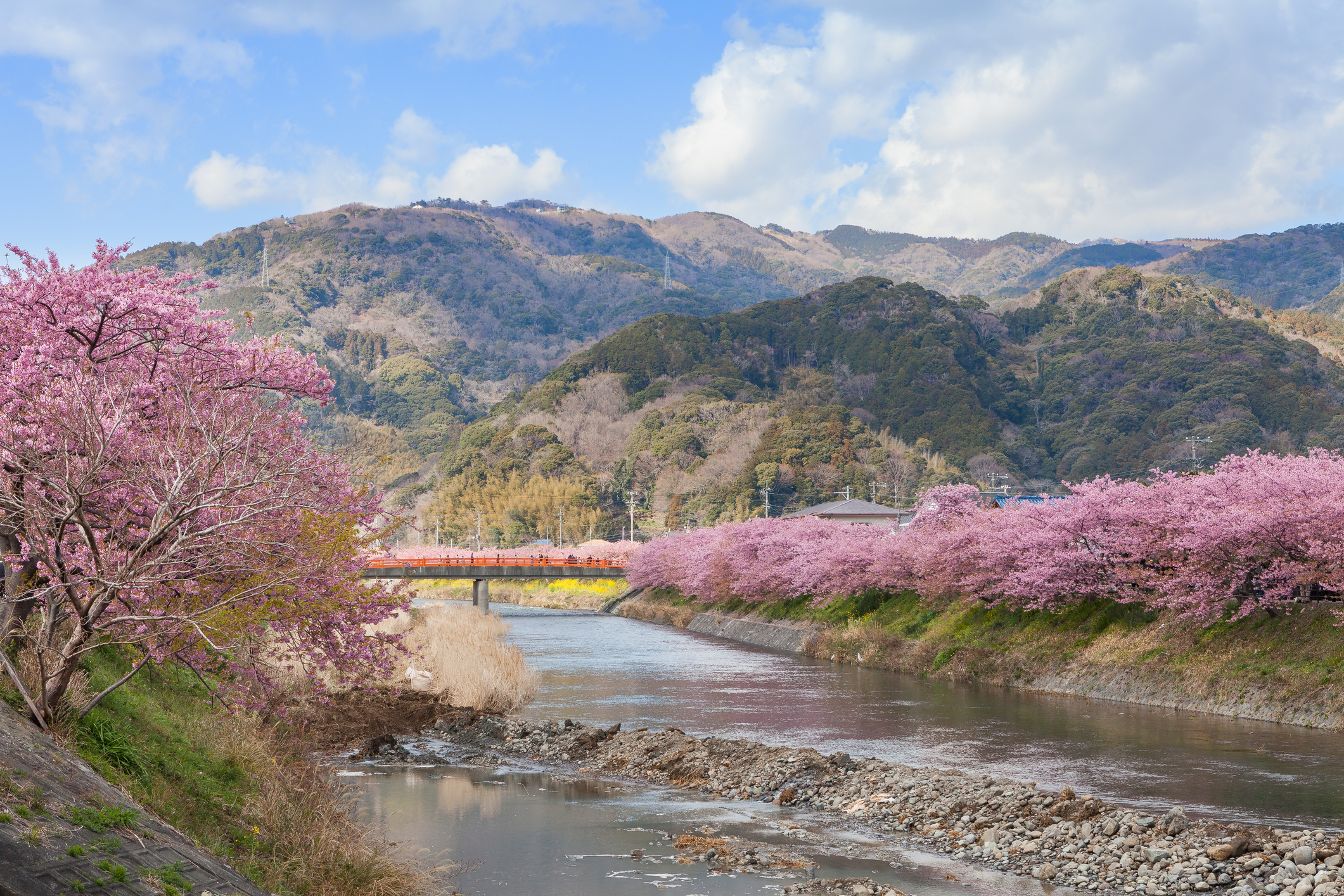
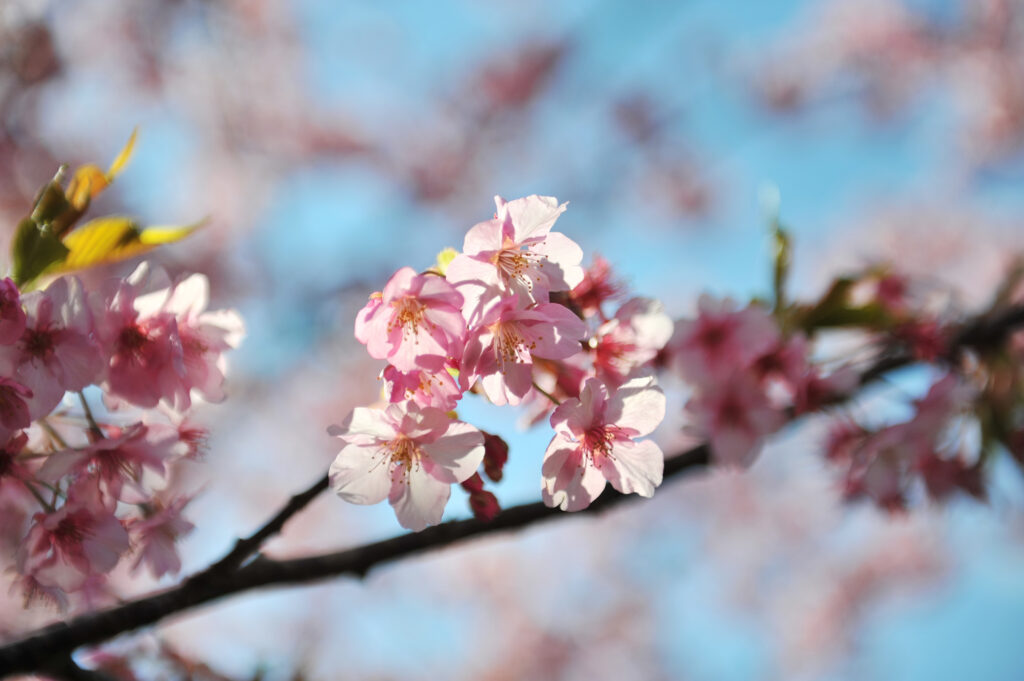
Kawazuzakura is one of the earliest-blooming cherry blossom varieties, reaching its peak from around late February to early March. Its color, too, is characteristic, pushing forth deeper, brighter pink petals than its later-blooming cousins. With trees lining both sides of the Kawazu River in close proximity stretching approximately four kilometers, the resulting spectacle is something to behold, especially when in full bloom.
The Kawazu River runs clear through a corridor of pink, the canopy above set against the (hopefully) blue sky. In the far background, as the eye is drawn toward the river’s vanishing point, mountains rise up. Every so often, the scene is punctuated by the classic red of a Japanese-style bridge.
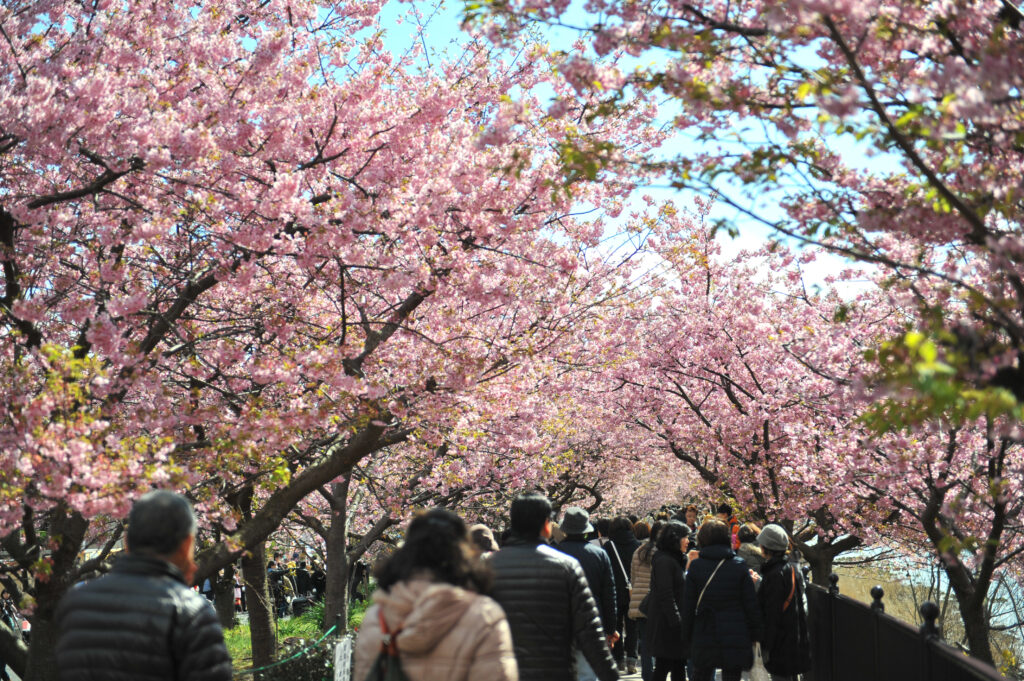
During peak bloom, the small, usually quiet town is filled with energy as it puts on its biggest event of the year, the Kawazu Cherry Blossom Festival. Though it still draws quite a crowd, the festival is much quieter than many of the cherry blossom festivals held in Tokyo or Kyoto later on in the year. Food stalls line the river, selling classic Japanese festival fare, along with pink taiyaki (fish-shaped pastries typically filled with custard, red bean paste, or chocolate) that match the hue of the blossoms above.
Riverside walkways mean you can stroll directly beneath the blossom-laden boughs, allowing sunlight to filter through the cotton-candy petals as you crane your neck upwards to gaze upon them. There are also spots where you can head down to the stony banks of the river to take in the cherry blossoms from a different perspective, or even sit down with your festival food for an impromptu picnic. You can also follow the river toward the sea, and take a stroll along the beach, breathing in the slightly salty air.
How to get to Kawazu Town
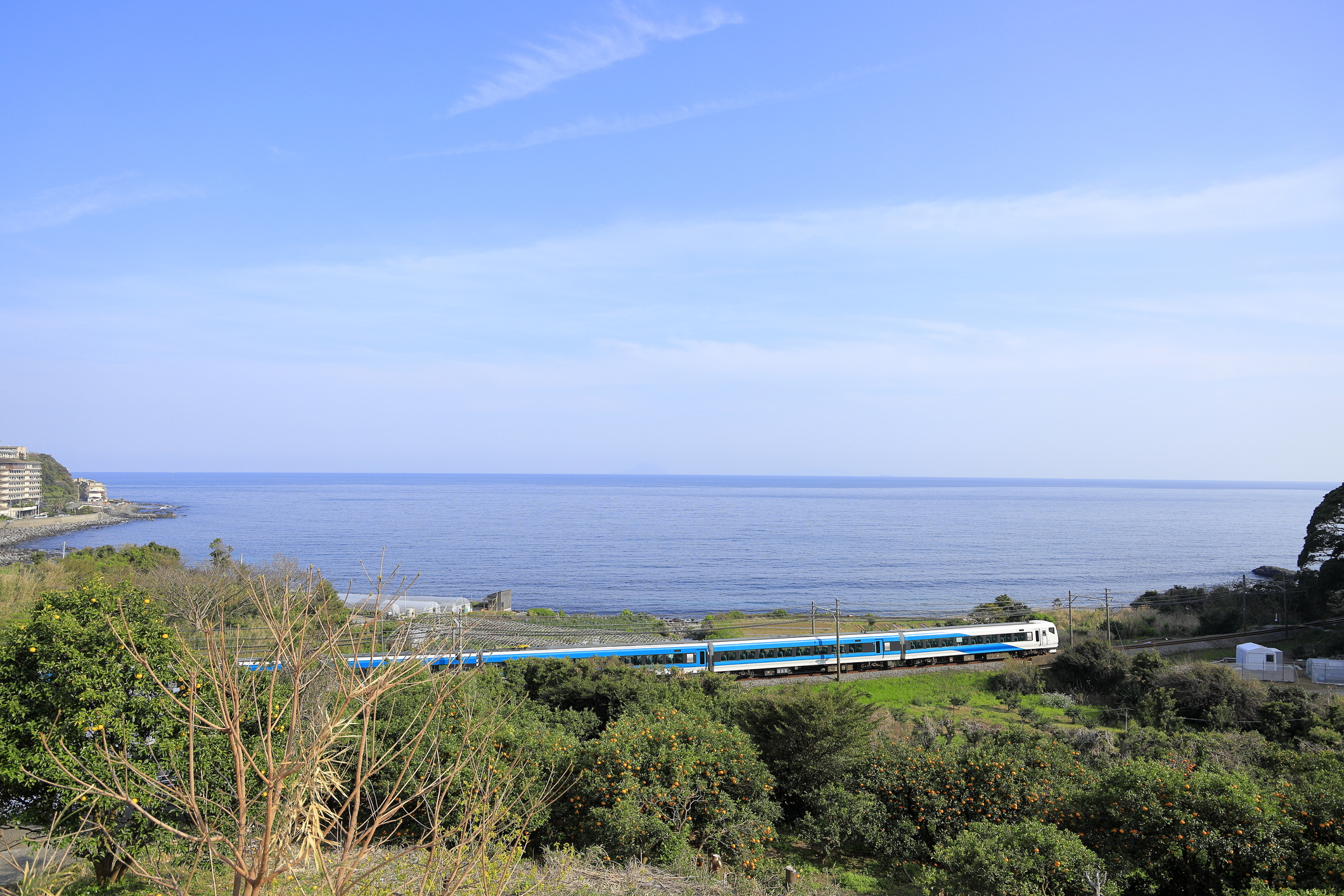
While not too far from Tokyo, it can take a little time to reach Kawazu. If you’re looking for the most stress-free way of travelling, there is the Saphir Odoriko limited express to Izukyu-Shimoda. This direct train departs from Tokyo Station and stops at Kawazu Station before continuing on to Shimoda (another great spot to visit).
This is a luxury train with comfortable seating and large windows that allow you to take in the magnificent coastal views along the way. This all comes with a price tag though, as a one-way ticket can cost over ¥10,000, and the journey takes roughly 2.5 hours.
A slightly cheaper option with a similar travel time is to hop on the Shinkansen from Tokyo Station and get off at Atami Station, where you would then transfer to the Ito Line, which stops at Kawazu Station. At approximately ¥6,000, it’s a much more reasonable price, and the Ito Line also features large windows so you can enjoy the views.
The cheapest option, for those looking to save money over time, is to take the Tokaido Line from Tokyo Station all the way to Atami Station before switching to the Ito Line. Seating on the Tokaido Line is similar to regular commuter trains, which means if it’s very busy, you aren’t guaranteed a seat. It is considerably cheaper at around ¥3,750, but the journey is much longer, taking close to 3.5 hours in total.
What else to do in the area
While heading to Kawazu from Tokyo for the day just to see the cherry blossoms is very doable, there are plenty of other sightseeing spots in the area if you decide to stay for a few days.
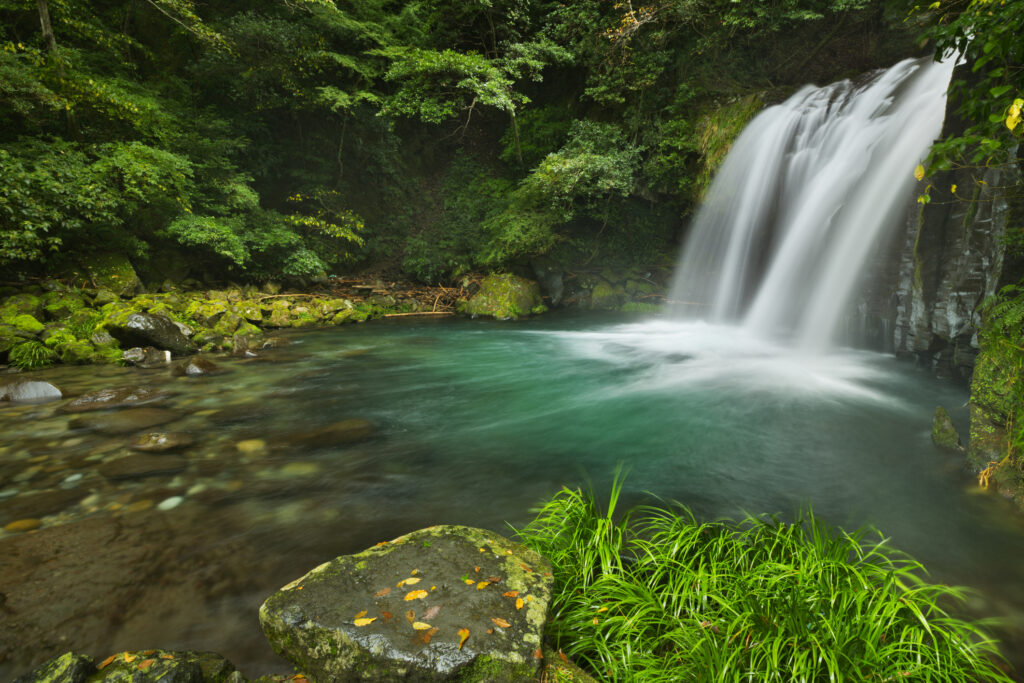
Very close to the town is another stunning natural attraction that invites you into the mountains: Kawazu Nanadaru, the town’s famous seven waterfalls. A scenic trail takes you past all seven, along mountain tracks, up viewing platforms, and across suspension bridges, all whilst hearing the roar of the water as it plummets from above.
If you’re looking for something a little quirky, stop by Higurashi, a traditional Japanese forest dwelling that serves seasonal meals, drinks, and sweets, and sells antiques such as sake cups and Japanese pottery.
For another fun day out, take the train a few more stops south to Shimoda, a historic seaside town where Commodore Matthew C. Perry’s Black Ships arrived in 1854, ending more than 200 years of Japan’s self-imposed isolation. The town later became home to the first American consulate in Japan, where Townsend Harris, the first U.S. diplomatic representative to Japan, negotiated the Treaty of Amity and Commerce in 1858. This treaty opened five key ports to U.S. trade and marked the formal beginning of Western influence in Japan.
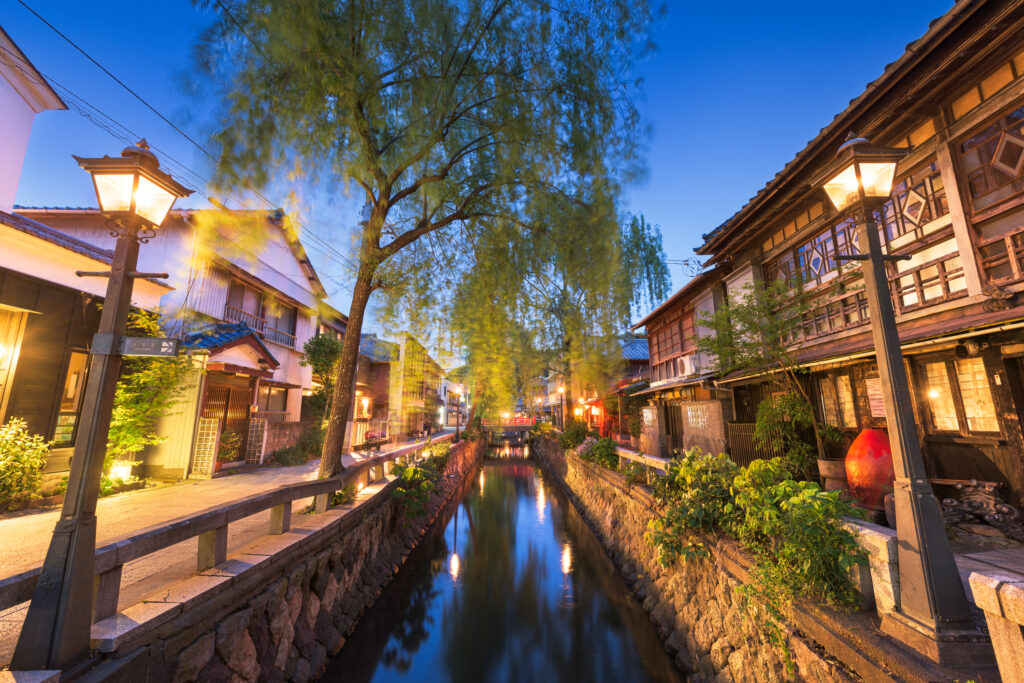
Beyond its history, Shimoda also has an extremely charming spot known as Perry Road, where cafes, restaurants, and antique shops housed in traditional Japanese buildings line a quiet canal bordered by weeping willows.