
Built in 1889, Kabukiza is perhaps the most iconic venue to catch a performance of Kabuki, one of Japan’s three traditional theatrical art forms. Here’s what you can expect when going to see Kabuki.
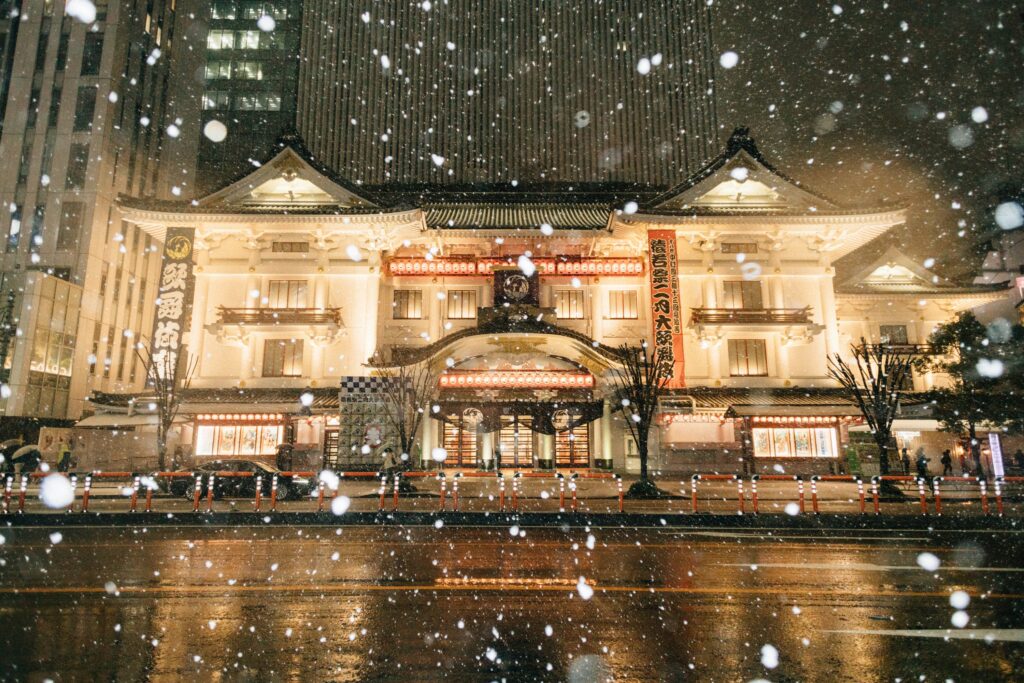
What is Kabuki, anyway?
First developed around the early 1600s, Kabuki is a traditional form of Japanese theater known for its dramatic acting, elaborate costumes, striking makeup, stylized movements, and expressive storytelling. The stories presented on stage can range from historical dramas to romantic tragedies and legends.
In Kabuki, all roles are portrayed by male actors, even the female characters. In the art form’s early days, a government edict prohibited women from participating — an effort to control public morality — and the rest is history.
Some of the most famous Kabuki plays include the story of the 47 ronin, a supernatural version of warrior Minamoto no Yoshitsune’s (doomed) flight from his brother, and a political drama depitcting the former court in Kyoto.
My experience at Kabukiza
During my recent visit, I sat along the hanamichi, the walkway for dramatic entrances. In my opinion, it’s one of the best seating options since it brings you close to the action.
The stunning costumes, drama, music, and dance transcend any language barrier, making it a memorable experience for everyone. Besides, even as a fluent Japanese speaker, I found it challenging to understand the dialogue due to the old style of speaking!
After the show, don’t miss the souvenir shops and restaurants on-site. I picked up a gold omamori (Japanese amulet) in the shape of a kanazuchi hammer, said to bring good luck — a perfect keepsake to remember this beautiful experience.
FAQ
- What is Kabuki?
-
Kabuki is a traditional form of Japanese theater, famous for dramatic acting, elaborate costumes, and an all-male cast.
- Is Kabuki accessible for tourists?
-
Yes, though the experience may be more meaningful if you do a little prep work in advance. While some theaters offer English audio guides, subtitles on a rental device, or other materials to explain the story, reading an overview of the plot — and perhaps even the story’s historical background — can help you understand and appreciate the action on stage.
- How long is a Kabuki performance?
-
A full program can last several hours, often with multiple acts and intermissions. Shorter, single-act performances are sometimes available too.
- How much do tickets to a Kabuki show typically cost?
-
Single-act shows can be as inexpensive as 1,500–4,000 yen for cheaper seats, while great seats at a full performance can cost roughly 15,000–20,000 yen.