
There is something special about a knife that comes from an authentic workshop in Japan. I still feel the difference every time I pick one up. The balance, the sound it makes when it touches the board, the clean slice that almost feels effortless, everything is just perfect. It is hard to describe, but once you use one, you understand it immediately.
Today, I want to take you into that world of craftsmanship. It is the world that shaped the vision behind how our team creates authentic Japanese knives at Kazoku and the way we work today.
My inspiration for authentic Japanese knives
I grew up around cooking and sharpening tools, and over the years, I became more curious about how they were actually made. That curiosity turned into passion, and later into Kazoku. Today, I spend a lot of time in Japan, visiting blacksmiths in places like Seki, Sanjo, and different rural areas. Not as a tourist, but as someone who wants to learn. Many of the blacksmiths I work with teach me something new every time. Those lessons find their way into the knives we create.
Why do our Japanese knives feel different?
When I first used a real Japanese knife, it changed everything. The thinness, the light weight, the control. It was completely different from the heavier Western knives I was familiar with. Japanese knives slice instead of pushing. They stay calm in the hand and move through food without crushing it.
That feeling is what I try to bring into every Kazoku knife. It starts with the steel, and I choose ones like VG10, AUS10, and Ginsan because they offer a balance that home cooks and chefs appreciate. They remain sharp for a long time, are easy to maintain, and are predictable when sharpening. I have never liked the marketing scheme that claims the “sharpest knife ever.” Instead, I prefer a knife that feels comfortable, that stays reliable, and that people enjoy using every day.
How are our blades forged?
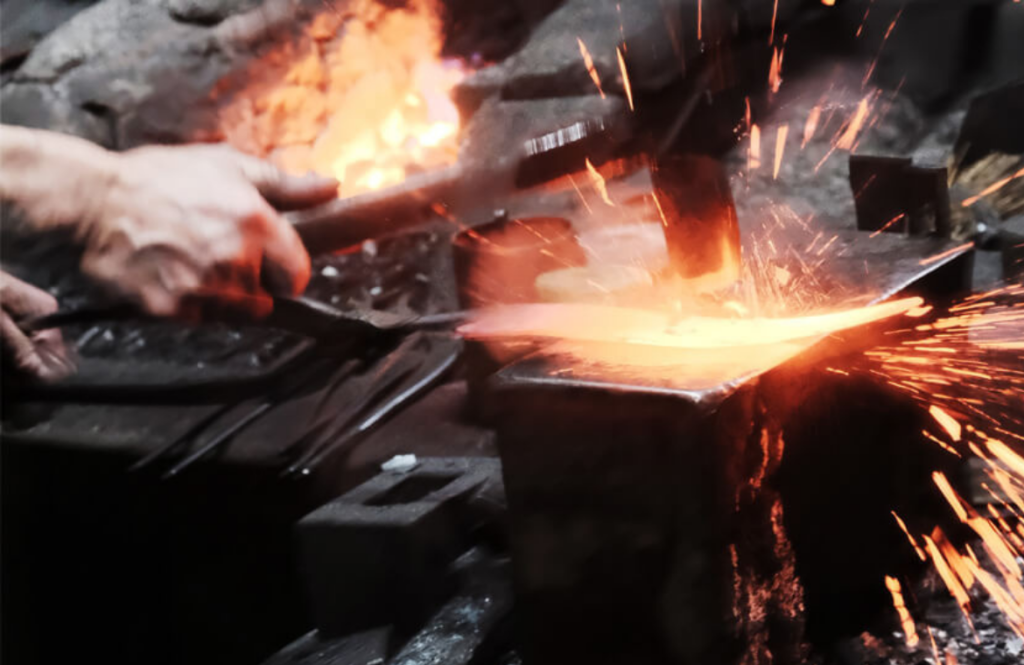
Many of the blacksmiths I work with have small workshops. Warm to the core with tools, dust, and a rhythm of hammering that never gets old. The process typically begins with a cold piece of steel that doesn’t resemble a knife at all. The blacksmith heats it until it is burning red-hot, and then hammers it again and again as the shape slowly comes into being.
They always tell me the same thing: if the forging and sharpening are not done well, nothing later can fix the build. Some can even hear the heat in the steel from the sound of their hammer. I love watching this stage because it shows how much of the craft depends on the blacksmith’s intuition, not only their skill.
The importance of heat treatment
Heat treatment is the heart of the knife. It is where the steel becomes strong but not brittle, flexible but not soft. Every maker has their own approach. One blacksmith in Seki once said to me that heat treatment is like cooking rice. Anyone can do it, but only a few do it perfectly.
They heat the steel, cool it suddenly, then warm it again gently. All by feeling. Some judge the color of the steel. Others trust the vibration in their tools. I choose makers who obsess over this part because it makes the biggest difference in how the knife performs and how long it lasts.
Shaping the knife’s edge
After heat treatment, the blade goes to another specialist for further shaping. In Japan, it is common for grinding and polishing to be done by different workers. The grinder shapes the final geometry by hand on large spinning wheels. This is where the slicing power is created. A thin, even shape that moves smoothly through food.
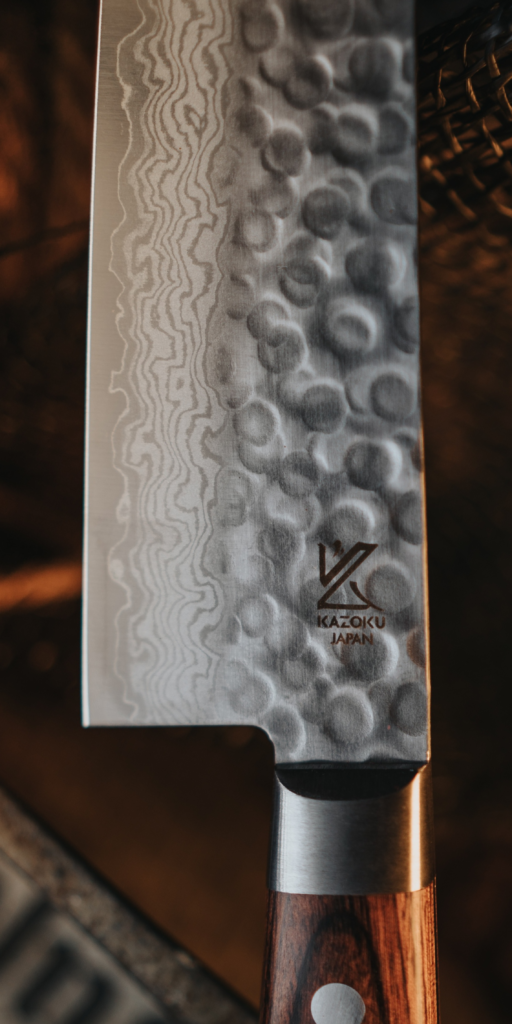
Watching grinders work taught me how much patience this part requires. They guide the blade across the wheel with a steady hand. One mistake and the blade is ruined. Textures like nashiji (“pear-skin finish”) or hammered patterns are added here as well. These textured knives look beautiful, but they also help food release more easily. That balance between looks and function is something I always keep in mind.
Choosing the right handle
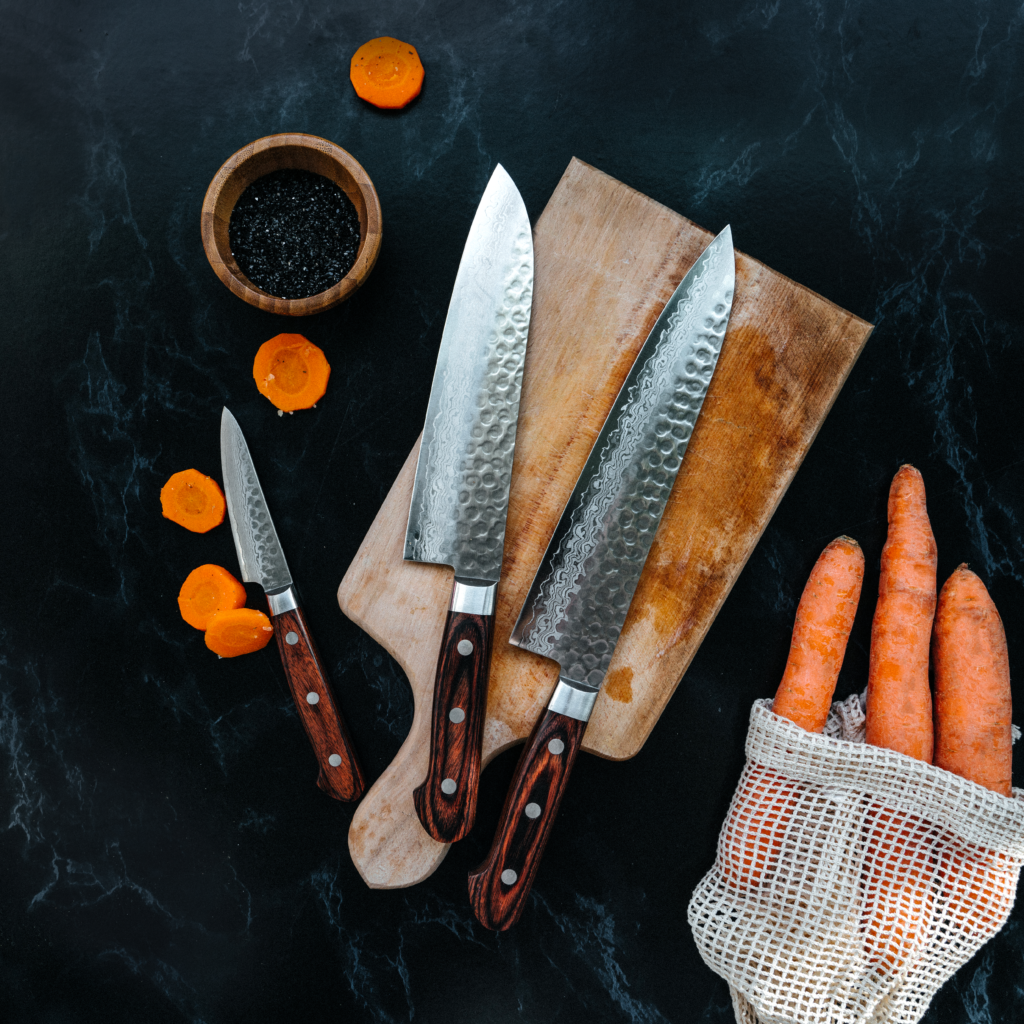
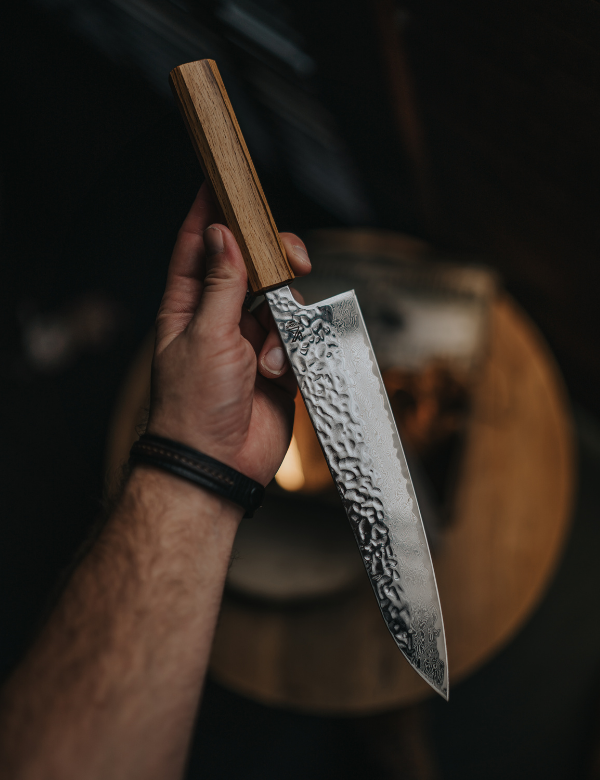
A knife becomes personal when the handle feels comfortable. That is why I pay a lot of attention to this part. Some of my knives use Western handles in pakkawood. Others use Japanese handles in magnolia, walnut, hinoki (cypress), or ebony. Every handle maker has their own style. Some prefer the clean look of natural wood. Others specialise in stable engineered woods.
What’s most important is balance. A knife should feel balanced, not front or back heavy. When I design a knife, I think about how people are going to hold it, what they are going to cut with it, and how long they will use it.
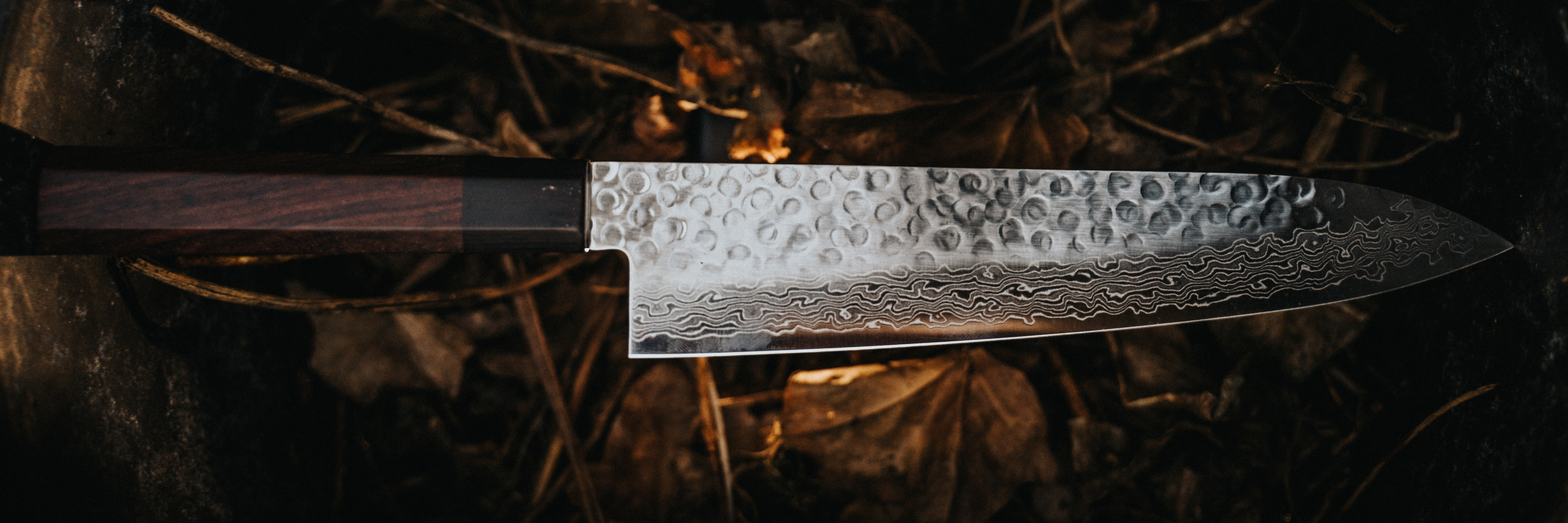
Selecting the right edge for every knife we make
There are many Japanese knives on the market, so I never pretend to reinvent anything. But I concentrate on getting the fundamentals right: clean grinds, good steel, comfortable handles, and a (relatively) fair price. And most of all, I want users to know where the knives come from and who has worked on them. A lot of brands conceal their creators; I prefer to honor them.
Through testing, cooking, and talking with chefs, I often make small adjustments to my designs. A bit more height. A softer curve. A different balance point. These details make a knife more enjoyable to use day after day.
Why do people love our knives?
People choose Kazoku Prestige knives because they offer real Japanese craftsmanship without being unreachable. They are made with care, tested with passion, and created with honesty. They are tools that make cooking more enjoyable. That is all I ever wanted to create.