
Drawn to Japan’s “way of the warrior” through film
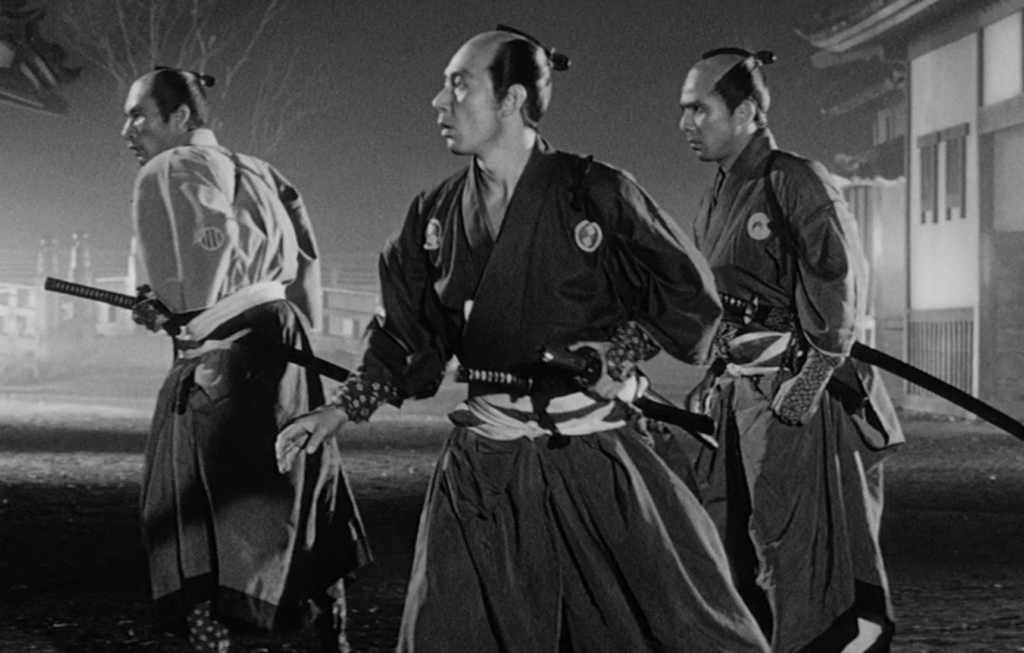
When I was about seven years of age, my father practiced karate. So, I grew up practicing karate and hearing phrases like ‘samurai spirit’ and ‘Bushido’ (the way of the warrior). As I got older, I was encouraged to watch samurai movies directed by Akira Kurosawa and saw the heroic-looking samurai warriors depicted in his movies with their magnificent armor and cool swords strapped to their hips. I was captivated.
Another movie about Japan that was directed by American director Sidney Pollack featured Hollywood legend Robert Mitchum and a Japanese actor called Ken Takakura. The movie was called The Yakuza (1975) and was a homage to the popular Ninkyo Eiga of Japan’s Showa period (1926 – 1989), of which Ken Takakura was a huge star. The movie explored the common ground between Japan and the West, with the main theme being duty and obligation.
From security guard to Japanese sword specialist
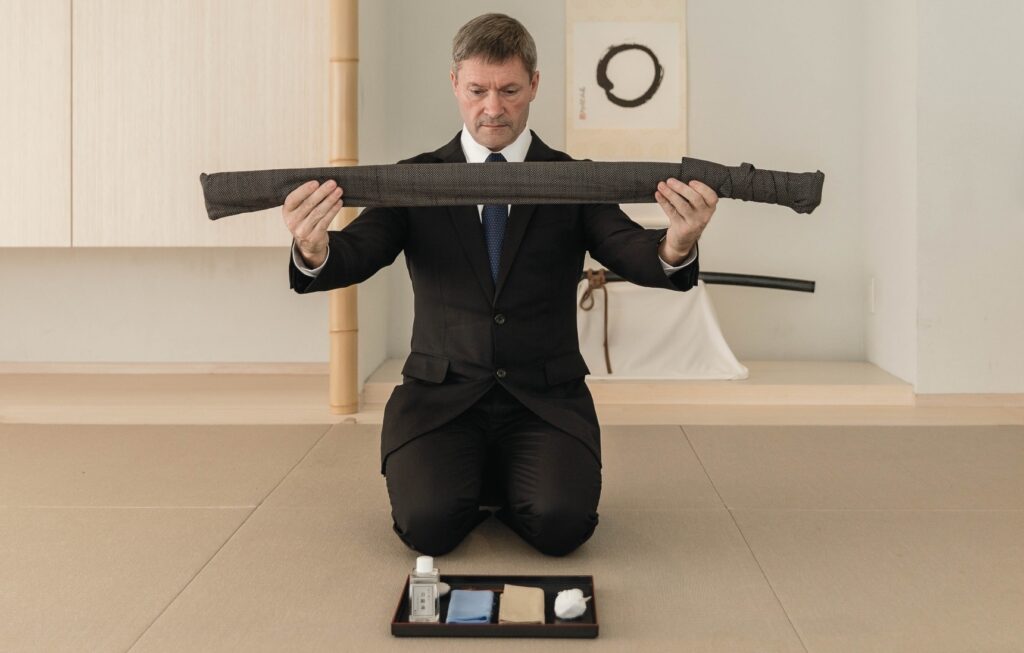
Years later, by chance, I began working as a security guard at the British Museum in London. Within a week of starting there, I wandered into the Japanese gallery, where a number of Japanese swords were lined up on display. I had seen them in books and in movies, but it was the first time that I had ever seen them up close. They were unbelievably beautiful. Additionally, they had very informative explanations of their historical, spiritual, and artistic importance. I had known that Japanese swords were special, but this was the confirmation I had been searching for.
During my excitement at seeing actual swords for the first time, one of the gallery warders said to me, “The man in charge of the Japanese Department is a Japanese sword specialist.” This revelation blew my mind. “You can do that as your job?” At that very moment, my worldview increased exponentially. I suddenly had a dream.
I spent the next five years buying books (starting with ones written by the head of the Japanese department, Victor Harris) and attending meetings of the Japanese Sword Appreciation Society in London (The Token Society of Great Britain). Then, in 1997, to my great surprise, someone in the Japanese department quit. It was my great chance. Following several incidents of divine intervention, I managed to obtain the position. Victor Harris became my line manager and mentor. My journey had officially begun. In my new position as a representative of the department, I was also finally able to travel to Japan, couriering objects from our collection.
On these trips, my colleagues in Japan would show me top-quality swords, including National Treasures, and introduced me to various craftsmen. During these trips, my vision of what I needed to do became clearer, as I realized that if I really wanted to become a Japanese sword specialist, I would have to follow in the footsteps of my mentor and move to Japan to study Japanese swords in all their aspects. In 2004, I moved to Japan.
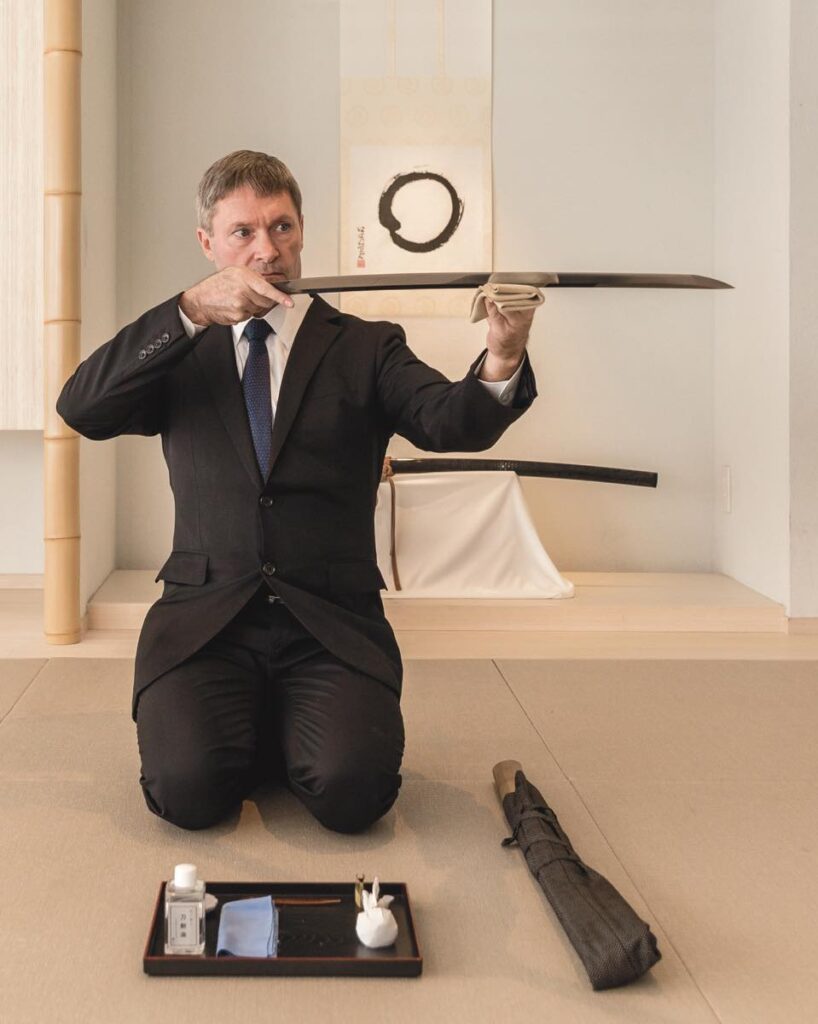
Since moving here, I have become completely immersed in all aspects of Japanese swords, from their manufacture to their appreciation as objects of art and appraisal, and from their use in martial arts to their use in traditional dance and religious ceremonies (of which there are many). What started out to me as an ultracool weapon strapped to the hips of samurai became an object of fascination and wonder due to their diversity and complexity. Japanese swords have a multitude of meanings and roles in Japanese history and society.
The spiritual roots of Japanese swords are connected with the mythical origins and spiritual protection of Japan. So much so that the mythology and real history have become inextricable. They are part of the fabric of Japan to such a degree that many average Japanese people today cannot see the wood for the trees.
More than a weapon: A spiritual vessel
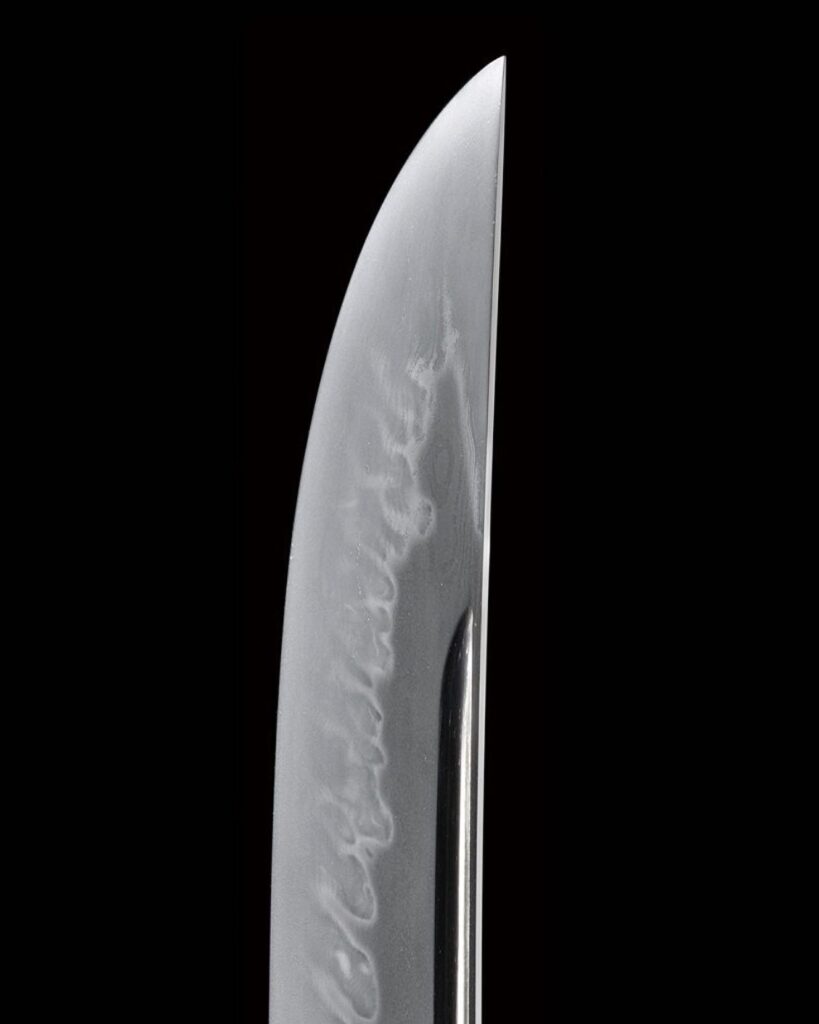
Japanese swords are imbued with the gods of Japan. In the case of swords being given as a votive offering to a shrine, they can even become a vessel in which the gods of Japan reside, therefore turning the sword into a manifestation of the deity themselves. The art of Japanese swords is split between the external, man-made arts of the mountings, which can reflect wabi-sabi (nostalgic, rustic simplicity), seasons, animal zodiac, historical events, and the general aesthetic sensibilities of the wearer. The internal art of the blade itself is somewhat abstract and can reflect natural phenomena and elements of the universe through the patterns of the folded steel and the crystalline structure of its differentially hardened edge.
It is said that a good Japanese sword should not bend or break and should cut well, but this is the same objective of bladesmiths all around the world. However, the Japanese sword is not merely a weapon. Conversely, it is not merely art or a spiritual artefact. It is the sum of all its parts and roles. It has an ability to move the hearts and minds of even those who have only the smallest degree of knowledge of Japanese swords. This is the reason they have become a symbol of Japan and are known throughout the world today.