
Each spring in Japan, the arrival of sakura, or cherry blossoms, transforms the landscape into a fleeting dream of pale pink petals and quiet anticipation. From Tokyo’s riversides to mountain temples and countryside parks, people gather beneath blooming trees to celebrate hanami, the centuries-old tradition of enjoying cherry blossoms with food, tea, and conversation. For a brief moment each year, everyday life slows down, inviting reflection on the beauty and impermanence that the blossoms symbolize.
Seasonal sweets play an essential role in this ritual. Delicate wagashi tinted with shades of pink, sakura-infused teas, and subtly flavored rice crackers appear in confectionery shops across the country, each one designed to echo the atmosphere of spring.
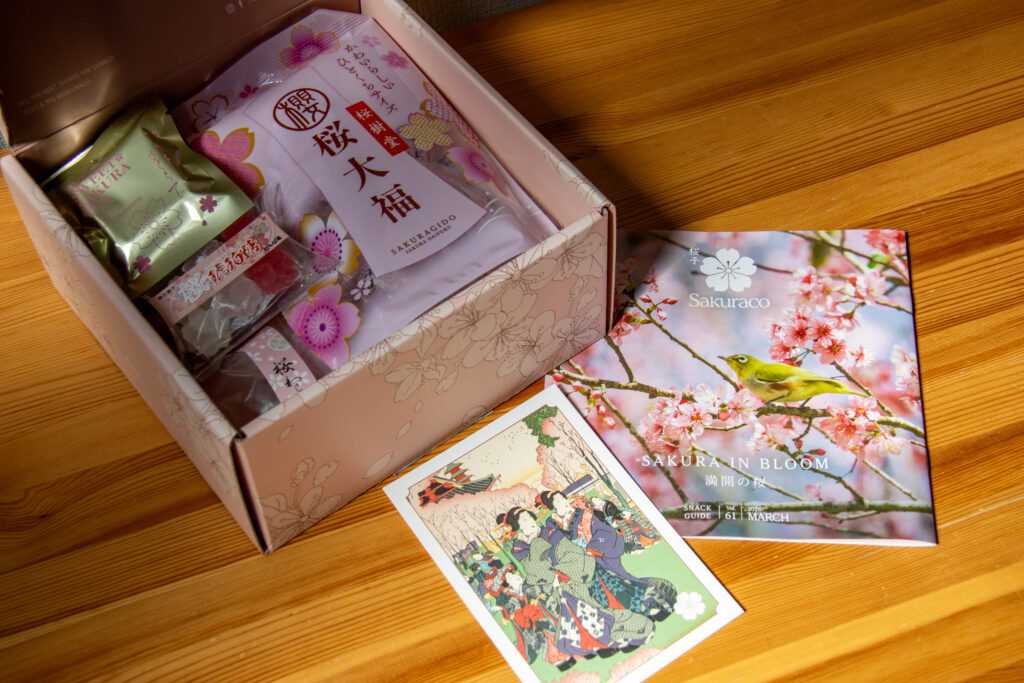
The Sakuraco Box seeks to capture this spirit of seasonal celebration. Curated with traditional snacks and artisanal sweets from different regions of Japan, the box invites its recipients to experience hanami through taste, even if they are thousands of kilometers away from the nearest cherry tree. Inside are carefully selected confections accompanied by tea and even a handcrafted ceramic plate.
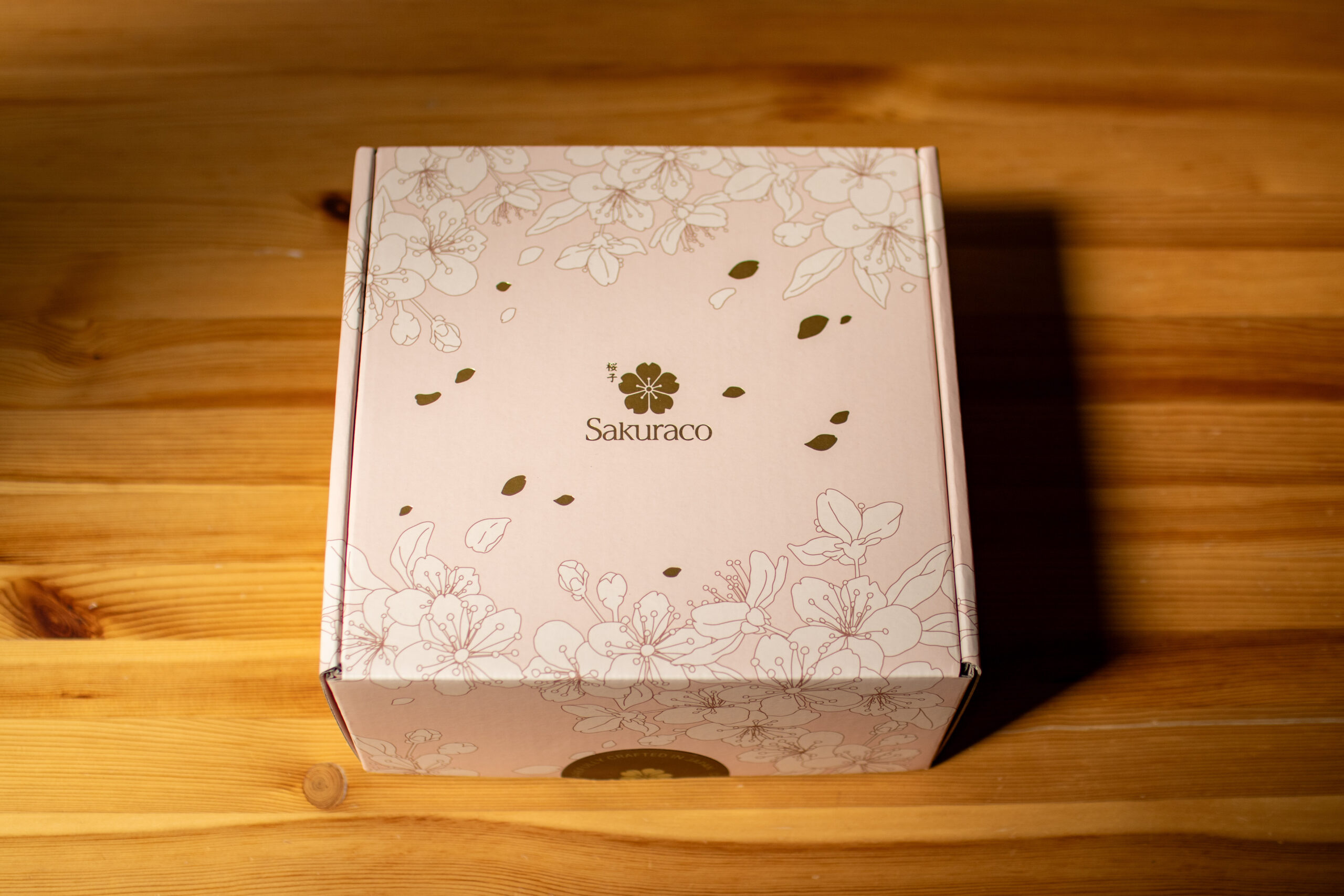
The spirit of sakura season
The practice of hanami dates back to the Heian Period (794 – 1185), when members of the imperial court gathered beneath flowering trees to compose poetry, listen to music, and enjoy seasonal food and sake. Over time, this refined pastime gradually spread beyond aristocratic circles and became a cherished seasonal ritual shared by people throughout Japan. Today, parks and gardens across the country fill with small groups enjoying bento lunches, sweets, and tea under the blossoms, celebrating the fleeting beauty of spring.
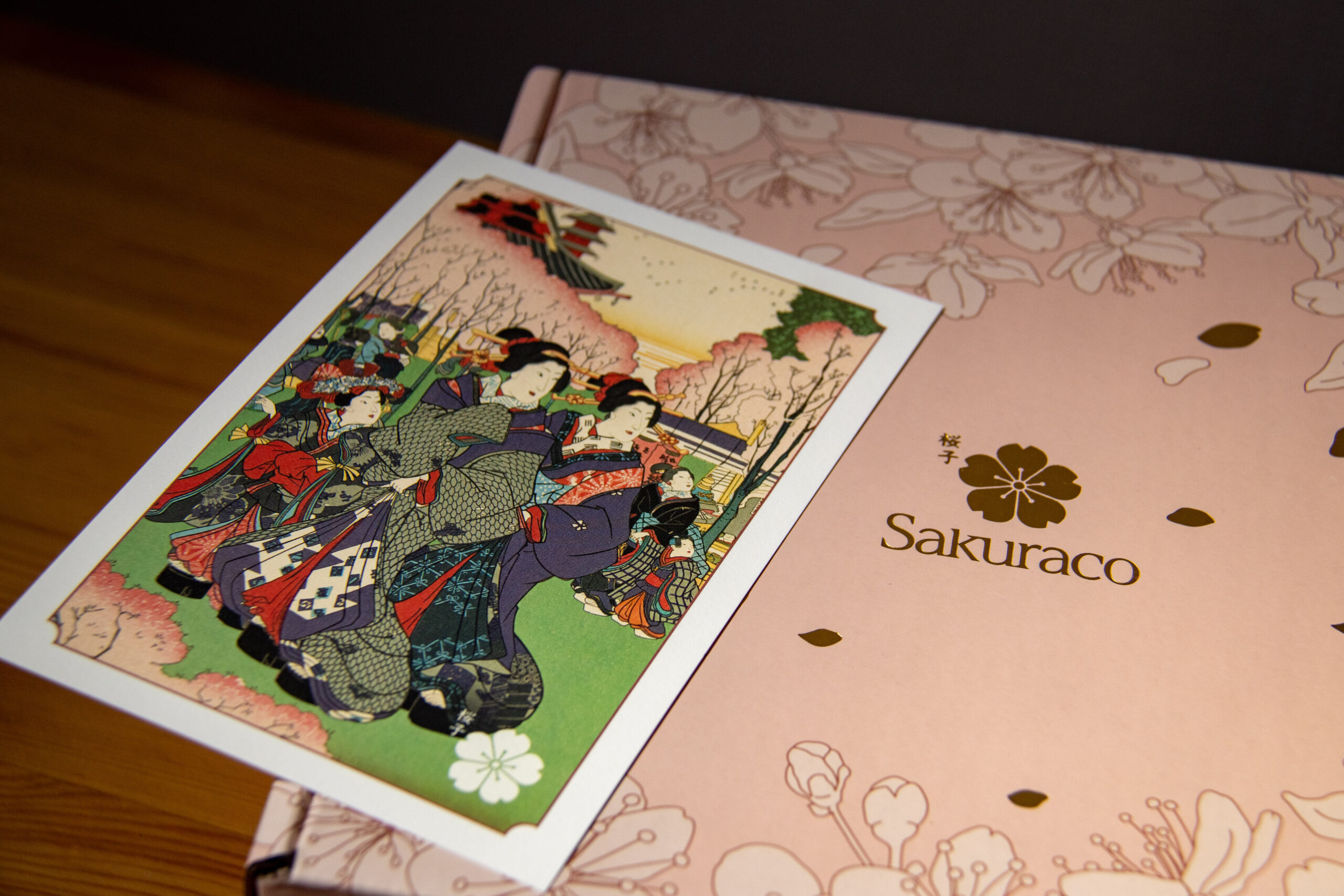
It is precisely this spirit that the Sakuraco snack subscription box seeks to capture. Each month, the service curates a selection of traditional Japanese snacks, teas, and artisanal products from small regional producers. Sakuraco highlights the craftsmanship of long-established confectioners and the seasonal ingredients that shape Japan’s culinary traditions. This month’s box, themed around the arrival of cherry blossom season, offers a delicate assortment of sweets and snacks inspired by sakura. Opening the box feels a little like stepping into a hanami picnic, where each treat evokes the colors, aromas, and subtle flavors of Japan’s most beloved season.
A journey through sakura-inspired flavors
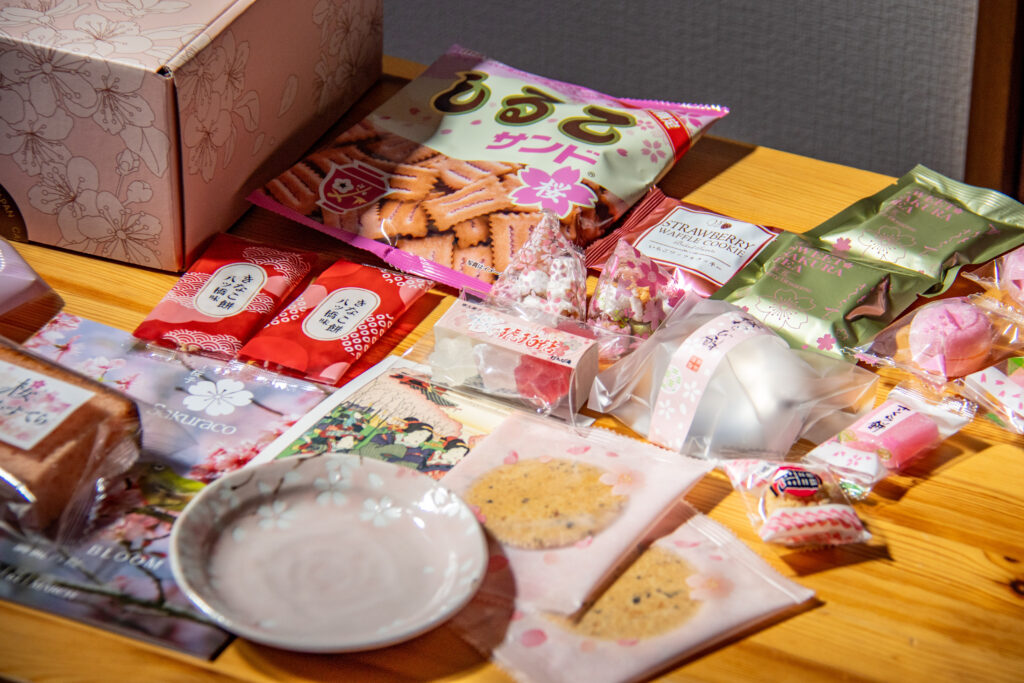
One of the most distinctive items is the Sakura Senbei from Sugi Confectionery, a company based in Aichi Prefecture. Senbei, or Japanese rice crackers, are typically associated with savory flavors such as soy sauce or seaweed, but this version introduces a seasonal twist. Cherry blossom leaves are kneaded directly into the dough, creating a gentle floral aroma that balances surprisingly well with the lightly salted cracker. The result is a snack that feels both familiar and slightly unexpected.
Sugi Confectionery itself has an interesting story. Founded in 1970 with a single senbei-baking machine, the company set out to create crackers centered around the rich umami flavor of seafood, particularly squid. Over time, they refined their recipes by sourcing ingredients from across Japan and developing a signature sweet-savory sauce made from local white soy sauce and mirin. Today, the company is known for its bold, large-format senbei and its dedication to craftsmanship, qualities that are evident even in this seasonal sakura variation.
For those with a sweet tooth, the box offers several wagashi inspired directly by cherry blossom flavors. One of the most traditional examples is Sakura Daifuku, produced by Kimura in Kumamoto Prefecture. Daifuku are soft rice cakes filled with sweet bean paste, and this version incorporates sakura into the gyuhi mochi dough itself. The result is a gentle floral fragrance that complements the smooth sweetness of the red bean filling. The combination is delicate rather than overpowering, reflecting the subtle approach typical of Japanese sweets.
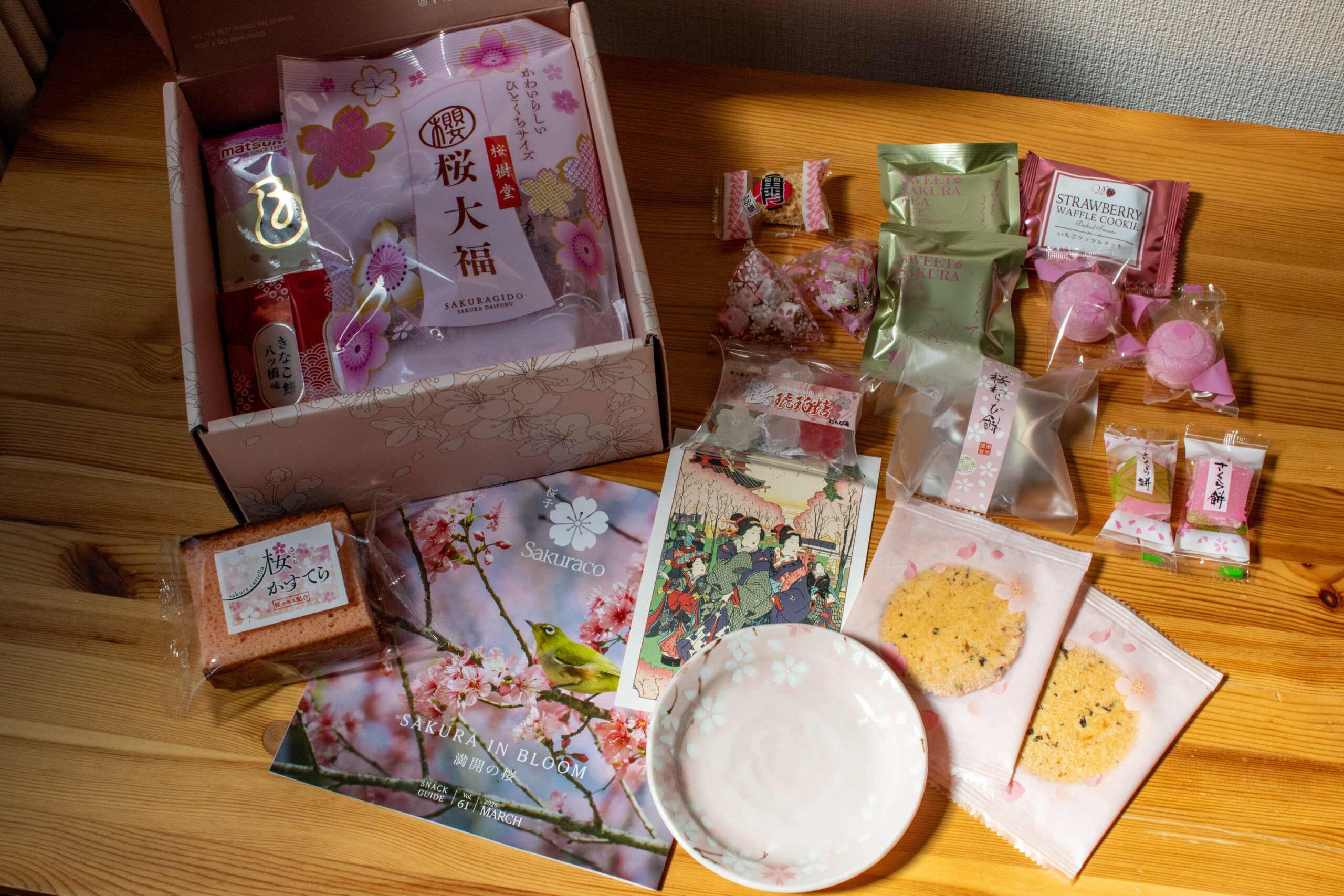
Another highlight is the Sakura Warabimochi crafted by Tsuruya Confectionery in Osaka. Warabimochi differs from standard mochi in that it has a translucent, jelly-like texture made from bracken starch. In this seasonal interpretation, the confection is designed to resemble a cherry blossom floating in clear water. A light drizzle of sakura-infused honey syrup adds just enough sweetness to enhance the floral notes without overwhelming the dessert’s refreshing character.
Some treats in the box combine sakura with other classic Japanese flavors. The Sakura Shiruko Sando, produced by Matsunaga Confectionery in Aichi, pairs crisp sakura-flavored biscuits with a filling of sweet adzuki red bean paste. The dough includes sakura powder and a touch of ume plum juice, introducing a faint tartness that contrasts nicely with the richness of the filling.
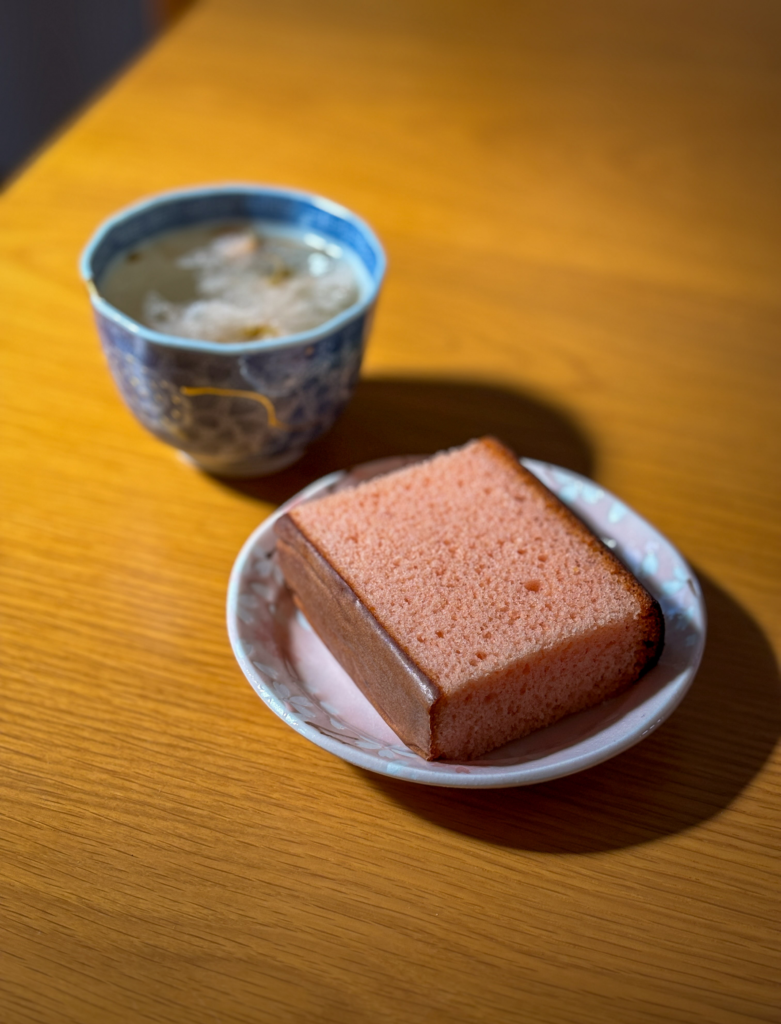
There is also the Sakura Castella from Serii Daikokudo in Osaka. Castella cake, originally introduced to Japan by Portuguese traders in the sixteenth century, has since become a beloved Japanese confection. In this version, sugar-pickled cherry blossom petals are blended into a sakura paste that is folded into the batter. The cake itself is soft and airy, with a gentle sweetness that allows the floral flavor to shine through.
Not all the snacks rely solely on sakura for their appeal. The Spring Jelly Monaka, produced by Kanemata Confectionery in Nagano, offers a visually striking treat in which cherry-flavored jelly is sandwiched between delicate pink monaka wafers. Monaka shells are made from crisp rice flour and are traditionally used to encase sweet bean paste, but the use of jelly adds a refreshing twist that feels particularly suited to the spring season.
The box also includes Sakura Kohakuto, small crystallized sugar candies that are a staple of traditional wagashi shops. Their texture is especially intriguing: a thin, crunchy exterior gives way to a soft, gel-like interior. Each piece is lightly flavored with cherry blossom, creating a subtle sweetness that pairs well with tea.
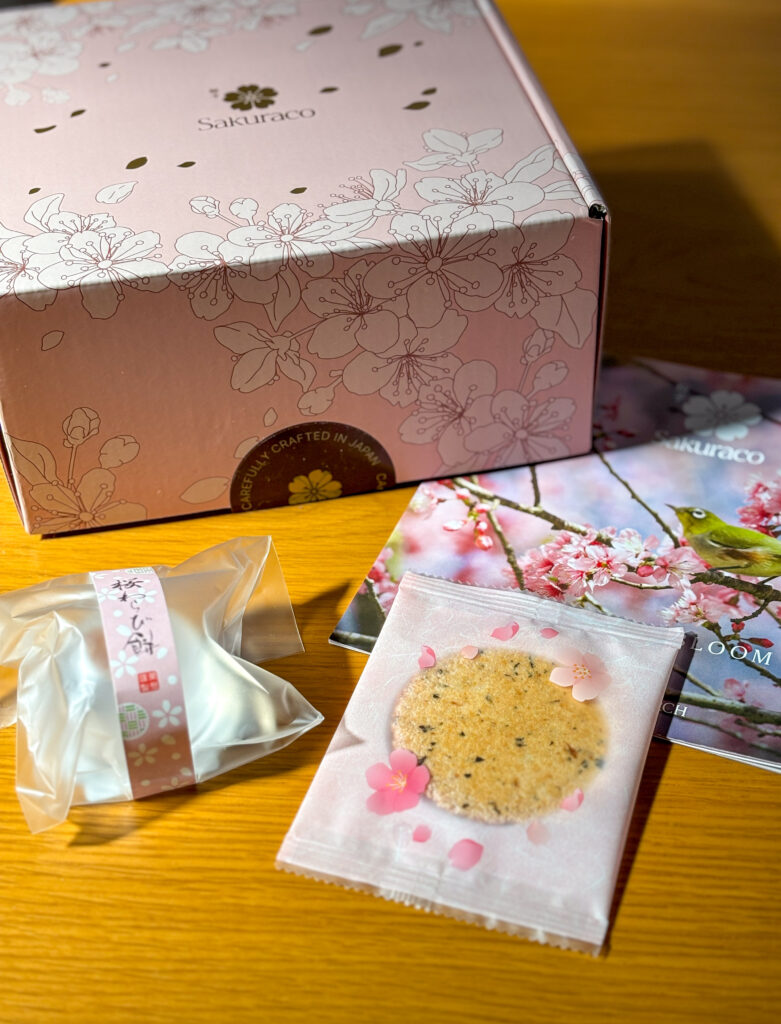
While sakura dominates the theme, a few snacks introduce complementary flavors that broaden the tasting experience. The Kinako Mochi Senbei from Iwatsuka Confectionery in Niigata, for instance, coats crisp rice crackers with a blend of kinako soybean powder and fine wasanbon sugar. The result is a nutty sweetness that melts pleasantly on the tongue.
Finally, the Sakura Houten from Matsumoto Confectionery in Osaka provides a playful assortment of small karinto pieces wrapped in sweet candy coating. The package includes three flavors (matcha, strawberry, and sugar) adding a colorful variety of tastes to the collection.
Tea, tableware, and the ritual of seasonal sweets
A defining characteristic of Sakuraco boxes is that they offer more than just snacks. Each collection typically includes a carefully selected tea and a piece of traditional tableware, encouraging recipients to recreate a small moment of Japanese tea culture at home.
This month’s tea is Sakura Blossom Tea from the Nihon Ryokucha Center in Tokyo. When hot water is poured over the leaves, real preserved cherry blossoms gradually open in the cup, creating a visually striking display. The tea itself is lightly sweet and floral, capturing the gentle aroma of sakura without overwhelming the palate. Watching the blossoms unfurl in the tea feels surprisingly evocative of the hanami experience. The flowers bloom briefly before fading, mirroring the fleeting nature of cherry blossom season itself. Paired with the sweets in the box, the tea adds a sensory dimension that reinforces the seasonal theme.
Equally noteworthy is the Sakura Kozara Plate, produced by Bloom in Gifu Prefecture. Crafted using traditional Mino ware, a style of Japanese ceramics with more than 1,300 years of history, the small plate features soft pink hues and drifting cherry blossom motifs. Though simple in design, it serves as a beautiful stage for presenting wagashi or small snacks.
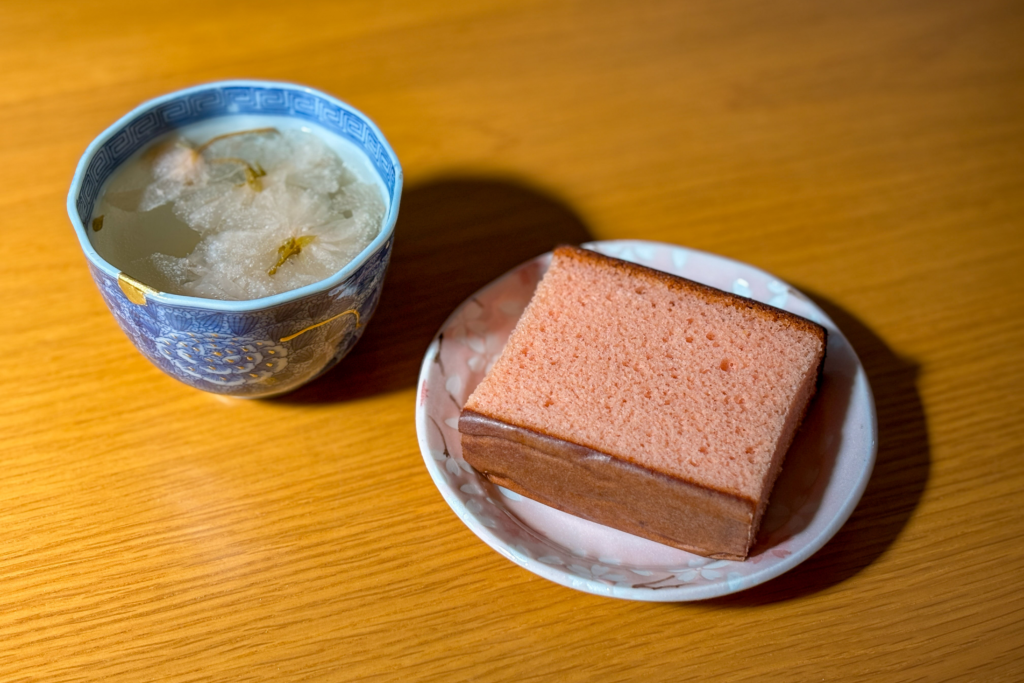
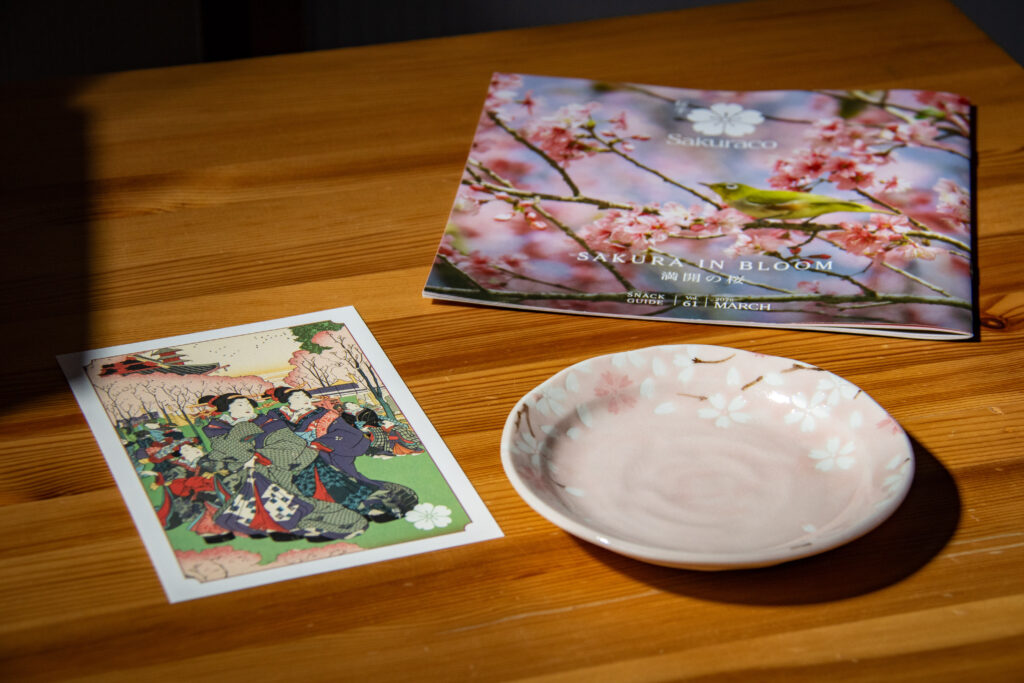
Including tableware may seem like a small detail, but it reflects an important aspect of Japanese food culture. Presentation is considered an essential part of the dining experience, and seasonal dishes are often served on plates that echo the colors or motifs of the time of year. Placing a sakura sweet on this small plate instantly transforms an ordinary snack into something more ceremonial.
As I worked my way through the different treats, I found that this combination of tea, sweets, and thoughtful presentation created a quiet, almost meditative moment. Rather than quickly sampling everything at once, it felt more natural to slow down, enjoy one snack at a time, and read about the producers and traditions behind them.
This deliberate pace is perhaps what distinguishes Sakuraco most clearly from other snack subscription services. Instead of emphasizing novelty or flashy flavors, the box encourages a deeper appreciation of craftsmanship, regional food culture, and the changing seasons.
A small piece of Japan at home
For many people outside Japan, traditional wagashi and regional snacks can be difficult to find. Even travelers visiting the country often encounter only a small portion of its vast culinary diversity. Local confectionery shops, seasonal sweets, and region-specific specialties frequently remain hidden from the typical tourist itinerary.
This is where Sakuraco offers something genuinely appealing. By sourcing products from small producers across the country, the box provides a curated introduction to Japan’s confectionery culture. In this way, Sakuraco manages to offer an experience that becomes a kind of cultural introduction, inviting people to explore Japan’s culinary traditions through taste, design, and storytelling. In the end, Sakuraco succeeds in offering a small, carefully curated window into Japan’s seasonal food culture. For anyone curious about wagashi, regional snacks, or the quiet beauty of sakura season, this box provides a delightful way to experience a little piece of Japan, wherever you happen to be.
ICHIGO Inc., the parent company of Sakuraco, kindly sent us this snack box so we could try it out and share our honest thoughts with you. This page also has affiliate links, which means we may earn a small commission if you decide to purchase a box through our website (at no extra cost to you, of course). Thank you so much for supporting Deep Japan!