
Tucked away in the mountains surrounding Matsue City, a small village with over 4,000 persimmon trees attracts crowds of curious spectators each year, eager to see the region’s iconic kaki noren (persimmon curtain) drying in the late-fall afternoon sun. The Hata district is one of the few places in Shimane Prefecture where this nostalgic autumn scenery still lingers.
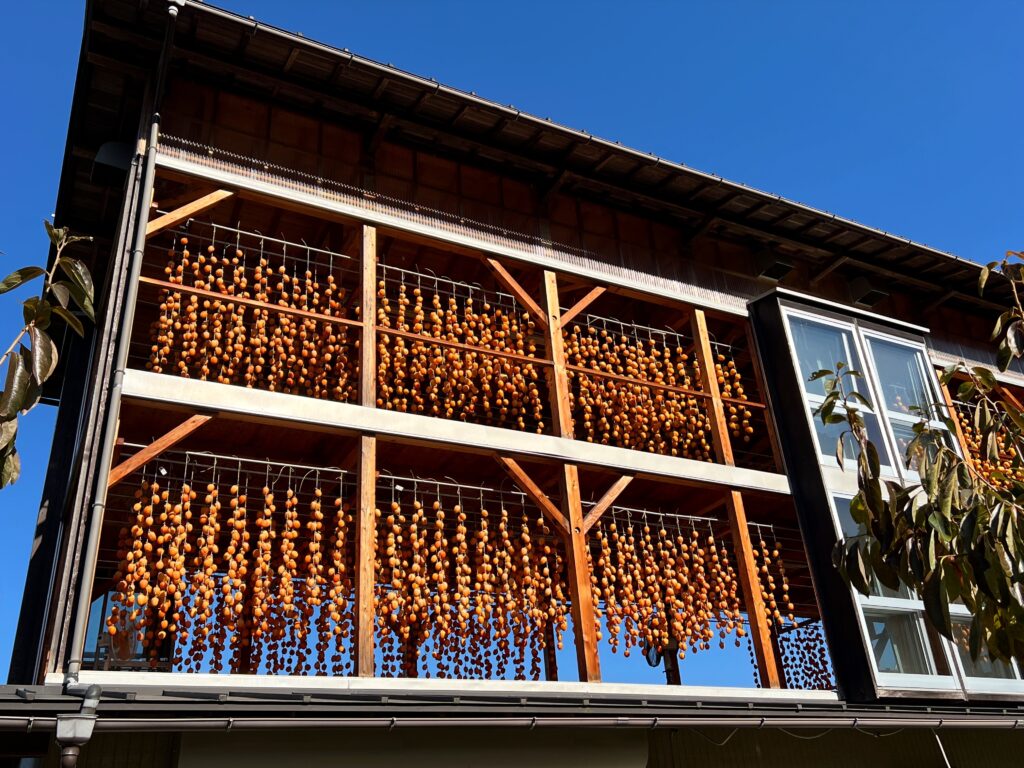
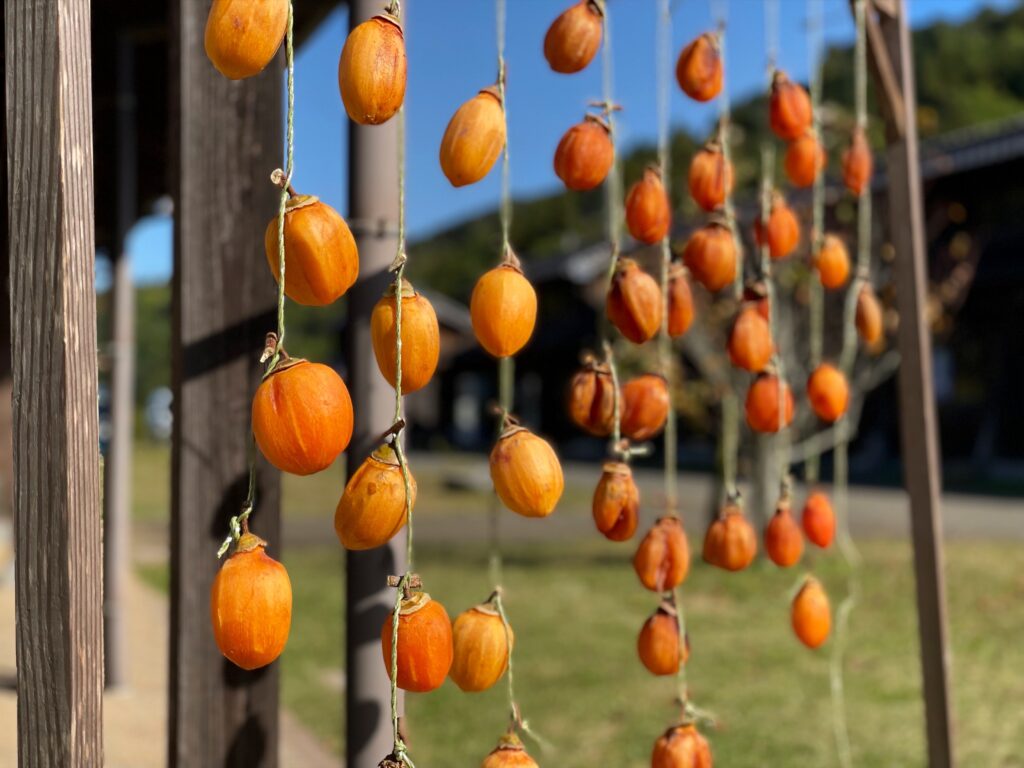
During November, I visited Hata to learn more about how the region’s famous hoshigaki (dried persimmons) are made and why Maruhata Hoshigaki remain popular and beloved in Japan and around the world. Our tour guide was a cheery Hata local who, like many others in this region, speaks Izumo-ben, a regional dialect that I have yet to master. We rode up the mountain by bus along a narrow and winding road, dodging small kei trucks along the way, until we reached the picturesque persimmon tree fields sprawling all around us.
Persimmons come in many varieties, and their uses vary just as much. Fuyu persimmons can be enjoyed like an apple, while the Hachiya variety is often used for baking or making jams. Saijo persimmons, known for their oblong shape and astringency, are the main variety cultivated in the Chugoku region of Japan. While unpleasant to eat fresh off the tree, Saijo persimmons are dried to remove astringency and preserve the fruit through the winter.
With a history spanning 450 years, Hata has a long-standing tradition of making its famed dried persimmons. Originally used as portable rations on the battlefield during the tumultuous Sengoku period (approximately 1467 to the early 1600s), dried persimmons are now often enjoyed with tea or paired with butter as a savory snack served with alcohol.
Ideal growing conditions are said to make the persimmons grown in the Hata region especially delicious. The soil is rich in clay, and, perched about 200 meters above sea level, the trees have access to plenty of sunshine and cool, dry winds from nearby Lake Nakaumi.
The normally quiet region comes to life as fields fill with farmers harvesting persimmons in late October and early November. The persimmons are carefully peeled, strings are wrapped around their stems, and they are hung in well-ventilated drying huts called kaki-goya. Each family in Hata has a dedicated kaki-goya. These massive wooden structures allow farmers to carefully control and adjust the conditions inside. During the drying season, the work continues day and night, as farmers work around the clock to ensure the persimmons don’t become hard or moldy.
The fruits are massaged daily to help release the natural sugars within. As the sugars rise to the surface, the outer layer becomes covered in a fine white bloom. The final product has a chewy exterior and supple interior, similar to the texture of a dried prune, with a sugar content of around 80 percent.
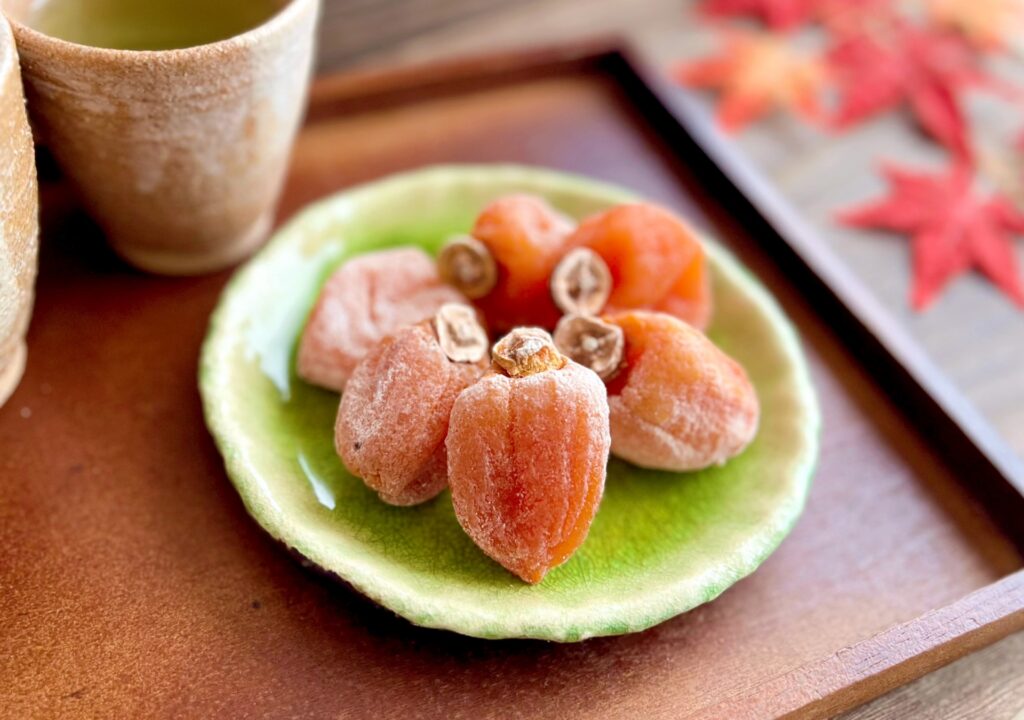
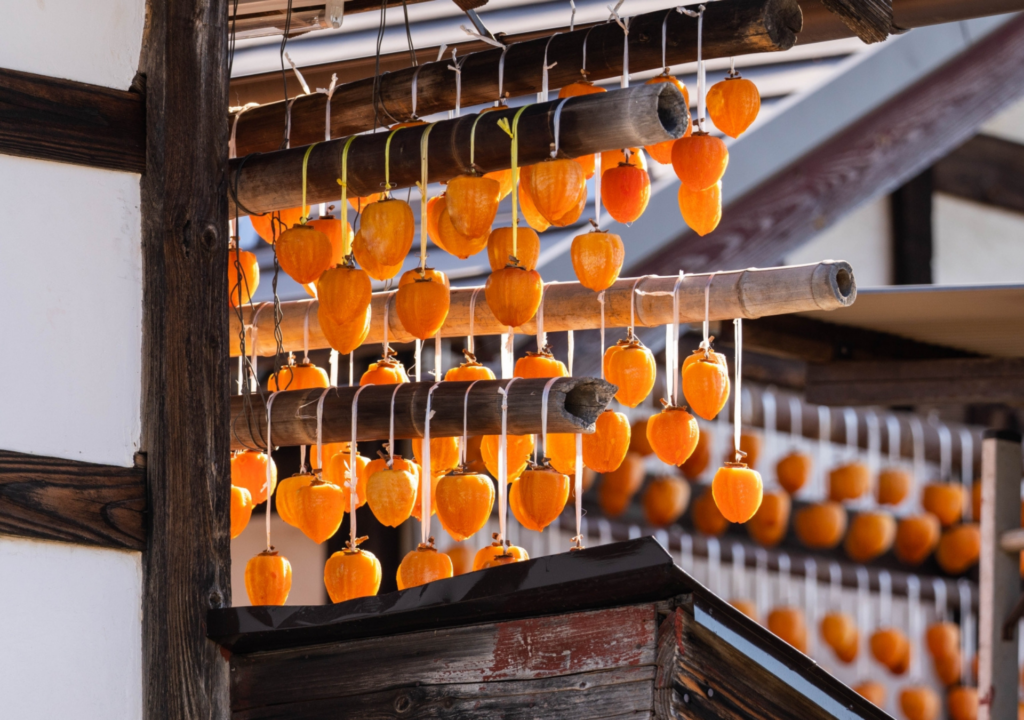
Families do their best to ensure that nothing from the harvest goes to waste. Leaves from the trees can be used to make tea, and the persimmons are used in a wide variety of products, ranging from soap and shampoo to even toothpaste.
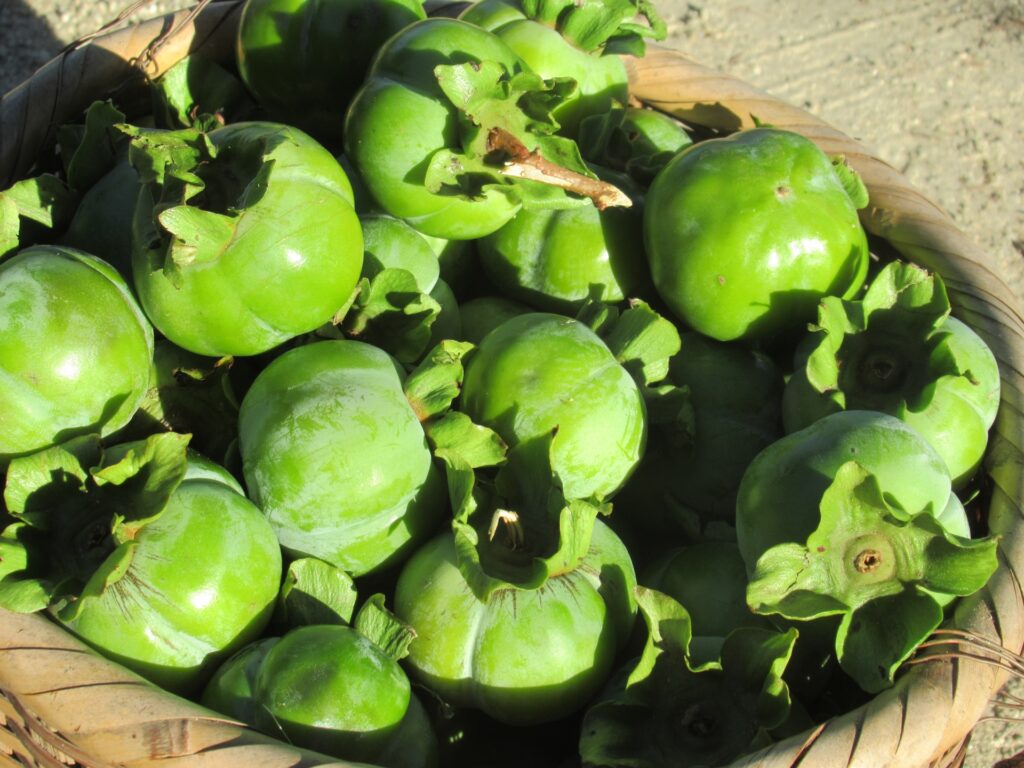
Kakishibu is a centuries-old Japanese dye made from astringent, unripe green persimmons rich in tannins. The fruit is crushed, mixed with water, and left to ferment before being strained and bottled, where it continues to mature and darken over time. Kakishibu dye produces a warm amber color that becomes richer and more beautiful with wear.
Traditionally, kakishibu was used for a variety of purposes, ranging from dyeing fabric and paper to treating burns, and even as an ingredient in deodorizing soap. Its antiseptic, antibacterial, and antimicrobial properties made it an essential part of Japanese folk medicine. When the dye is applied in multiple layers, the tannins create a water-resistant finish, which is why it was often used on traditional Japanese umbrellas.

Maruhata Hoshigaki can be found in high-end supermarkets and department stores throughout Japan, as well as internationally, including in parts of Europe. If you’re interested in seeing the process yourself, be sure to visit Maruhata’s Instagram page for up-to-date information about events, especially during the harvest season.