 Miguel Ah-Loi Chung Carmichael
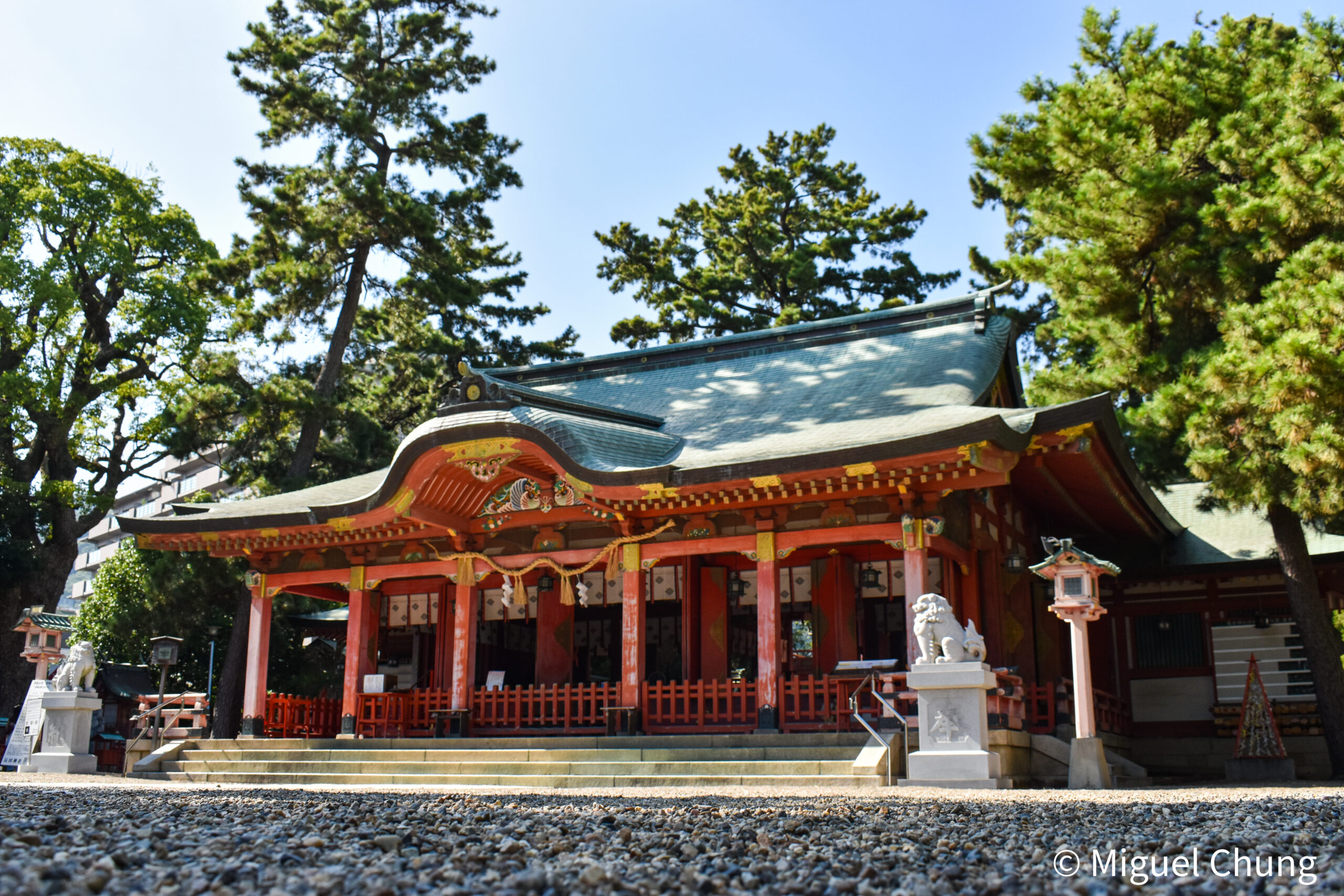
Kobe City, best known for its luxury beef, historic ports, and iconic sake breweries, houses an equally important shrine with a history dating back more than 1,800 years, as well as a summer festival that captures the authentic cultural atmosphere unique to Japan. A shrine that has been designated a kanpei chusha (a middle-tier ranking imperial shrine that has been given support by the Japanese government). A shrine that forms part of the three representative shrines of the city. A shrine that has been used as a filming location for a Netflix thriller series. The shrine I will be covering here is not the well-known Ikuta Shrine, one of Kobe’s most famous and frequently visited shrines.
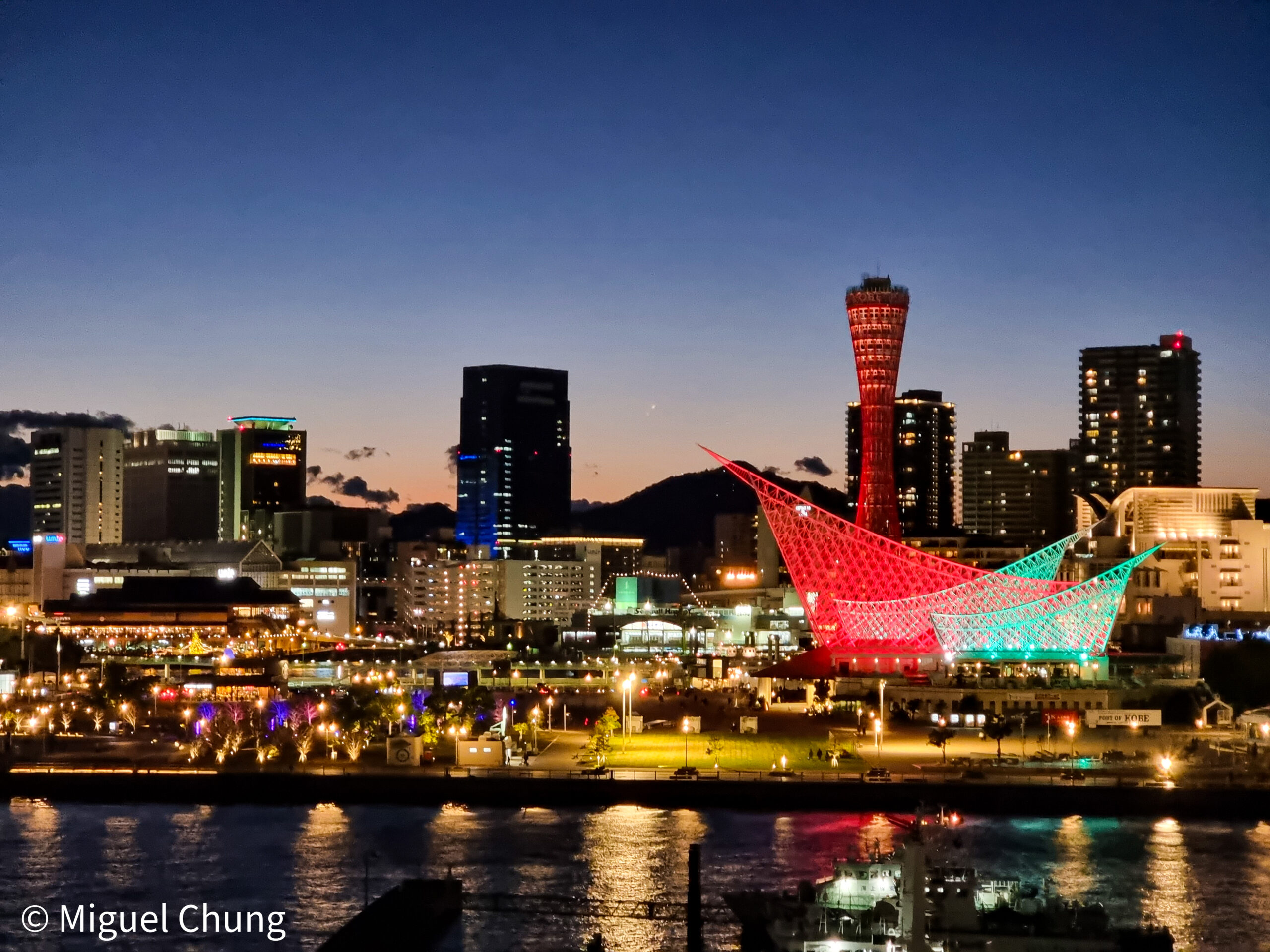
Nagata Ward: A place of international status
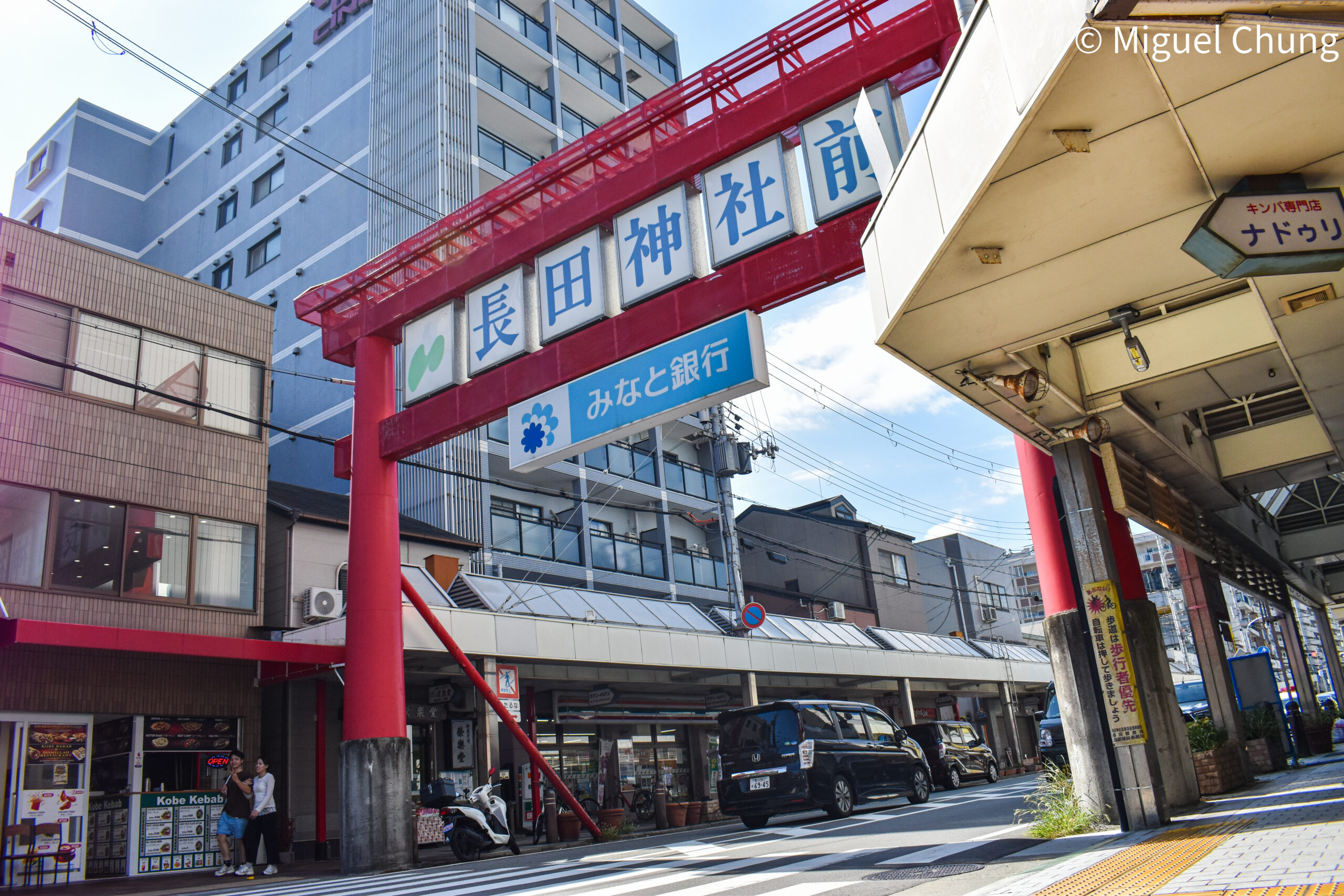
Kobe City’s Nagata Ward — otherwise unassuming and mostly overlooked by both domestic and international tourists — boasts a significant immigrant presence and stands to me as the perfect indicator of the “international” status often spoken about in conversations regarding the city. Upon exiting the stations in Nagata, you are greeted almost immediately by Chinese, Nepalese, and Korean restaurants. A further walk ahead towards the mountains comes to a shopping street containing an “international cafe” run by a very kind and welcoming Japanese woman, Thai grocery stores, a Burmese restaurant, and an English conversation school. All of this is to reiterate the predominant international presence there, which is relevant to the history of Nagata Shrine itself.
Finding Nagata Shrine
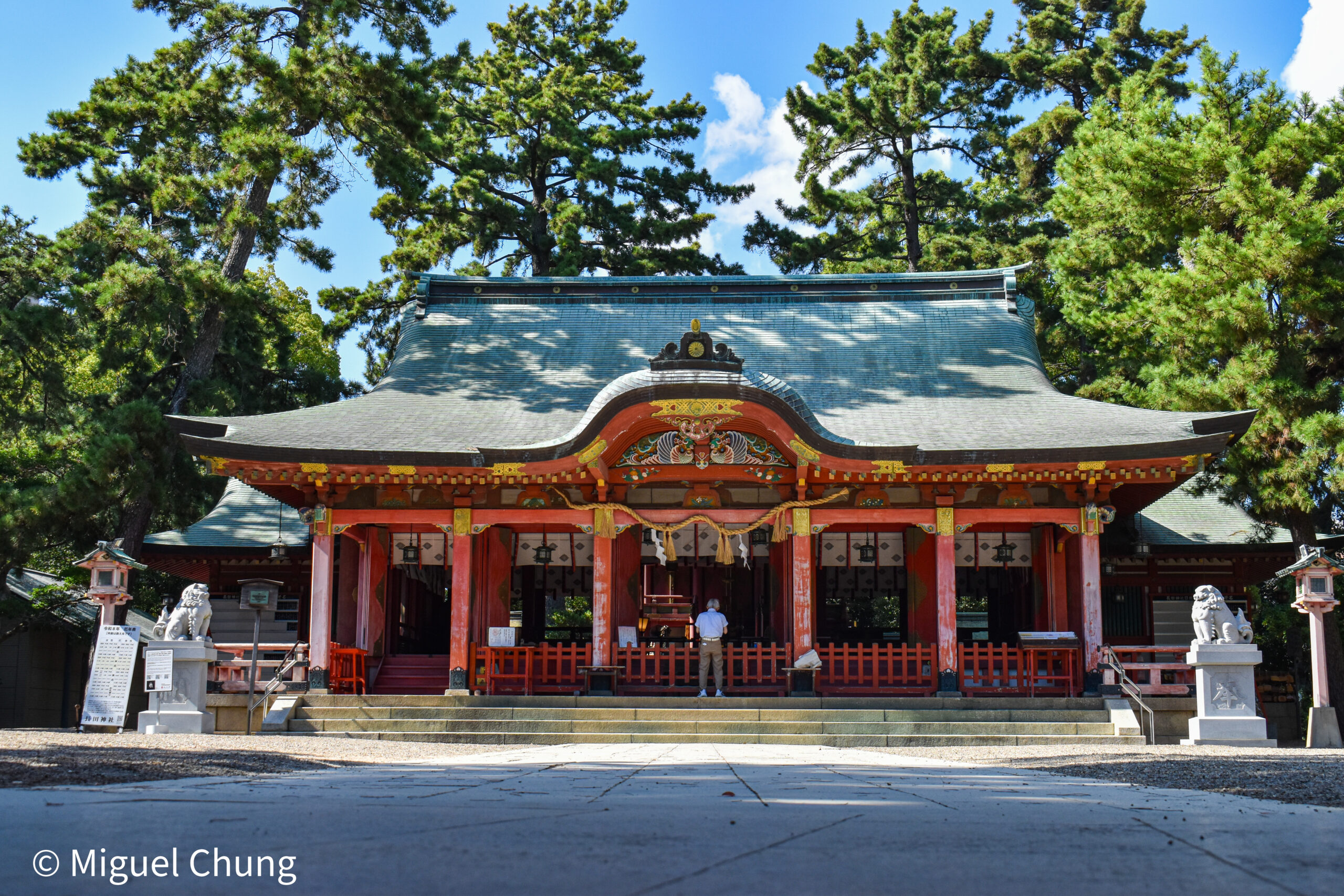
Nagata Shrine, part of a trio of representative shrines for Kobe City alongside Minatogawa Shrine and Ikuta Shrine, rests about a 7–10-minute straight walk from either of the two stations closest to it: Kosoku-Nagata Station on the Hanshin/Sanyo Line, or Nagata Jinja-mae Station on the municipal Seishin-Yamate Subway Line. With recently installed multilingual signs pointing it out from either station, locating the shrine is easier and more convenient than it has ever been.
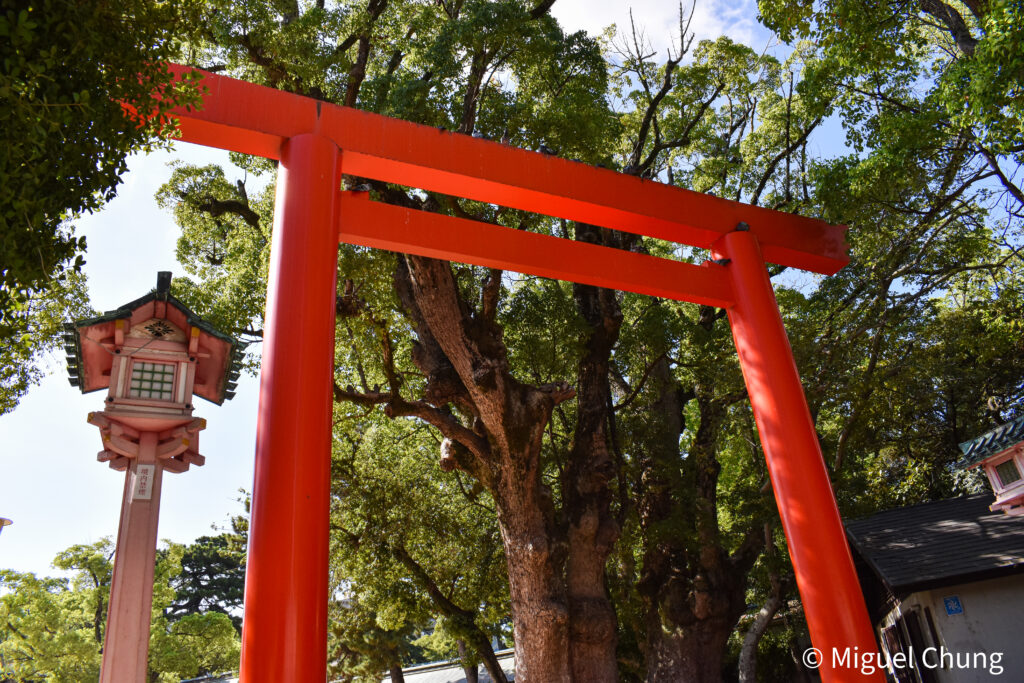
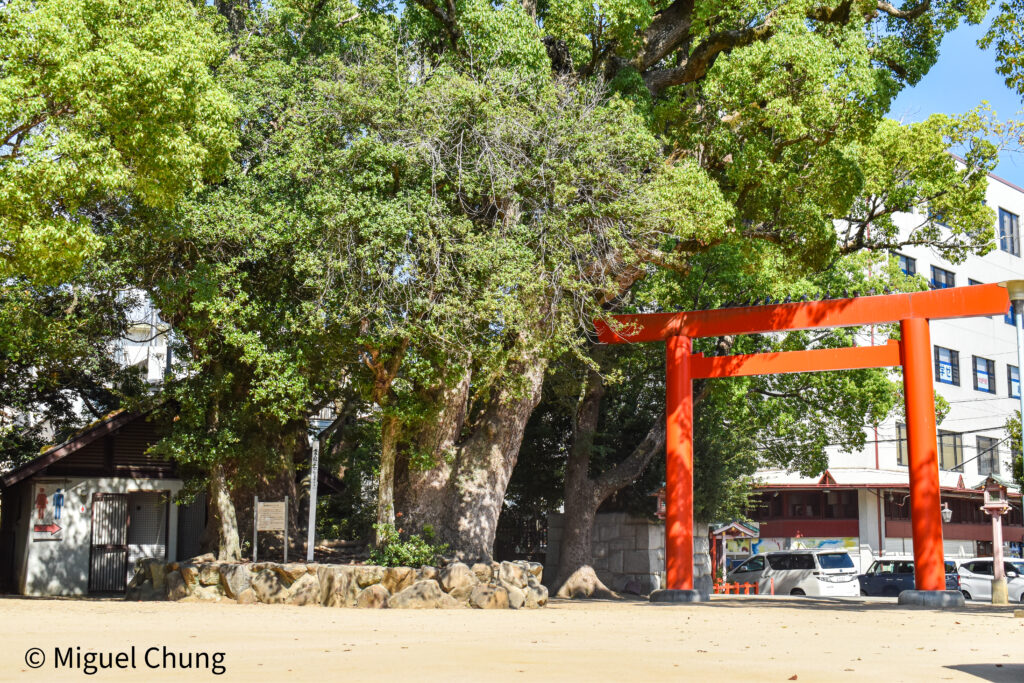
The shrine precincts can be divided into two main sections: an open area designated for various stalls and stages during festival times (and a car park on regular days), marked by a massive camphor tree standing at about 30 meters tall with a trunk circumference of about 5 meters, and a more secluded area containing the shrine’s main hall, where various ceremonies are conducted.
An immigrant history
The shrine’s origins are detailed in the Nihon Shoki (Chronicles of Japan), wherein Empress Jingu, on her way back from having conquered the Three Kingdoms of Korea, consults with an oracle in present-day Komagabayashi in Nagata Ward. She then receives divine instructions from the god of fortune and fishing, Kotoshironushi, more commonly known as the god Ebisu. A shrine was to be built in Nagata in which Kotoshironushi would be the principal deity, and enshrined within the main hall would be the goddess Amaterasu, goddess of the sun, and Emperor Ojin, who is believed to have built Kofun-era Japan primarily by employing immigrants.
Today, the shrine is used for various ceremonies throughout the year, most notably Setsubun (the day before spring begins in the old Japanese calendar) and Oshogatsu (Japanese New Year celebrations). One festival, however, stands out as a personal favourite and one that I have attended every year that I have lived in Japan: the Nagoshi summer festival.
An ancient practice continued
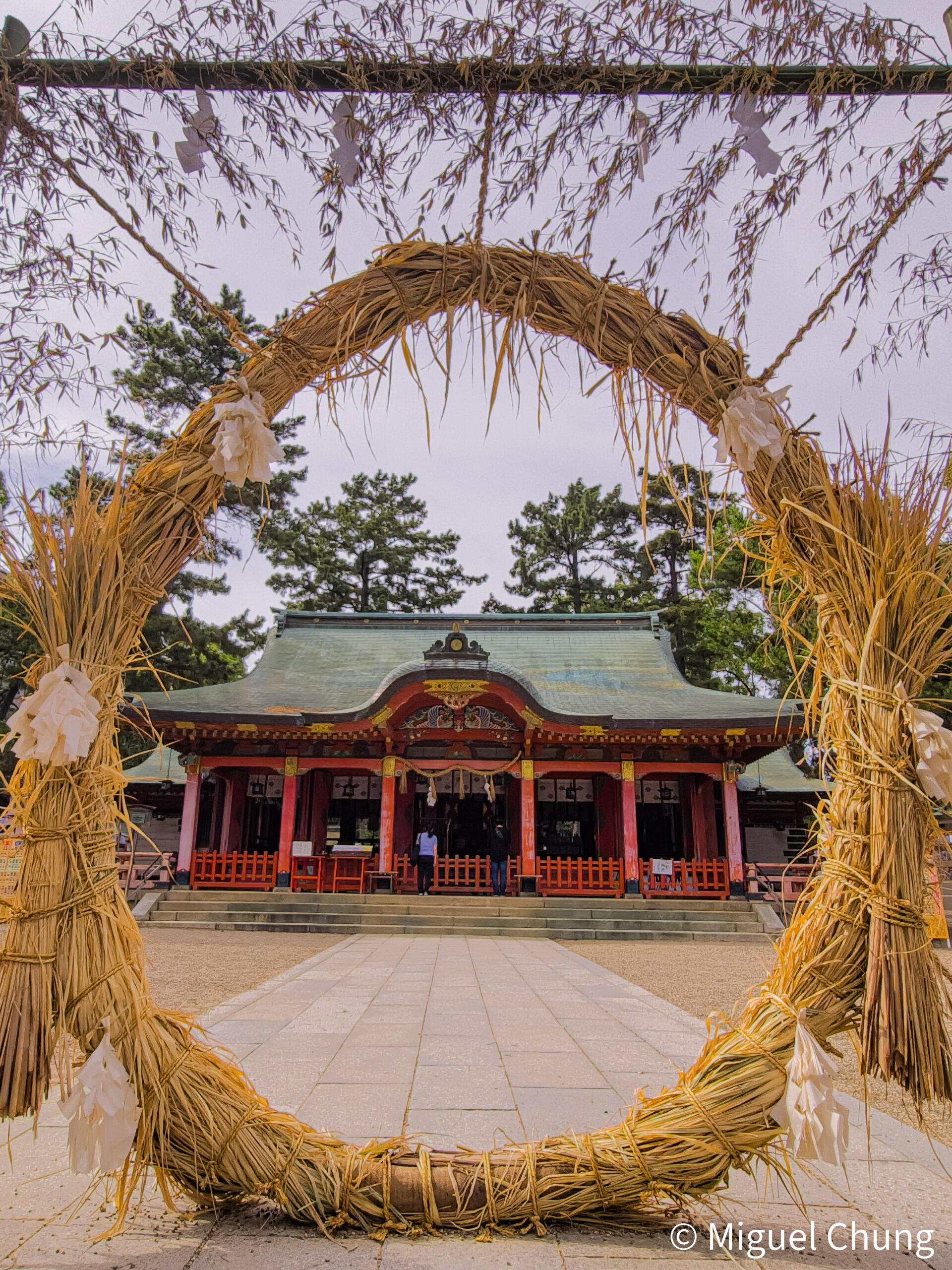
Held annually on July 17th and 18th, Nagata Shrine’s Nagoshi festival coincides with the nagoshi no harae purification rites (rituals to “overcome” the summer), in which visitors walk in and out of a large grass ring in a figure-eight shape. This is known as chinowa kuguri, with chinowa meaning “grass ring” and kuguri meaning “passage” or “gateway.”
While the festival celebrations as we know them — the food stalls, dance stages, paper lanterns, and so on — only began in 2003 at Nagata Shrine, the nagoshi no harae have been an integral part of the shrine’s history for centuries. With the country’s implementation of the Taiho Code at the end of Japan’s Asuka period (592 – 710), these purification rituals were designated as an official ceremony, intended to protect the people from plagues and epidemics that were common during the summer at the time.
What makes Nagata Shrine my personal choice
Nagata Shrine holds a very special place in my heart as far as my identity as a resident in Japan goes. As a participant of the JET (Japan Exchange and Teaching) Programme, I was placed in two elementary schools in Nagata Ward, both within walking distance of the shrine. The shrine grounds at the time were incredibly quiet and empty, a result of coming to Japan at the tail-end of pandemic restrictions and regulations. The shrine very quickly became a place that I frequented to mentally deflate and reorganize myself before heading home after a full day of being immersed in the chaos and loudness of a Japanese elementary school classroom.
As spring started to warm up into summer, it was difficult not to notice the posters for a festival littered on storefronts and community notice boards throughout the area. Posters advertising a “summer festival.” Initially, I had no intention of attending any festival so close to my place of work, resolute in my desire to maintain the distinction between work life and personal life. That resolution would quickly crumble at the request of a then-third-grade student who made a very compelling argument by informing me that attending the festival would, in fact, be “very fun.”
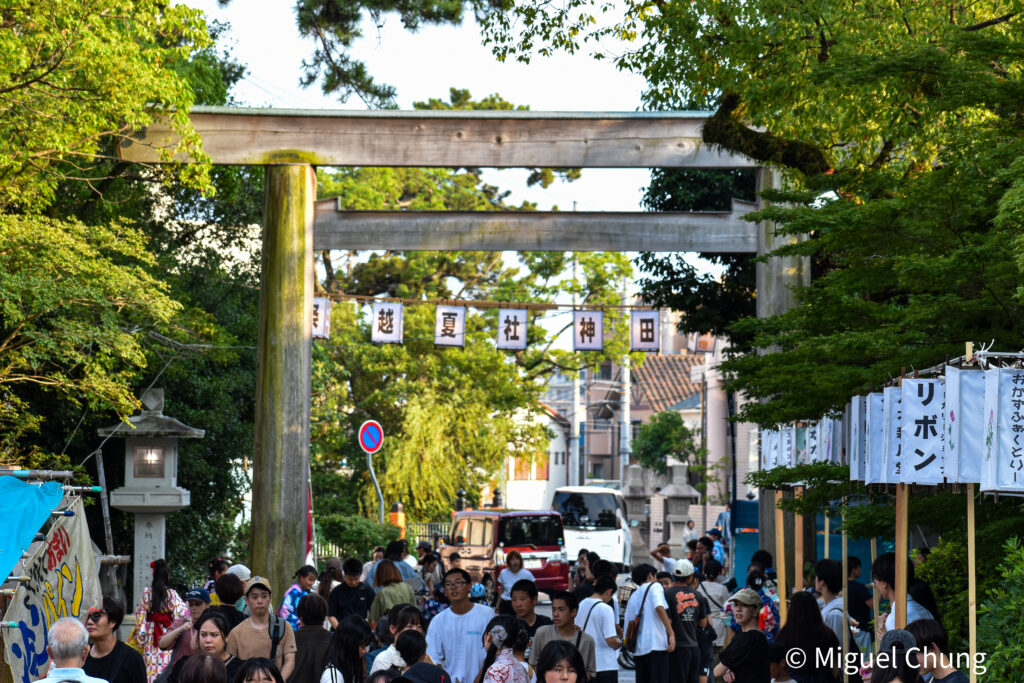
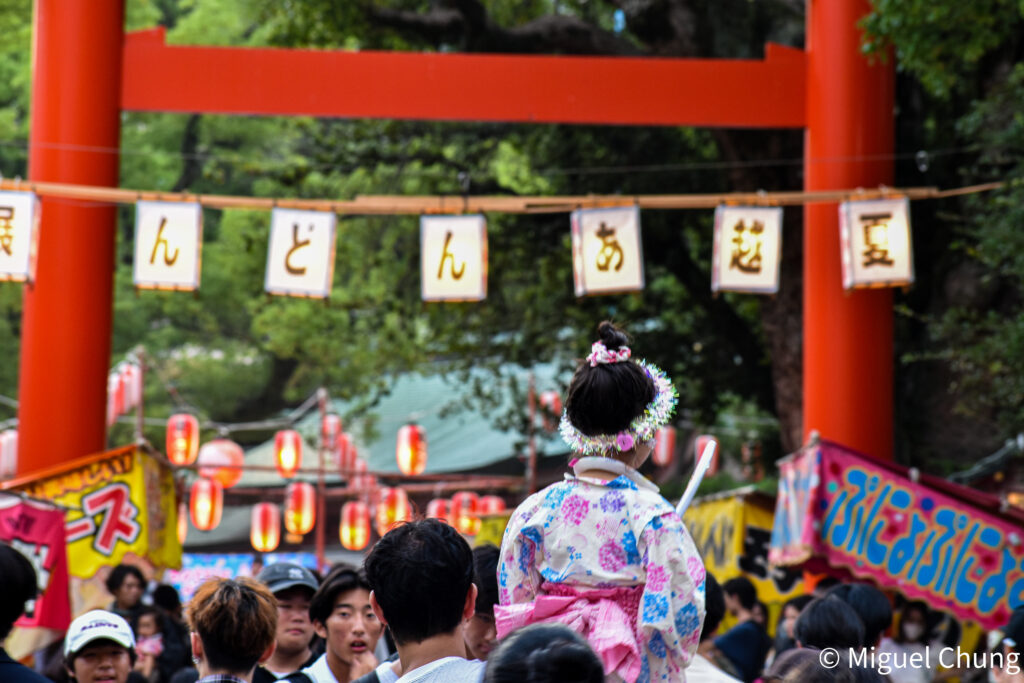
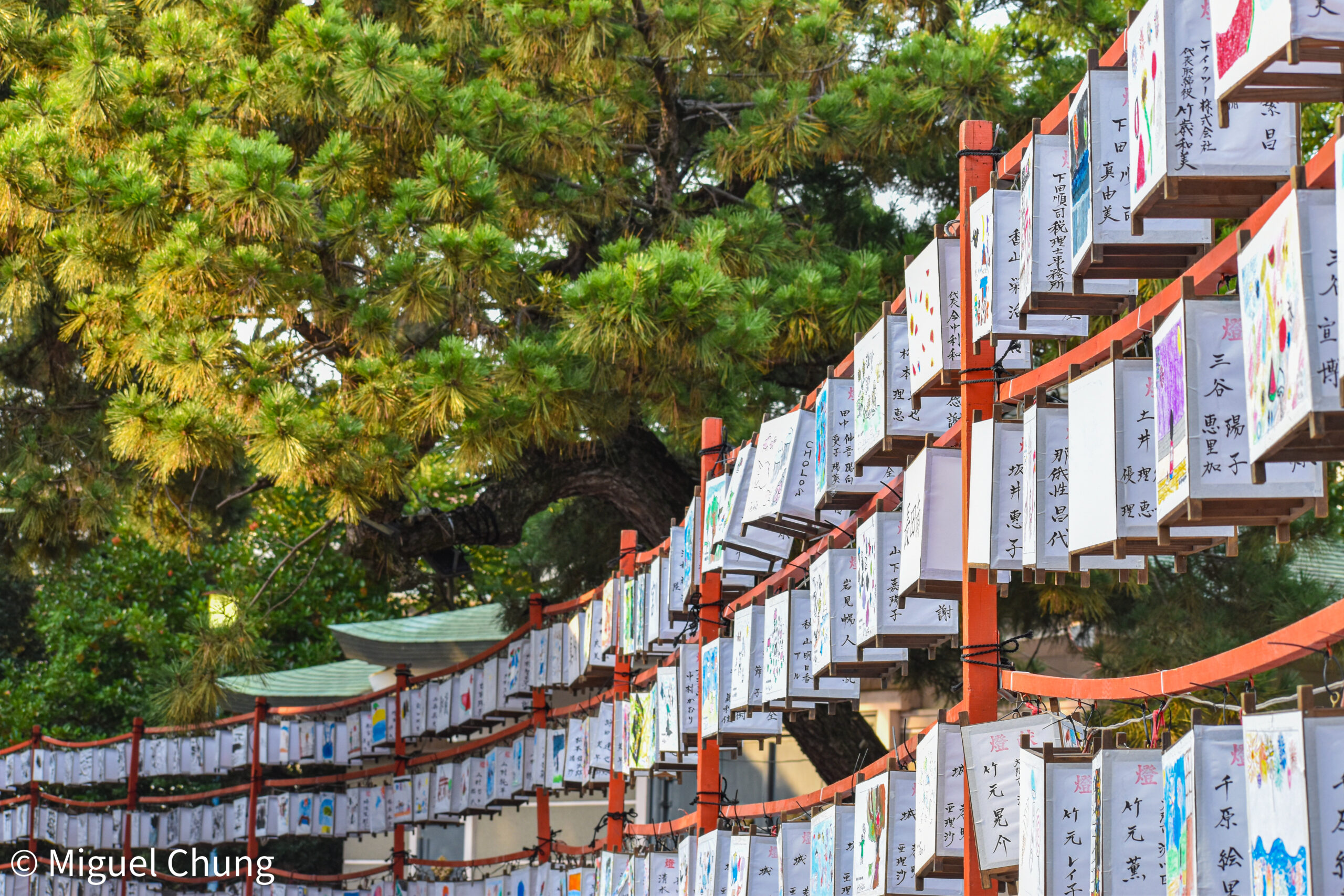
And it certainly was. The calm and pensive atmosphere that I had come to associate Nagata Shrine with had completely transformed into the textbook illustration of a Japanese summer festival, with crowds of people in yukata (traditional Japanese clothing typically worn during outdoor summer events like festivals and fireworks displays) occupying queues for different food stalls. Children lined up for games to win toy prizes. The shrine’s main hall area was adorned with paper lanterns designed by elementary students in the schools closest to the shrine.
In recent years, following a full recovery from pandemic restrictions, festival celebrations have also included a stage erected in the centre of the shrine’s festival grounds, where students enrolled in local dance studios perform. After sunset, the stage becomes the setting for a bon dance (traditional Japanese summer folk dance), in which festivalgoers circle the stage, mirroring the motions of the dancers on stage.
In closing…
Nagata Shrine is by no means as grand as Izumo Taisha or as ostentatious as Meiji Jingu, but therein lies the focal point of its charm. With festivals that are big enough to experience and understand its significance to the city, yet small enough to maintain a level of comfort well underneath the stresses of being “overcrowded,” Nagata Shrine’s intimate setting in the heart of Nagata Ward allows visitors to feel a truly local and homey atmosphere. To quote Kobe Brighten’s article on the shrine: “Among Kobe’s Three Great Shrines, Nagata has the most grounded, neighbourhood feel — a place of genuine local faith rather than a tourist stage.”
Years later, after changing school placements, changing jobs, and even changing my city of residence, I still find myself returning to Nagata to be a part of the shrine’s many annual festivals and ceremonies. What was once a place for some quiet relief from the noise of the day became a place of community gathering. A place to which I can return with no doubts that I will once again see the many welcoming faces that were the most consistent part of my life for years, including that of the very student who encouraged me to attend the festival for the first time all those years ago.
Though I doubt that they have any recollection of that conversation now.