
This past fall, I assigned students in my university course about life in Japan to read a chapter by Victoria Yoshimura, a senior ordained Buddhist priest from the UK based in Takachiho, Miyazaki Prefecture. Yoshimura’s account of her intriguing journey was written for my edited volume A Passion for Japan: A Collection of Personal Narratives.
To start that day’s lesson, I gave the students a warm-up question: “Is Japan a religious country?” Although the discussion extended well beyond the allotted time, it came as no surprise that the class — a multicultural mix of students from Japan and more than ten other countries — reached no definitive conclusion about the role of religion in Japan. And, honestly, that was basically what I expected.
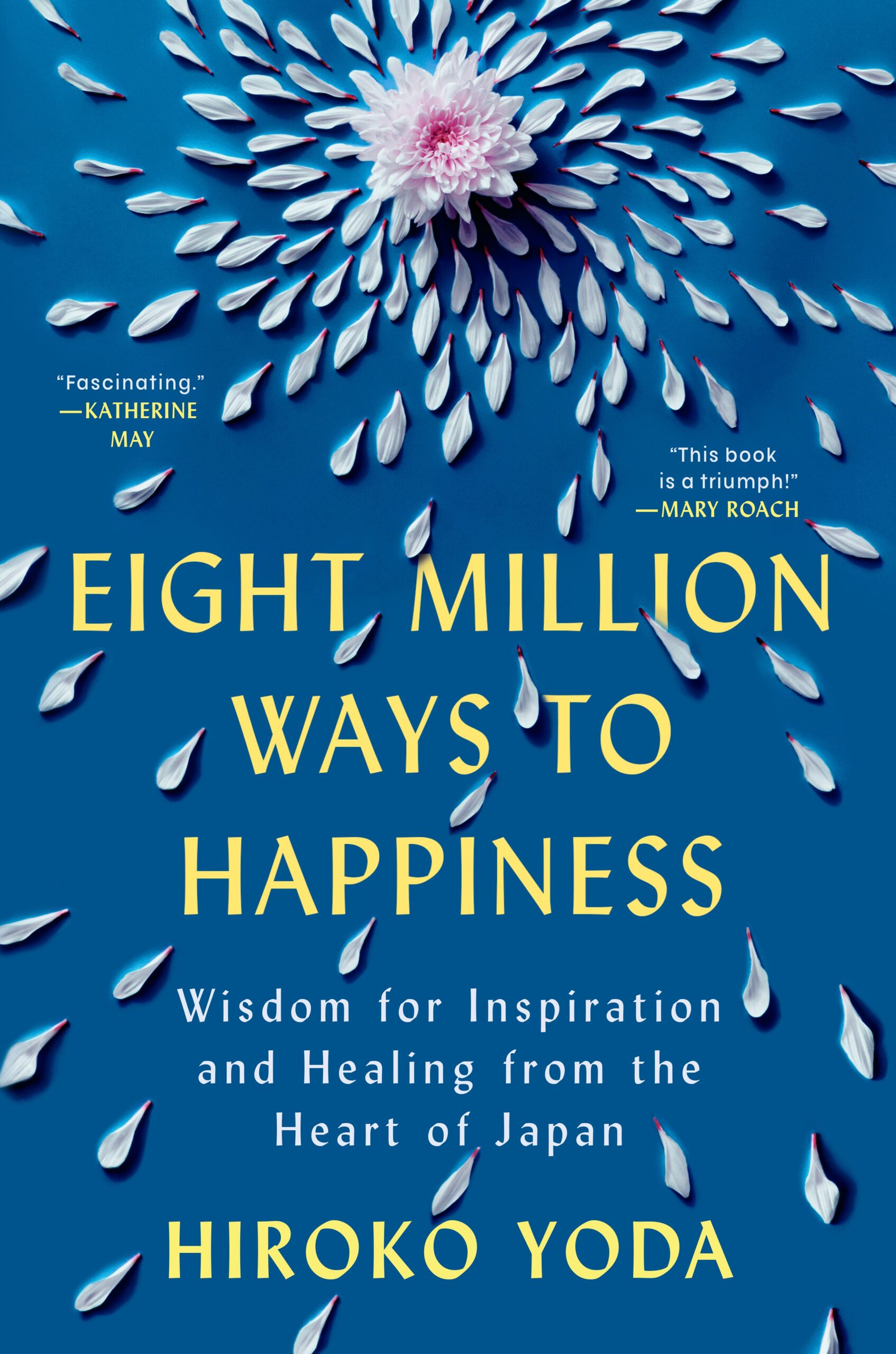
It was thus a pleasant surprise that shortly after that class, a book was published that explores this question and much more. Hiroko Yoda‘s Eight Million Ways to Happiness takes readers on an engaging journey through the religious and spiritual (with a strong emphasis on the former) landscape of Japan. Yoda told me that one of the aims of the book was “to write about Japanese spirituality in a way that would appeal to mainstream readers,” which she has definitely accomplished. While word count limits prevent me from listing eight million ways I enjoyed this book (more on the meaning of the title later), I will settle for eight reasons why I highly recommend it.
Eight reasons to read Eight Million Ways to Happiness
It’s written with authority
The current international love affair with Japanese culture means that we have unprecedented amounts of English-language content about Japan available to us. This is both good news and bad news, as it also means it can be harder to discover higher-quality work. Too much current English-language content about Japan lacks credibility, as writers and content creators may misinterpret Japanese cultural concepts (see Yoda’s excellent essay about ikigai, for example) to suit their own agendas or merely resort to Japan glazing.
Yoda’s book is thus a breath of fresh air. She has spent decades “building bridges between my country and the world,” both as an innovative localizer of Japanese video games and as the author of books exploring everything from yokai (supernatural creatures of Japanese folklore) to ninja. In recent years, her articles explaining various aspects of Japanese culture in English have appeared in prestigious publications such as The New York Times, The New Yorker, and Wired. I had initially assumed this latest book was a major departure from her previous work, but it turns out that Yoda is also a certified Shinto cultural historian!
It strikes the right balance
In discussing her motivations for writing the book, Yoda explained, “There’s next to nothing written about Japan’s spiritual side that isn’t either highly academic or couched in terms of self-help methods.” For this reader, that is yet another reason why the book is a triumph. As a long-term resident of Japan who has struggled to truly grasp religious (or spiritual) beliefs in this country, I am much less interested in exhaustive academic tomes than in personal accounts detailing how religion and/or spirituality have positively impacted the lives of Japanese people.
One aspect of the book that helped make it such a page-turner is how deeply personal it is. Yoda bares her soul to the reader about her personal losses before illustrating how the spirituality surrounding us in Japan helped her on the road to recovery. And while the book definitely avoids becoming overly academic, readers (as we’ll see in the next reason) will still learn a lot about the subject matter.
It covers a lot of ground
The title of Yoda’s book is a reference to the traditional Japanese expression “eight million gods” (yaoyorozu no kami), referring to the Shinto belief that there are an infinite number of kami (gods or spirits) that can take any form. Yoda devotes several passages of the book to addressing the conundrum of whether Japan is indeed a religious country. After all, Japan is a country where Buddhist temples and Shinto shrines far outnumber that ubiquitous feature of modern Japan — convenience stores — yet survey after survey shows a majority of Japanese consistently claiming to have no religion.
When I asked Yoda whether she personally considers Japan a religious country, she replied that “the short answer would be no. Now if you asked me whether Japan is a spiritual country, I would give an unhesitatingly short answer of ‘yes.’”
Yoda thus sets out to explore the sheer variety of forms spirituality can take in Japan, meaning she also quite literally covered a lot of ground in writing this book. Although Yoda was careful not to make the book overly academic, she nevertheless went to great lengths to ensure it was meticulously researched. She crisscrossed Japan to interview and give voice to everyone from Buddhist and Shinto priests to miko (shrine maidens) and yamabushi (mountain ascetics). For one chapter, she even traveled all the way to Aomori in the Tohoku region to meet arguably the last surviving genuine itako (blind spiritual medium).
It’s also a cultural history
Although the role of spirituality in Japan is the central theme of the book, it will also appeal to anyone with a general interest in Japanese culture as a whole. Again, whether or not a majority of Japanese consider themselves religious (or spiritual), the impact of Buddhism and Shinto on countless holidays, festivals, and daily rituals is undeniable. Yoda explained to me that, in addition to mainstream readers, she “also wanted enough rigor that it could interest, and hopefully educate, those with knowledge about Japan.”
She succeeds in this respect too: despite being a long-term resident of the country, I found the book giving me fresh insights into cultural traditions I had taken for granted, such as hatsumode (the first visit of the year to a shrine or temple) and bon odori (summer dances celebrating the Obon season).
She also consistently illustrates how various customs have evolved. Using bon odori as an example, she explains its Buddhist roots but also shares a modernized version in Nakano, Tokyo, in which participants even dance to a Bon Jovi song (get it?).
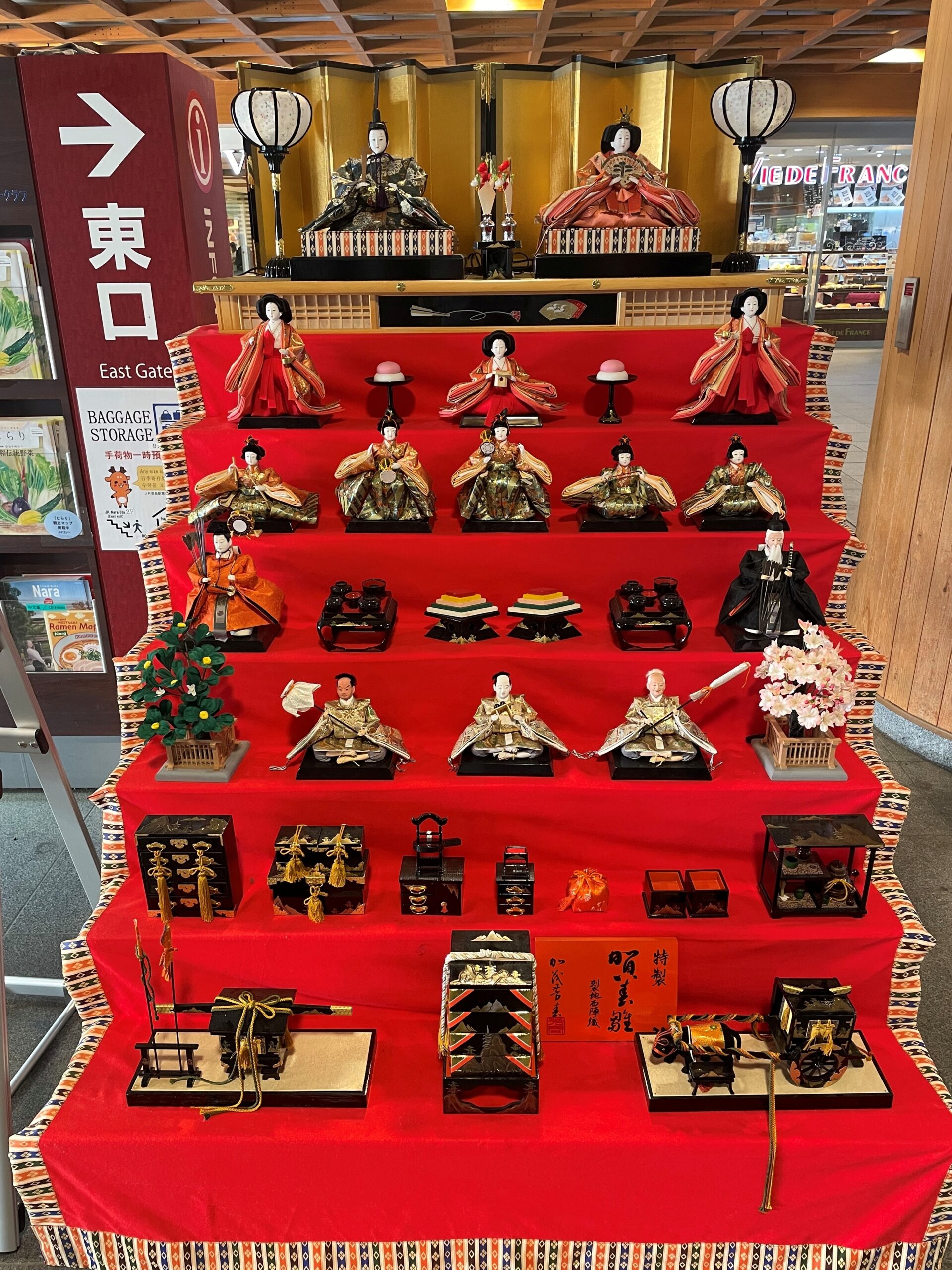
An especially poignant passage involves her description of teaming up with her sister to set up the hinadan (the tiered platform for displaying dolls on Hinamatsuri, or “Girls’ Day”) for the first time in years. Their father’s eyes widened upon once again seeing the elaborate seven-tiered display that had been retired after his daughters reached their early teens. The episode serves as further evidence that even if many Japanese claim no religious beliefs and have forgotten the Shinto or Buddhist roots of Hinamatsuri and other traditions, this in no way lessens the precious family memories forever attached to such customs.
It may guide you out of the darkness
When I mentioned the title of the book to a friend, he remarked, “It doesn’t seem like you to read a self-help book.” As previously mentioned, Yoda stressed that she endeavored to write something different from books about spirituality that are “couched in terms of self-help methods.” While I certainly don’t consider Eight Million Ways to Happiness to be a self-help book, Yoda also told me that her target readership includes “anyone who is struggling with loss and looking for new ways to approach life or look at the world.”
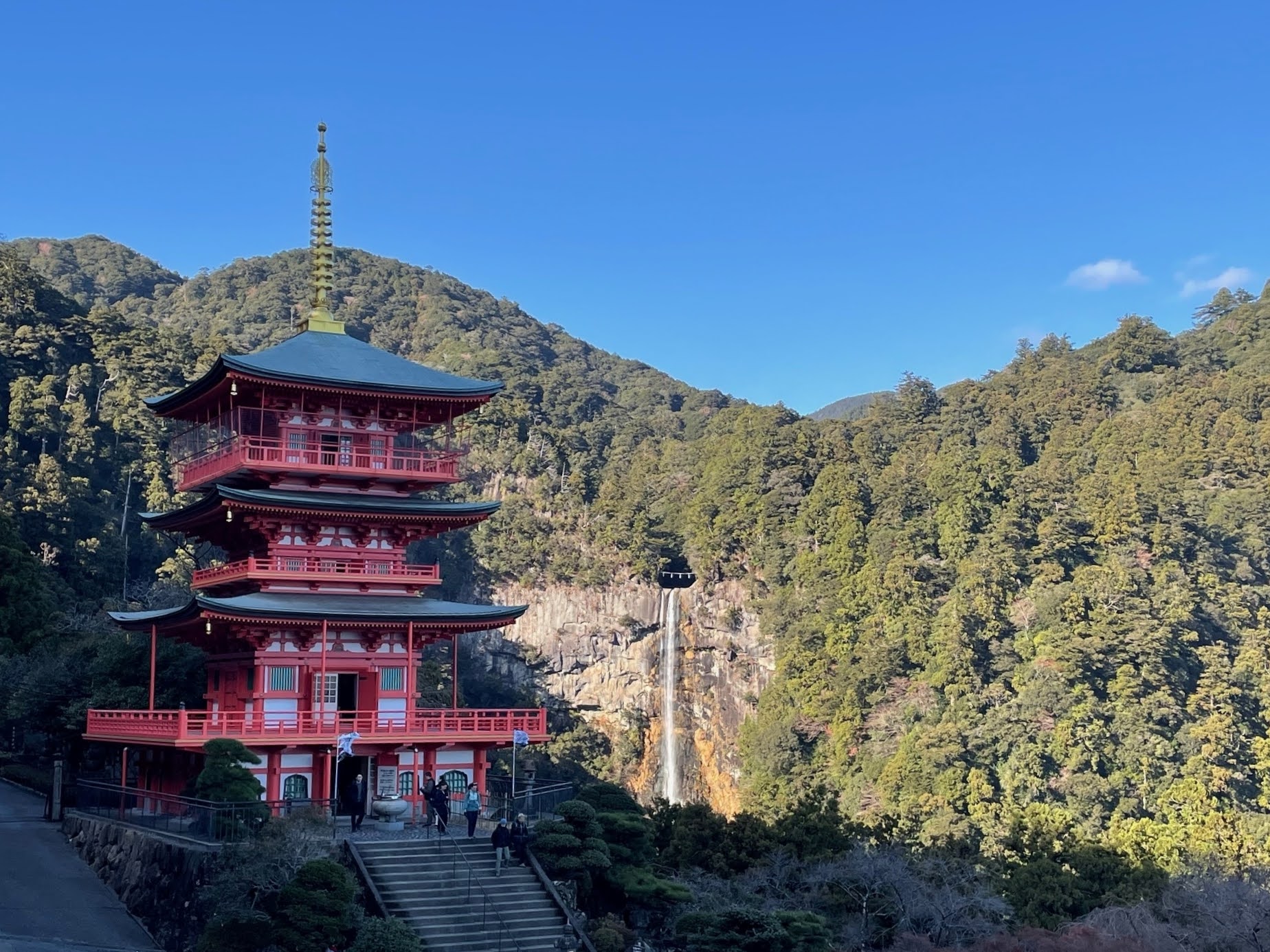
While I am not a religious person, Yoda’s book reminded me that I am a spiritual one (at least from a Shinto perspective). I make an annual pilgrimage to the Kumano Kodo, a holy place that Yoda also visited several times while researching the book, because I recognize it as a rejuvenating power spot (without feeling the need to identify as a strict adherent of Buddhism or Shinto).
What sets Yoda’s book apart from a self-help book (in a good way!) is that she never preaches definitive methods for achieving happiness, but instead openly shares how spirituality helped her personally overcome loss. One of the most illuminating moments in all of her research came when a Shinto priest defined kami as “a space in your heart.” Yoda thus realized that the concept of eight million kami “reminds us that everyone can find something to feel gratitude for.”
But it also shows the dark side
Referring to the flexible approach to religion in Japan, Yoda quotes the old saying that Japanese are “born Shinto, married Christian, and buried Buddhist.” It is with regard to this last part that she recounts a negative personal experience with religion in her home country. In a heart-wrenching encounter, Yoda’s sister met with a Buddhist priest to arrange a funeral and kaimyo (a posthumous Buddhist name) after the loss of a loved one. Sadly, the priest abruptly and emotionlessly quoted an exorbitant “suggested donation” for such services. Yoda reveals that her family was not alone in receiving such dismissive treatment.
And whereas in modern Japan we may only see the peaceful coexistence of Buddhism and Shinto (which Steve McCarty wrote about for my A Passion for Japan anthology), Yoda reminds us that this was not always the case. In an attempt to establish Shinto as the official state religion during the Meiji Restoration, a movement known as haibutsu kishaku led to the widespread destruction of Buddhist facilities.
It doesn’t proselytize
Yoda carefully points out in the book that “I am not a missionary, nor do I have aspirations of being anyone’s guru.” Although her spiritual beliefs did help her overcome personal loss, Yoda further explains that “this book is simply the chronicle of my journey, my experience of finding another way of looking at the world.” Yoda educates and enlightens readers by sharing her journey, but she never suggests that one religious or spiritual path is the absolute way.
This extends to her feelings about Japanese society as a whole. Yoda is obviously extremely proud of and knowledgeable about her native culture, and that passion helps make the book such an engaging read. But she is not a member of the ever-expanding Church of Japan Is Paradise, as she openly acknowledges how certain aspects of Japanese society (such as the gender gap) also led her to reject her home country at various points in her life.
It will make you happy!
In the end, this is a book about gratitude. Yoda explains that “Spirituality isn’t an identity; it’s the world itself.” While taking readers on a fascinating journey through the spiritual landscape of Japan, she also offers insights into overcoming loss and finding gratitude. Simply put, good books have always brought me happiness, and this joyful book is no exception.
As mentioned, when I asked Yoda whether she considered Japan to be a religious country, she replied that the short answer is no — but that it definitely is a spiritual country. She importantly added, though, that “the long answer is my book!” I highly recommend seeking out this long answer.