
The five-kilometer pedestrian loop that circles the Imperial Palace in the heart of Tokyo is one of Japan’s most famous running routes.
Best season for a run?
Although beautiful throughout the year, I personally recommend an early morning run in autumn. The temperature is just right to keep you cool while offering stunning foliage views lit by the slowly rising sun.
The area includes “runners’ stations” where you can rent lockers, showers, and even running shoes.
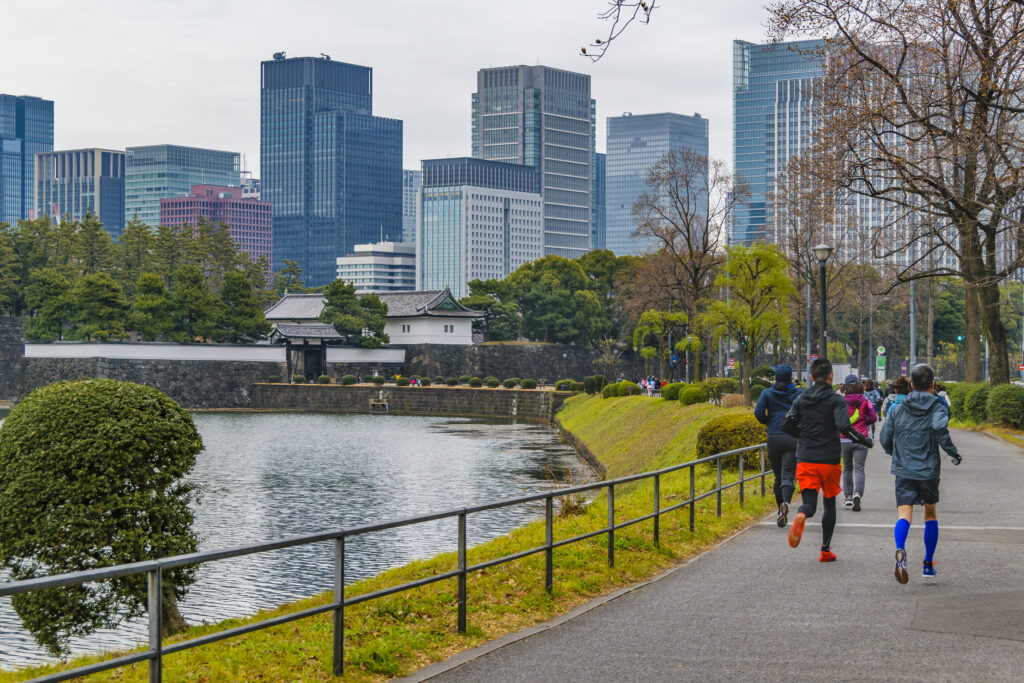
The scenery around the route combines the traditional architecture of the palace walls with the modern buildings of Japan’s business districts, showcasing Tokyo’s old-meets-new identity. If you love city lights, an evening or night run may be fun too!
Historic sights along the loop
The Imperial Palace and its environs have been the physical and symbolic heart of Tokyo — perhaps even of all Japan — across centuries, and a journey around the loop takes you past many historic buildings and structures.
The palace grounds originally held a samurai castle, which was significantly developed as the seat of power for the Tokugawa shogunate (1603 – 1868), although the site is older still. That’s why today’s palace is still ringed by a moat and its walls feature castle-like architecture.
Following the fall of the shogunate, Emperor Meiji moved from the Imperial Palace in Kyoto to Edo Castle in 1869.
One of the most picturesque locations along the route is Seimon Ishibashi Bridge, also known as Megane (Glassses) Bridge. The current structure, with its two stone arches, dates to 1889.
To the east, the palace abuts the Marunouchi business district, where many of Japan’s top corporations are headquartered. Some of the runners you see on the loop may be businesspeople who work nearby! The area also includes the Dai-ichi Life Hibiya First building, whose predecessor building was used as headquarters for the US occupation of Japan from from 1945 to 1952.
Whether you are a history nut or simply want to get in your steps, the Imperial Palace loop has got you covered!