
A different side of Aichi
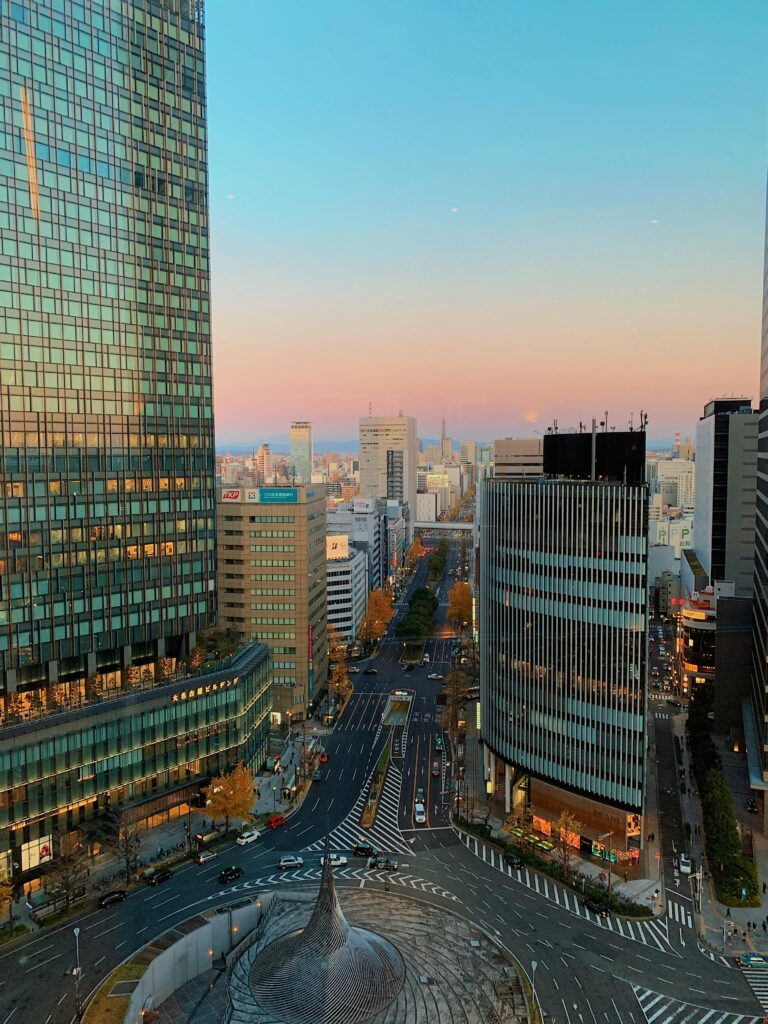
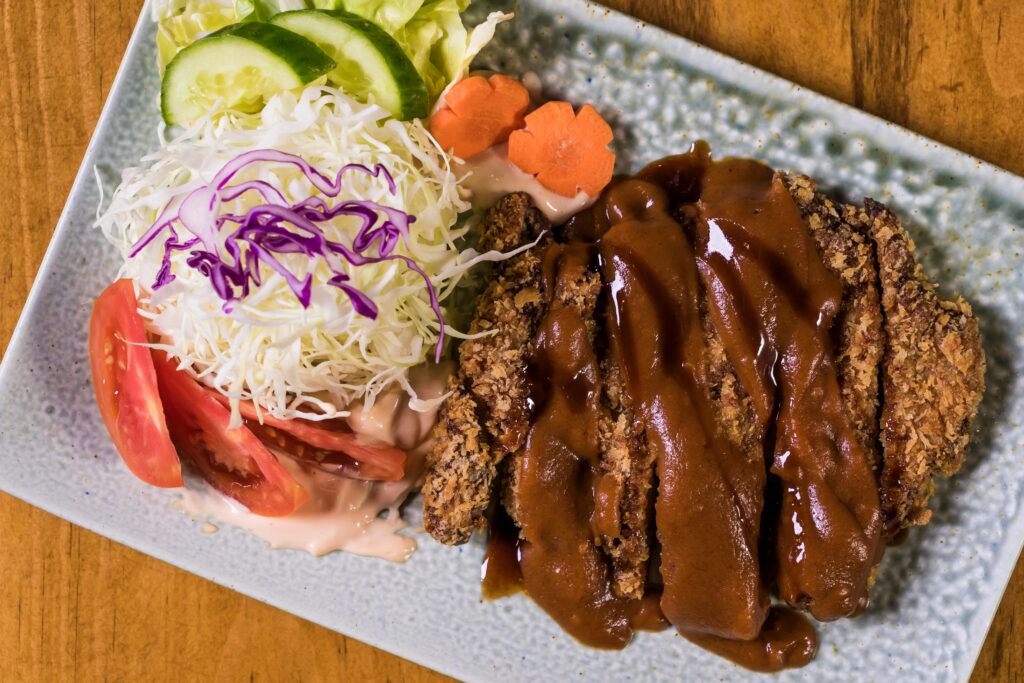
When people think of Aichi Prefecture, Nagoya is usually the first place that comes to mind. The city is known for its energetic downtown atmosphere, famous local dishes like miso katsu (pork cutlet smothered in umami-rich miso sauce) and tebasaki (chicken wings), and the urban scenery of sleek bullet trains passing between modern office towers. But if you drive south from Nagoya for a little over two hours, a completely different side of Aichi begins to emerge. The Atsumi Peninsula is surrounded by the sea and moves at a much slower pace.
This time, I set out from Nagoya on a road trip through the Atsumi Peninsula.
Starting the road trip from Nagoya
For international travelers, Nagoya is a very convenient starting point for a self-drive journey. Around Nagoya Station, you’ll find rental companies such as Toyota Rent a Car and Nippon Rent-A-Car, making it easy to pick up a vehicle before heading out. As long as you have a valid driver’s license and an international driving permit recognized in Japan, planning your own route is surprisingly simple. Compared with traveling by train, driving is much better suited to the Atsumi Peninsula, where many coastal spots, scenic viewpoints, and small fishing villages are easier to reach by car.
After leaving central Nagoya, the scenery outside the window is distinctly urban at first. But as you continue south, the buildings gradually become lower and give way to open fields, coastal roads, and small harbor towns. With the car window slightly open, you can even catch the faint scent of the ocean breeze. That gentle transition from city to countryside is one of the things I love most about road trips in Japan.
Cape Irago: Where the peninsula meets the sea
One of the best first stops on the Atsumi Peninsula is Cape Irago, located at its southern tip.
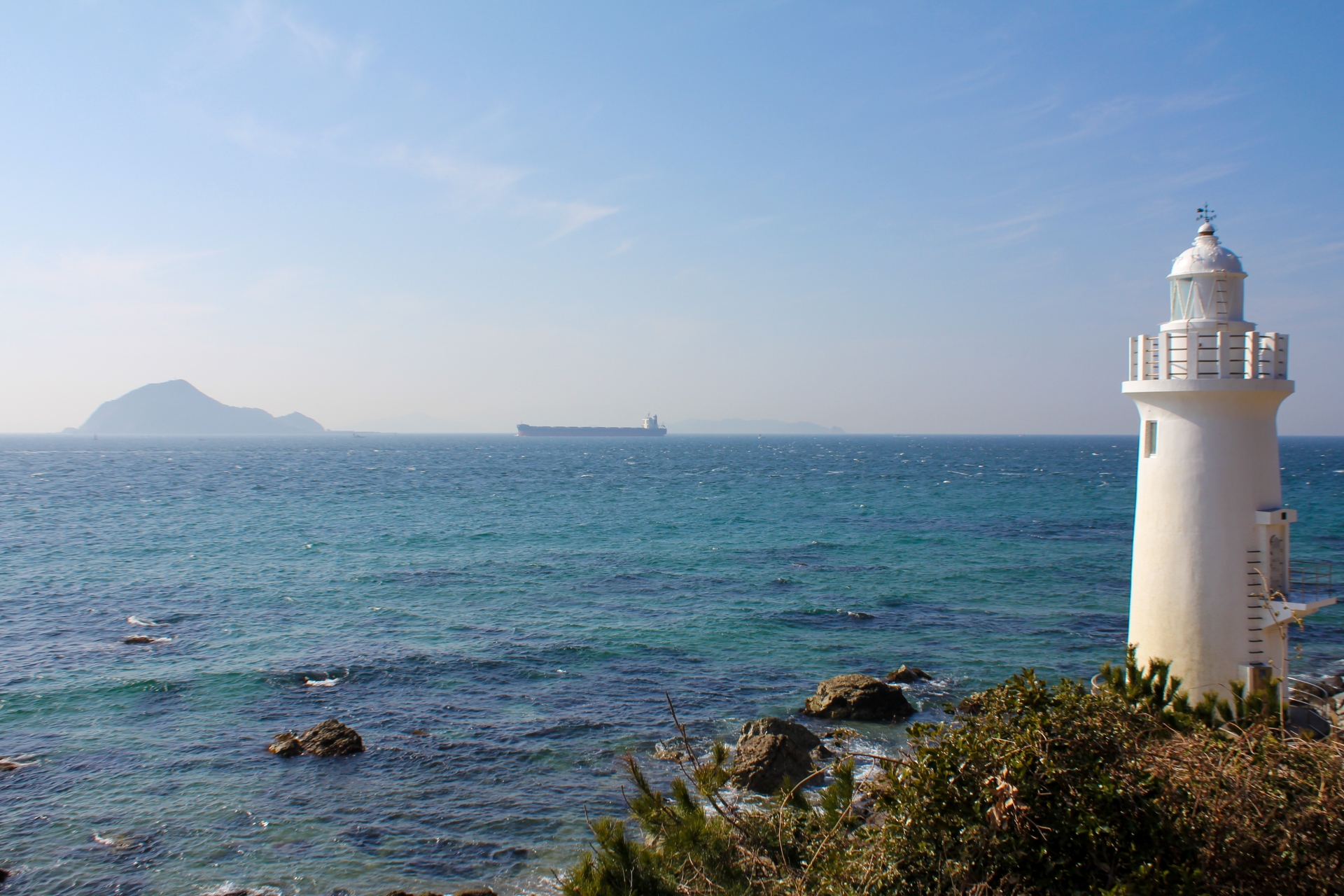
At the very edge of the peninsula, visitors can enjoy views of both the Pacific Ocean and Mikawa Bay. The area’s most iconic landmark is the white Irago Lighthouse, standing quietly by the shore as if watching over passing ships and the changing seasons.
From the lighthouse, you can see Kamishima Island in the distance, known as the setting of The Sound of Waves by Japanese author Yukio Mishima. Even if you’re unfamiliar with Japanese literature, the scenery feels cinematic: the white lighthouse against the blue sea, a small island on the horizon, and the sound of the wind moving across the coast. On clear evenings, the sun slowly sinks into the ocean, bathing the shoreline in soft golden light.
Irago Lighthouse was selected as one of Japan’s “50 Best Lighthouses,” and it’s easy to see why. It remains one of the most memorable stops on this road trip.
Koijigahama Beach: A shoreline of poetry and legend
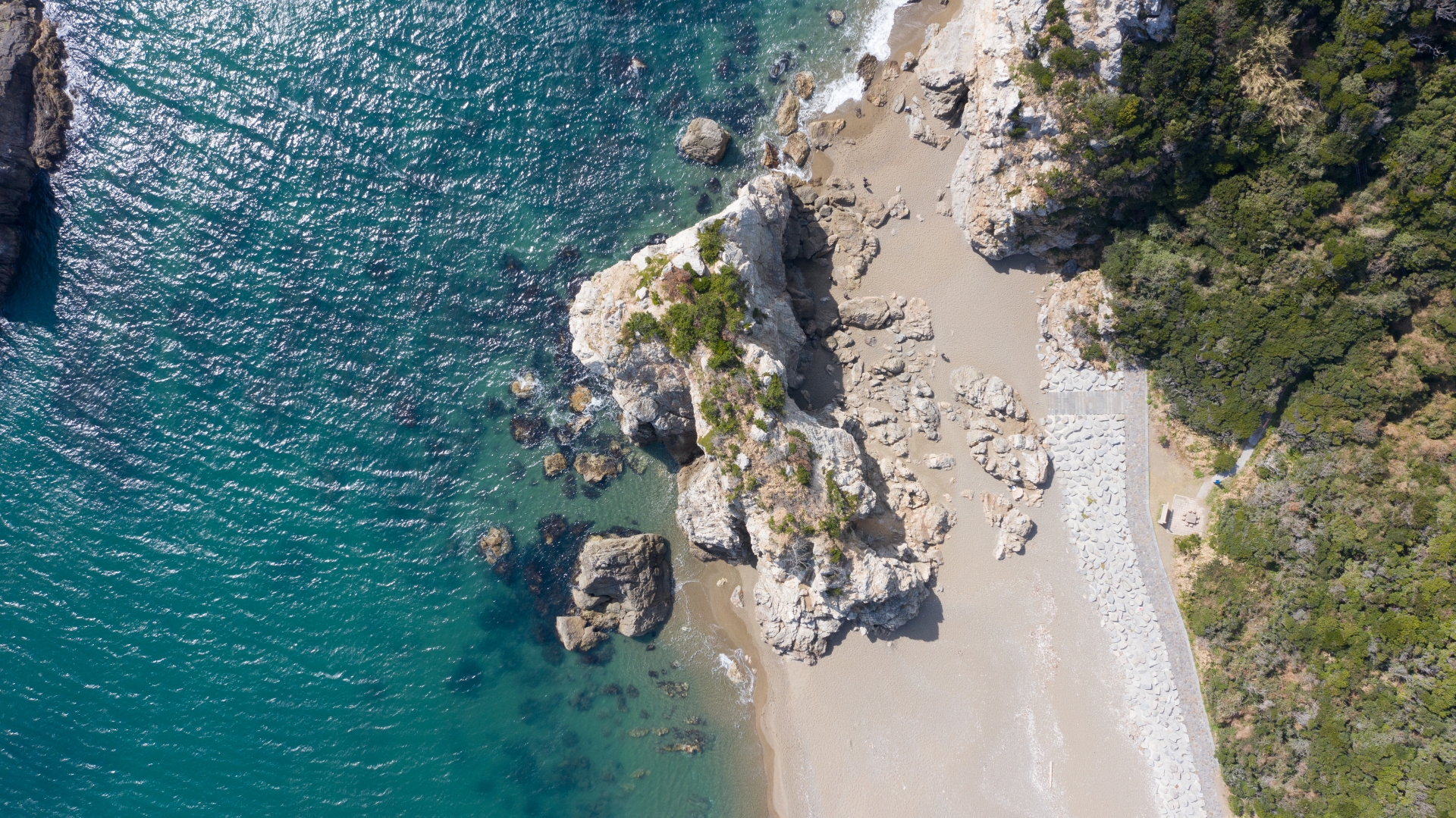
From the lighthouse, a coastal path stretches about one kilometer along the Pacific side toward Hii no Sekimon Stone Gates, a rock formation known as the “Gate of the Rising Sun.” Along this path lies Koijigahama Beach.
The name “Koijigahama” can roughly be translated as “Beach of the Lovers’ Path.” Its white sand has been shaped over centuries by the strong Pacific waves, forming a beautifully curved coastline. Although the name sounds romantic enough to feel modern, Koijigahama has appeared in Japanese poetry since the Edo period. According to local legend, a noble man and woman fell into a forbidden love, fled the capital, and eventually escaped to this very shore, giving the beach its poetic name.
Koijigahama is also associated with “The Coconut,” a poem by the Japanese poet Toson Shimazaki. The poem tells the story of a coconut drifting ashore from a distant southern island, carrying themes of travel, longing, and faraway places. Standing on the beach and watching the waves roll in, it’s easy to understand why this coastline inspired poetry. It’s not a place filled with activities or attractions; instead, it’s somewhere to slow down, walk quietly, and simply watch the sea.
Fresh seafood by Irago Port
Of course, no visit to the Irago area would be complete without seafood.
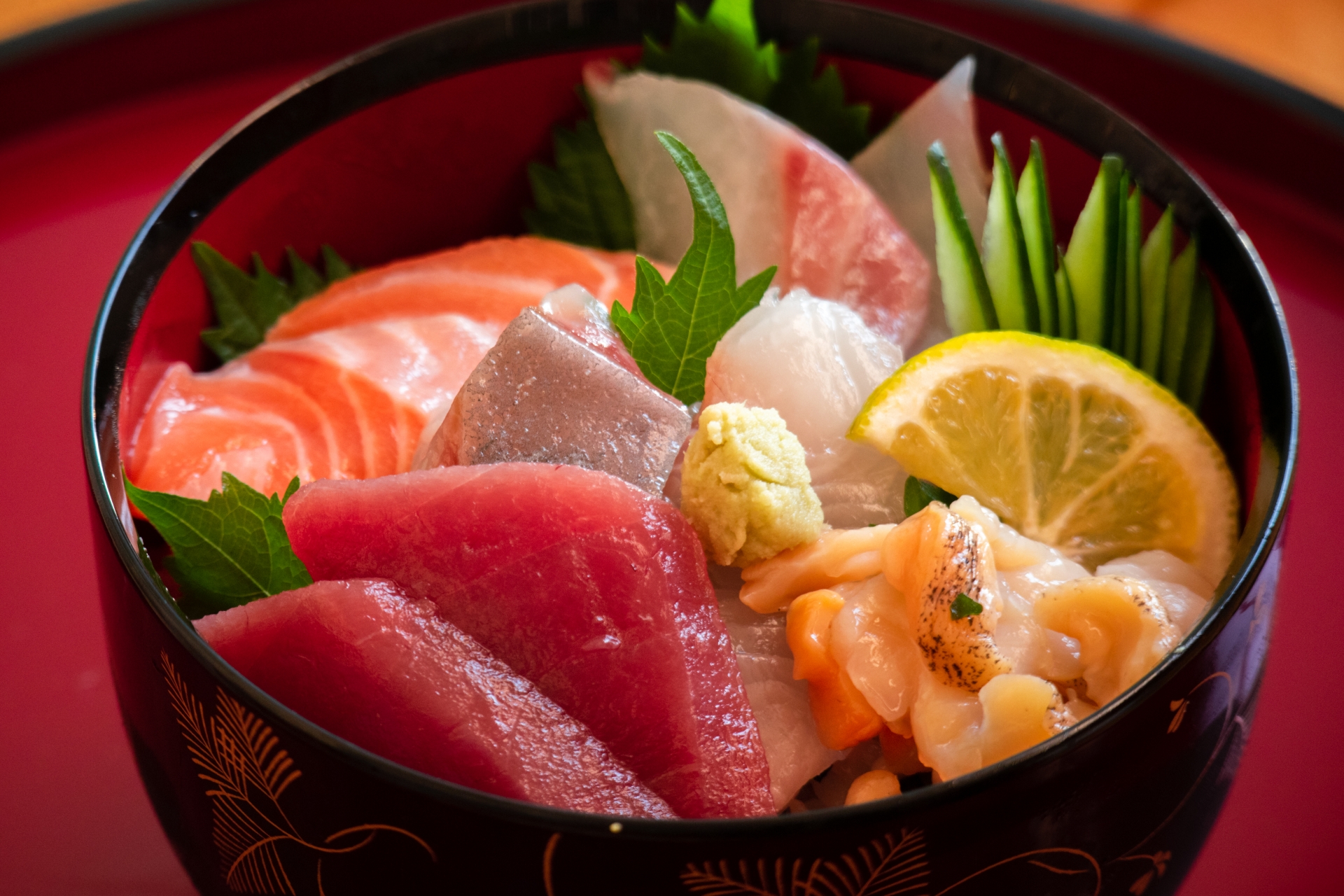
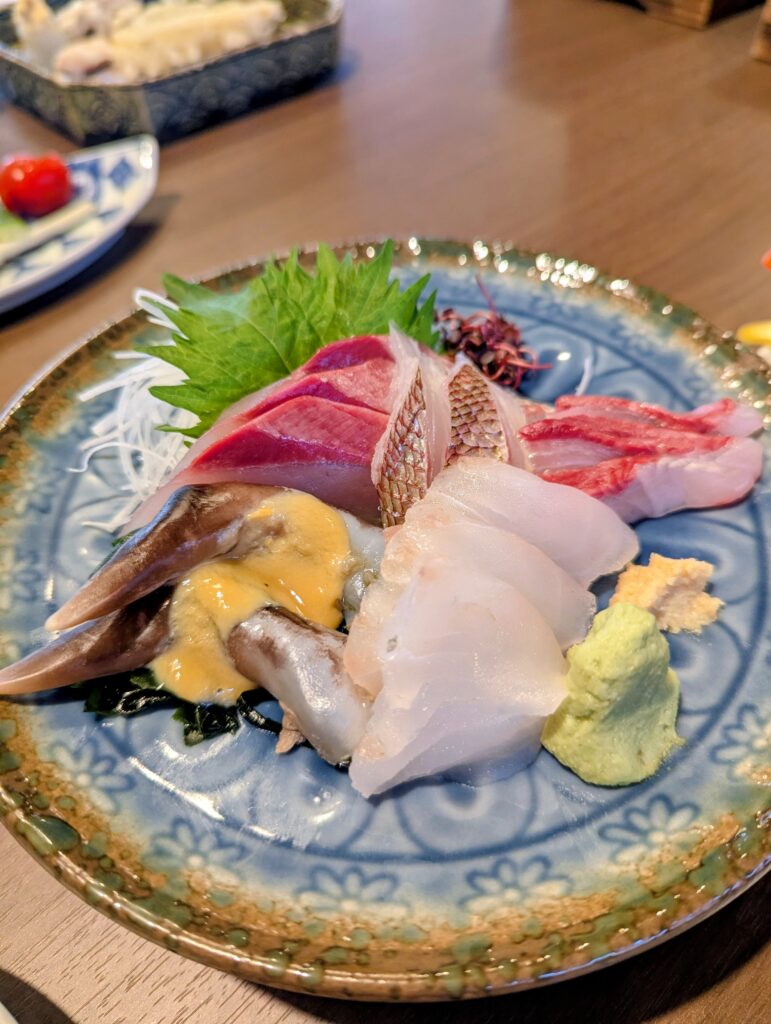
Around Irago Port, many local eateries serve sashimi, kaisendon (seafood rice bowls), and the large clams that the Atsumi Peninsula is famous for. A kaisendon typically consists of fresh slices of fish and shellfish served over rice, making it a perfect lunch during a day of driving. Compared with polished tourist restaurants, these harbor-side diners feel much more connected to everyday life. The freshness here doesn’t feel staged or marketed—it simply comes from being so close to the sea.
Mt. Zao Observation Platform: Seeing the peninsula from above
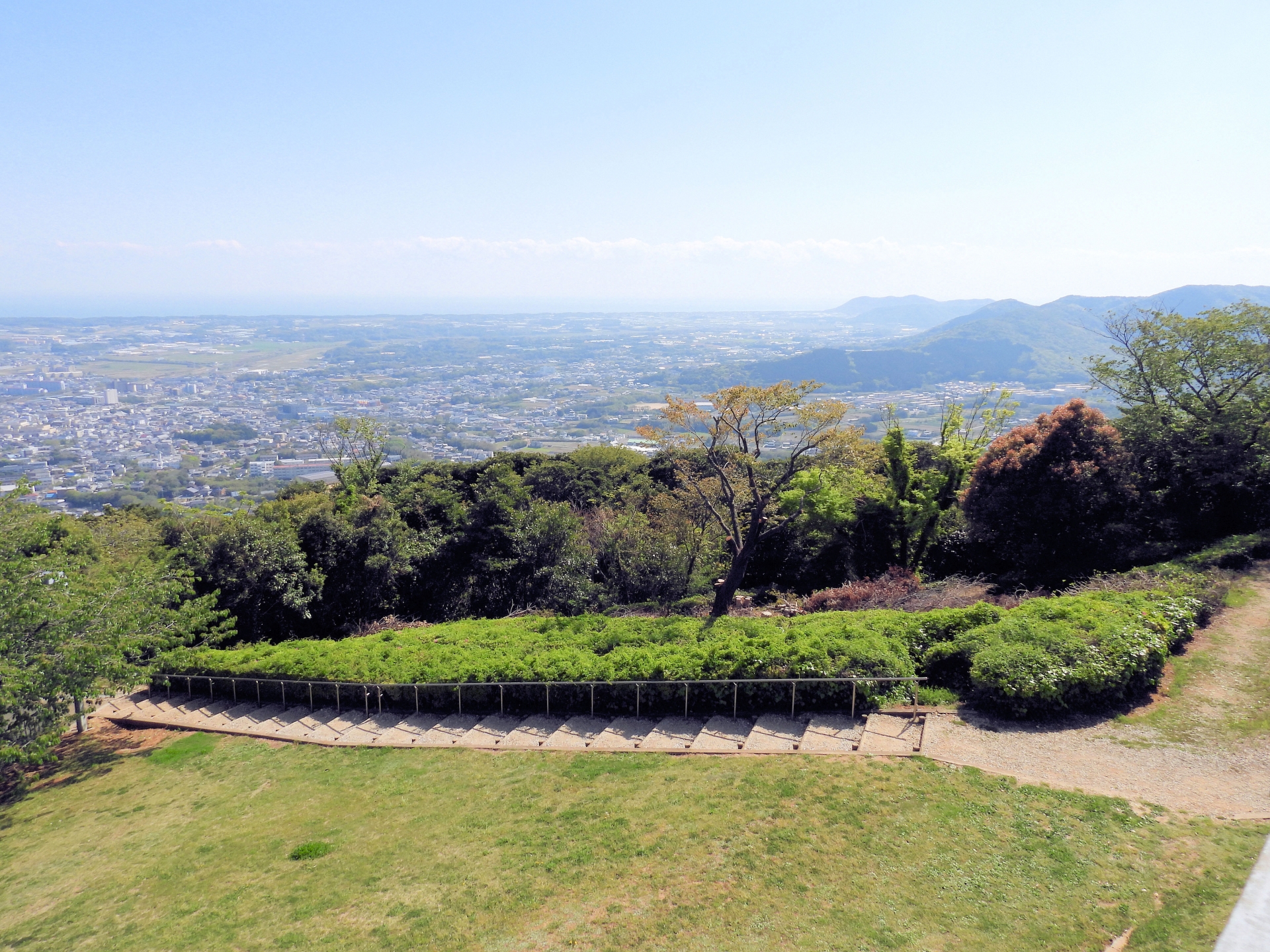
If you have extra time, it’s worth driving up to Mt. Zao Observation Platform.
From the summit, you can take in the full shape of the Atsumi Peninsula, with its coastline, farmland, and quiet bays stretching into the distance. During the day, you can see the Pacific Ocean and Mikawa Bay meeting on the horizon, while at night the small harbor towns glow quietly below. For first-time visitors to rural Japan, this viewpoint offers an excellent way to understand the peninsula’s landscape: sea on one side, fields on the other, and small communities nestled between them.
Fukue Town and the quiet memory of Showa Japan
Yet what stayed with me most about this trip wasn’t a specific attraction, but the overall character of the Atsumi Peninsula itself—calm, quiet, and unhurried.
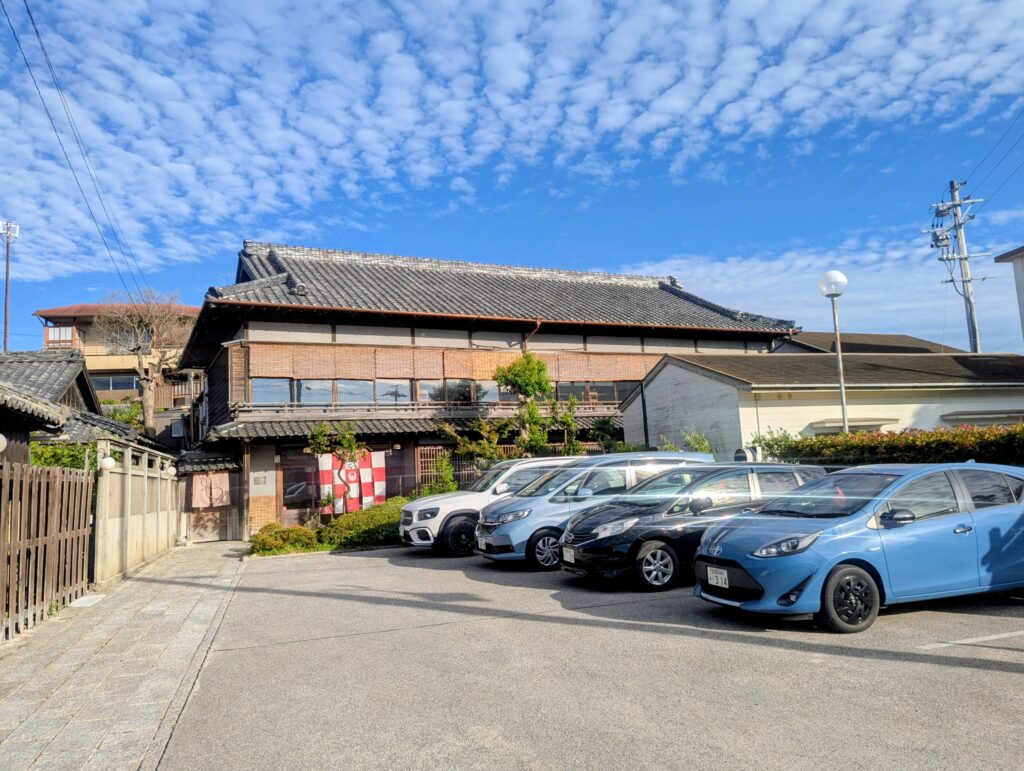
That impression became even stronger while walking through Fukue Town. It isn’t a major tourist destination, and the streets are never crowded, but many wooden buildings from Japan’s Showa era still remain. The Showa period, which spanned from 1926 to 1989, often evokes a nostalgic image of everyday life in Japan. Fukue Town hasn’t been polished into a perfectly curated tourist district. Instead, it feels authentic precisely because people continue to live there.
Kakujoro: A historic ryokan by the streets of Fukue
Quietly standing among these streets is Kakujoro, a traditional Japanese inn established in the first year of the Showa era.
Kakujoro has been designated a Registered Tangible Cultural Property of Japan, a designation given to buildings of historical, architectural, or cultural significance. In many ways, staying here feels less like checking into a hotel and more like stepping into a living piece of history.
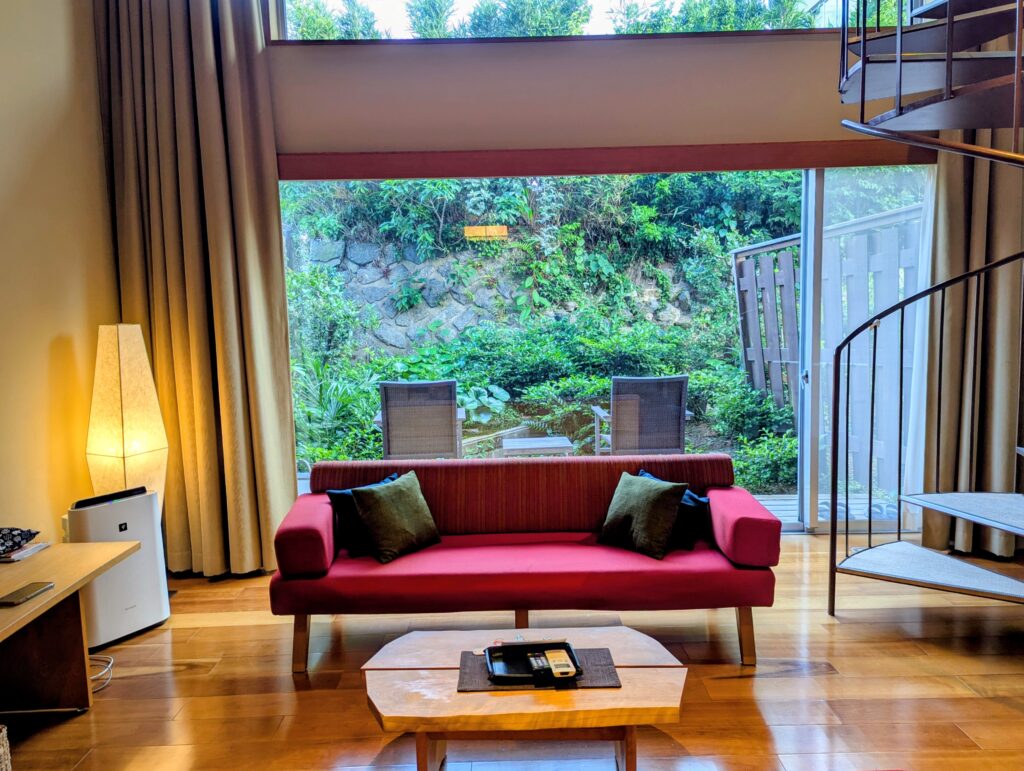
There’s nothing overly extravagant about the inn. What makes it memorable is the natural warmth of the wooden architecture itself. Stepping inside, you notice the scent of aged timber, antique furniture, softly dim lighting, old wooden window frames, and the traces of time throughout the building. The atmosphere encourages you to slow down and appreciate details that are often overlooked in modern accommodations.
Dinner is another highlight of the experience.
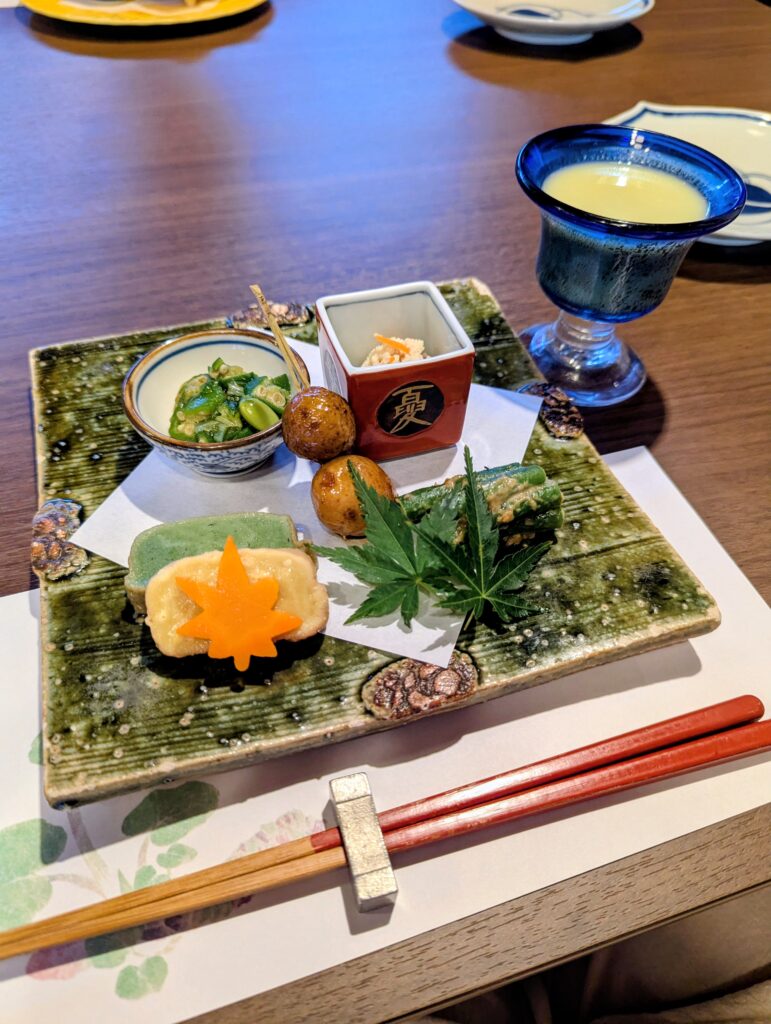
The cuisine at Kakujoro centers on the flavors of the peninsula’s mountains and sea. The traditional kaiseki dinner features local seasonal ingredients prepared course by course in the Japanese style. Much of the seafood comes directly from the Irago fish market, while the vegetables are sourced locally whenever possible. During autumn and winter, guests may also have the opportunity to try wild-caught torafugu (tiger pufferfish), considered a delicacy in Japan.
Even for travelers unfamiliar with Japanese cuisine, the meal becomes more than just seafood—it is a way to experience the seasons of the peninsula through taste. The inn also offers vegan kaiseki meals prepared with plant-based broth and local vegetables, making traditional ryokan dining more accessible to travelers with dietary restrictions.
After dinner, the perfect way to end the day is with a soak in Irago Onsen.
In Japanese ryokan culture, a daiyokujo is a large shared bath for guests and one of the defining experiences of staying at a traditional inn. The waters of Irago Onsen are mildly alkaline and are often referred to as a “beautifying hot spring” because they leave the skin feeling smooth after bathing. For international travelers, Japanese hot springs may feel unfamiliar at first. But once you learn the basic etiquette, such as washing before entering the bath, the experience becomes surprisingly peaceful.
More than a luxury inn, Kakujoro feels like a reflection of the Atsumi Peninsula itself. It reminds visitors that the most meaningful part of travel is not always how many places they visit, but the rare moments when they truly slow down.
Slow travel on the Atsumi Peninsula
These days, many trips feel packed with schedules and endless movement. But the Atsumi Peninsula is best experienced at a slower pace: watching the ocean in the morning, eating seafood for lunch, wandering through harbor towns in the afternoon, and ending the night with a quiet soak in a traditional inn.
Some places stay with you not because they are lively, but because they allow you to slow down. This road trip from Nagoya to the Atsumi Peninsula was exactly that kind of journey.