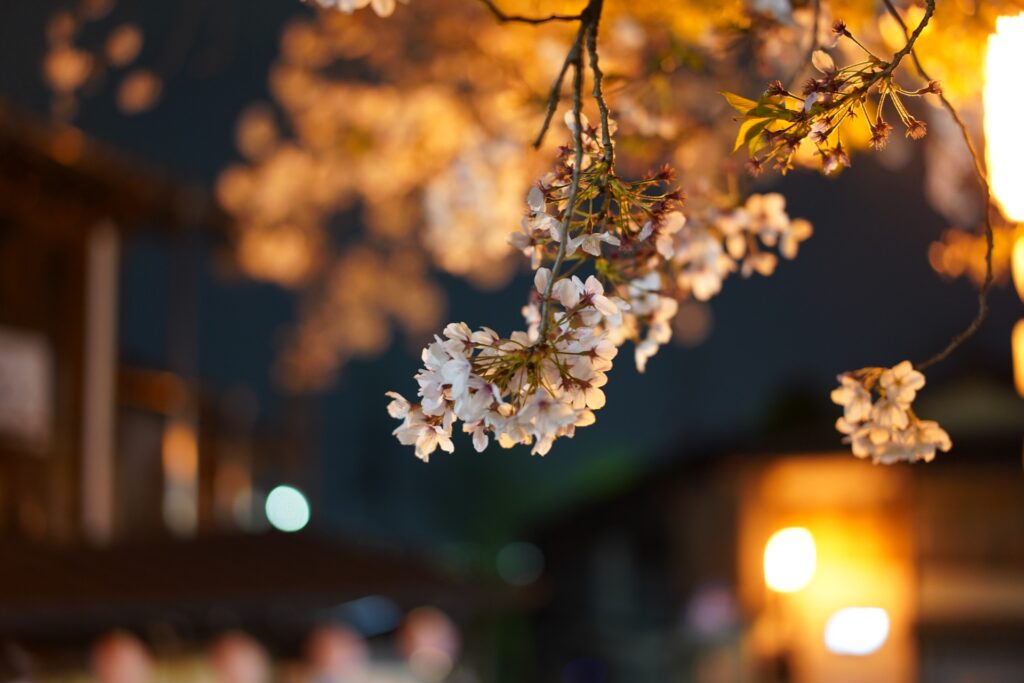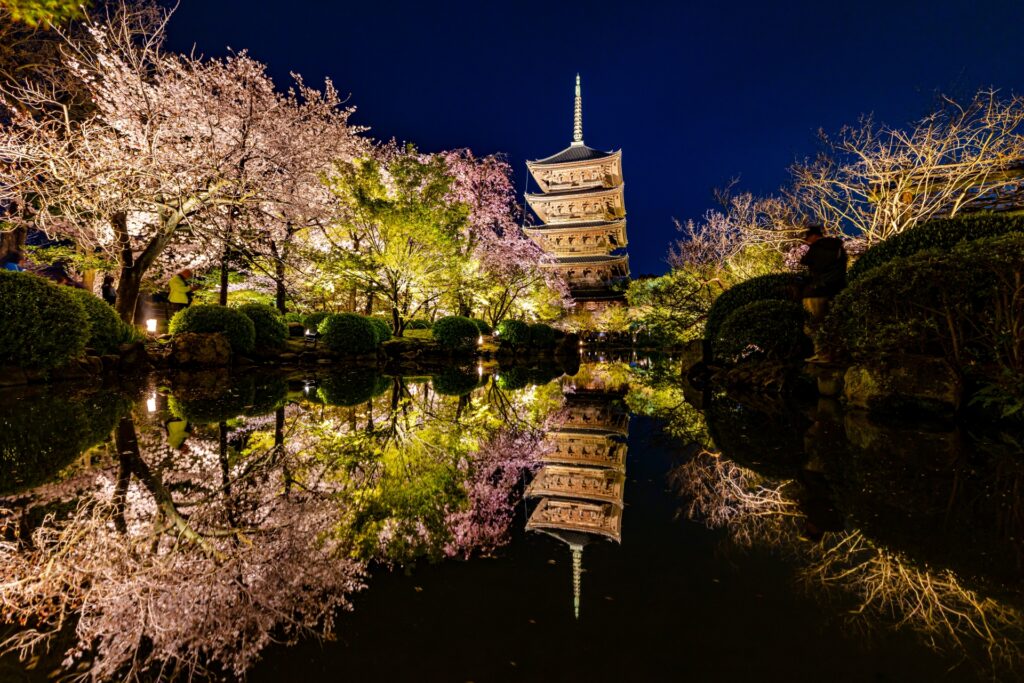
While hanami — the beloved tradition of enjoying cherry blossoms — is often associated with daytime picnics and strolls, the beauty of cherry blossoms does not fade after sunset. In fact, crowds continue to gather at famous cherry blossom spots across the country to admire their soft pink petals shimmering under the moonlight, amid glowing lanterns and colorful illuminations.
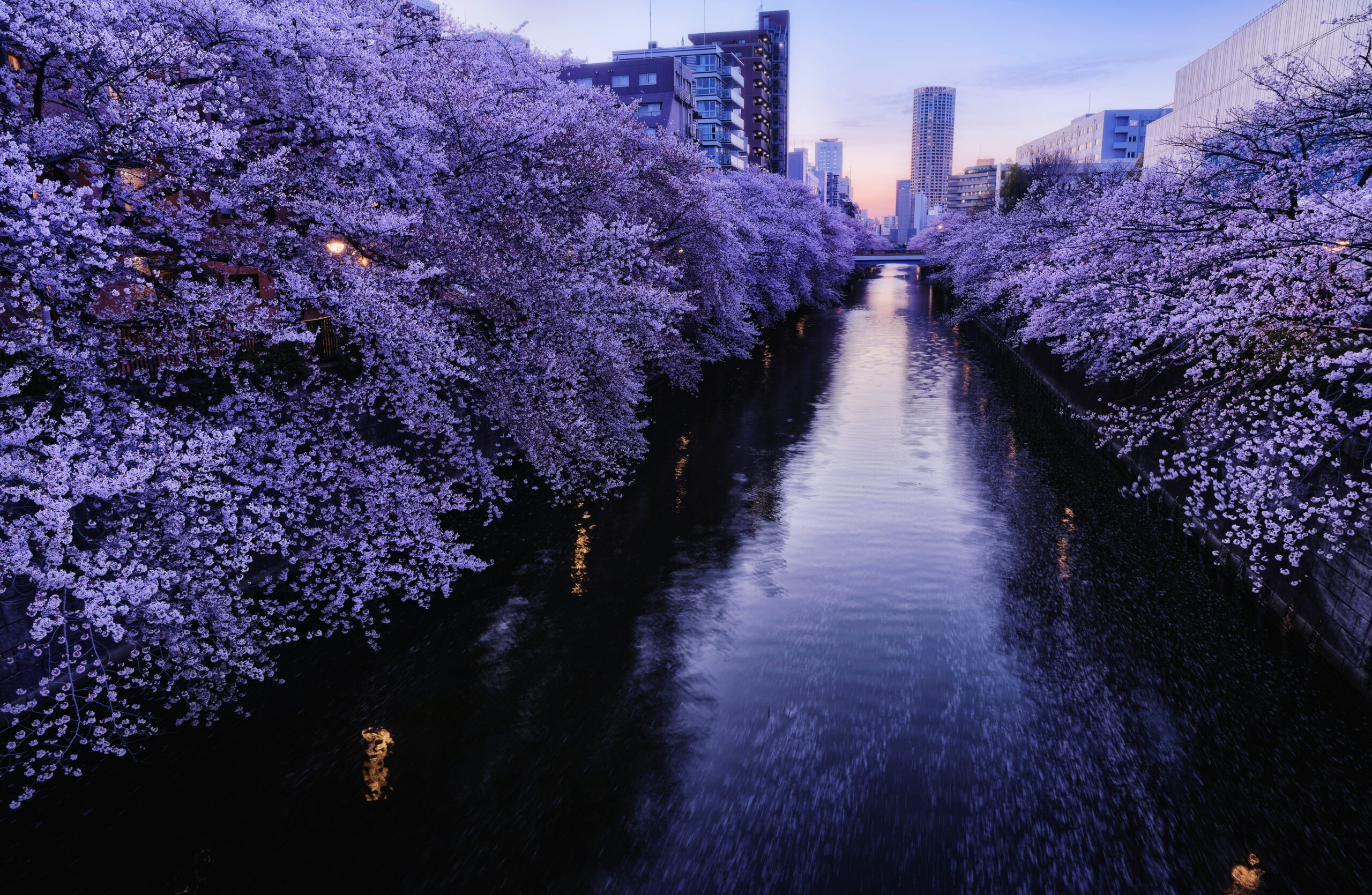
Yozakura spots in Tokyo
One of the best places to witness yozakura (cherry blossoms at night) is along the Meguro River in Tokyo, one of the most famous cherry blossom viewing spots in the capital — nay, the country. Perhaps going at night can help you avoid the peak crowds, or you can stop by for dinner in the neighborhood to catch both the dusk and nighttime scenery.
Other popular yozakura spots in Tokyo include Ueno Park; Chidorigafuchi Park, where you can take a rowboat out under the blossoms; and Rikugien Garden, which beautifully illuminates its weeping cherry tree.
Yozakura spots in other parts of Japan
There are many great yozakura spots outside the capital as well. Since sakura start blooming in the warmer southwest and later in the cooler north, you can chase yozakura across the country for weeks if you have it in you! (Do note that sakura bloom at slightly different times each year, depending on the weather.) Here’s a list of five stunning yozakura sites you may want to check out — and the cities and towns surrounding them have a lot to offer too!
Kakunodate Samurai Residences Street in Semboku City, Akita Prefecture
Many of the weeping cherry trees at Kakunodate have been designated as Natural Monuments. The area is filled with historic buildings, providing a perfect backdrop for the elegant blossoms. For reference, in 2026, the town’s cherry blossom festival was scheduled to run from April 15 to May 5.
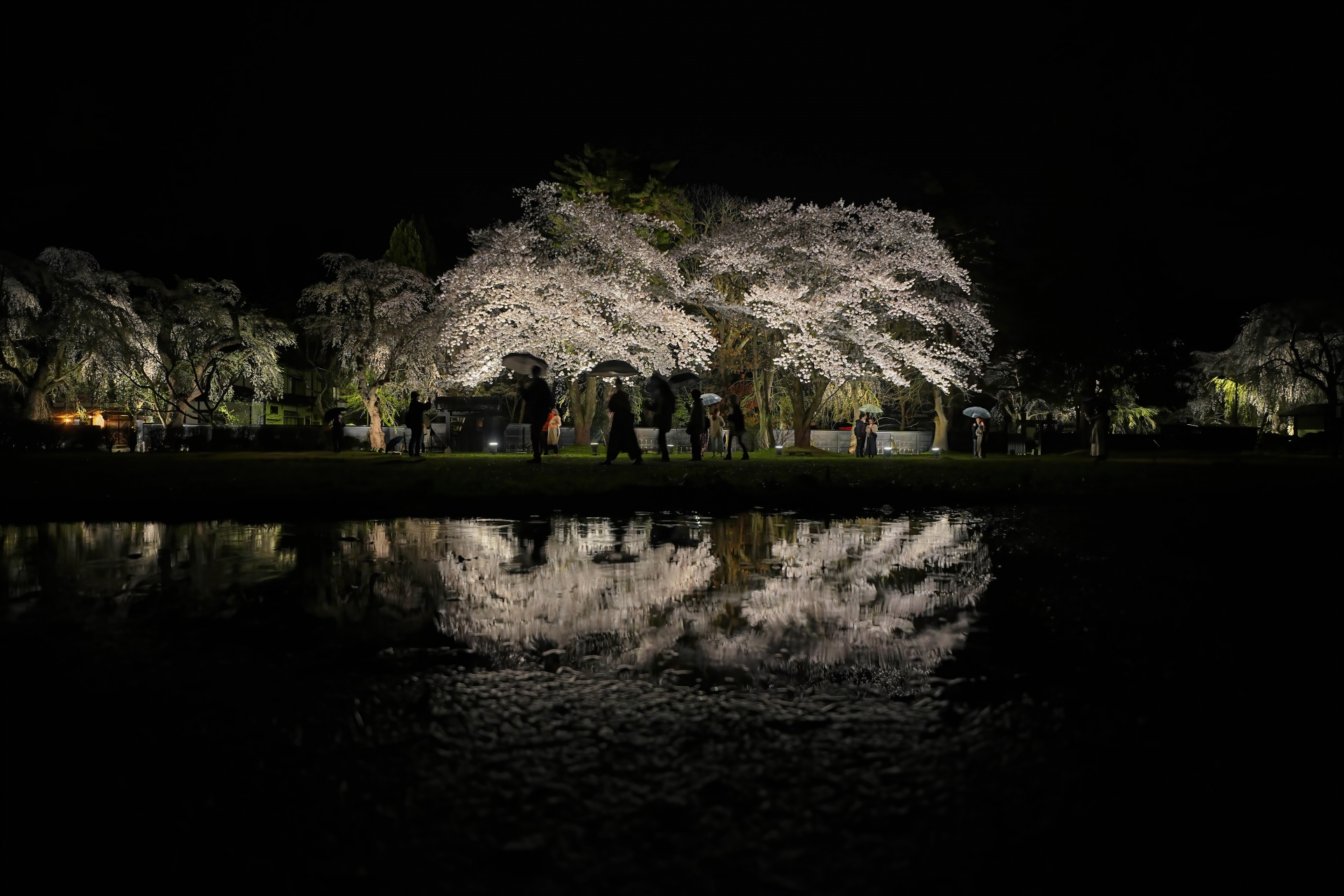
Fukushima Prefecture
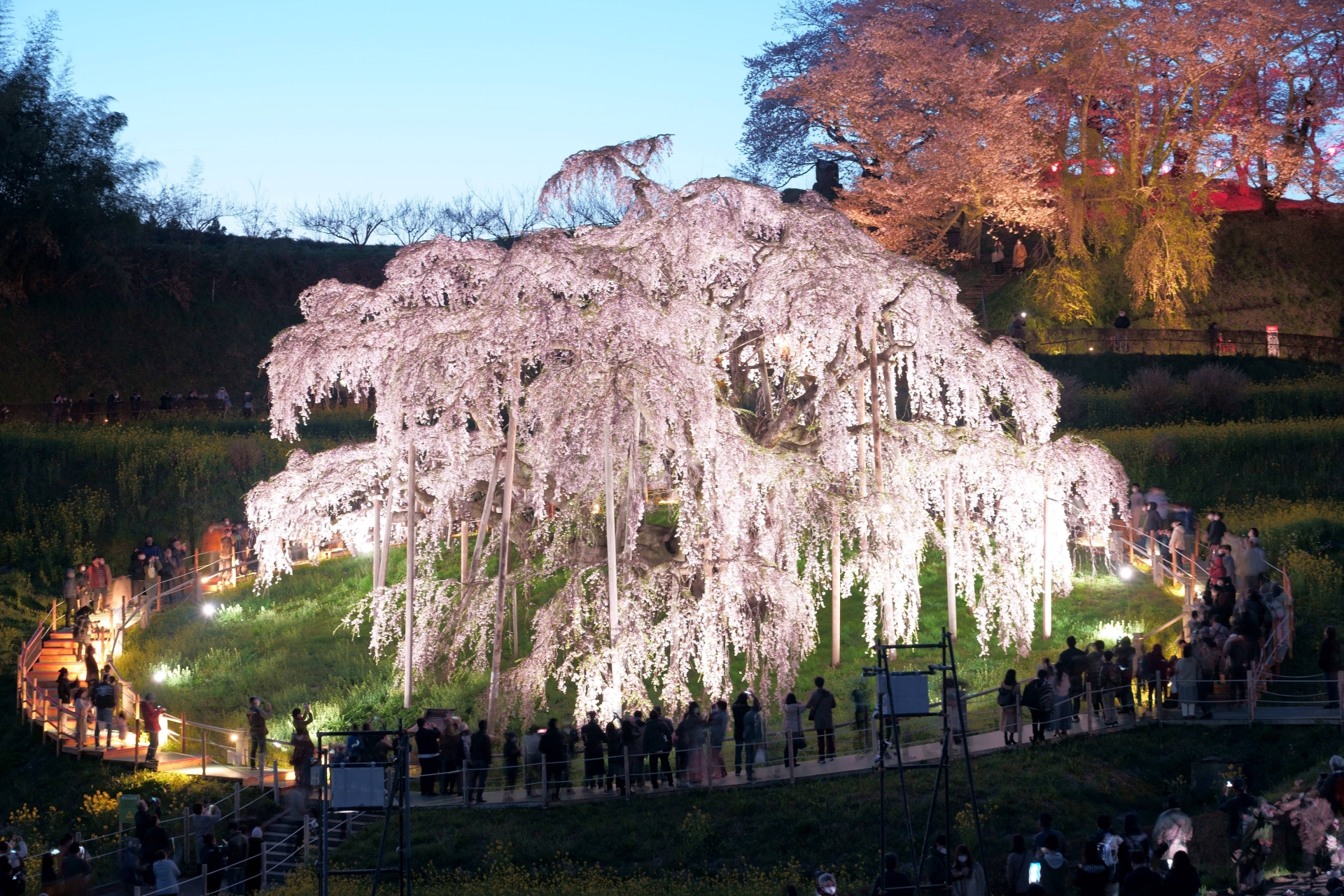
Fukushima boasts many famous hanami spots, including Miharu Takizakura, a Natural Monument believed to be over 1,000 years old, and the row of weeping cherry trees in Kitakata City. Many of its cherry blossom festivals, such as the one at Tsurugajo Castle Park in Aizu Wakamatsu City, include nighttime illuminations. The prefecture’s varied terrain means you can see cherry blossoms over a relatively long period.
Hirosaki Park in Hirosaki City, Aomori Prefecture
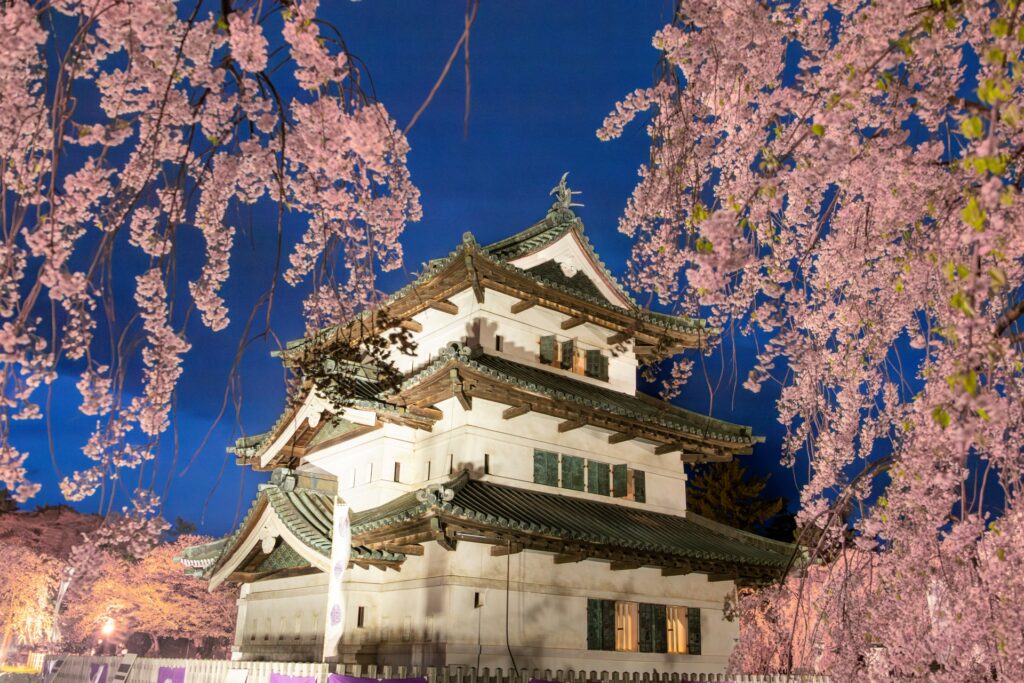
Roughly 2,600 flowering cherry trees of 52 varieties make Hirosaki Park in Hirosaki, Aomori Prefecture, one of northern Japan’s most famous hanami spots. In fact, the castle park has been chosen as one of the country’s top three places to view yozakura.
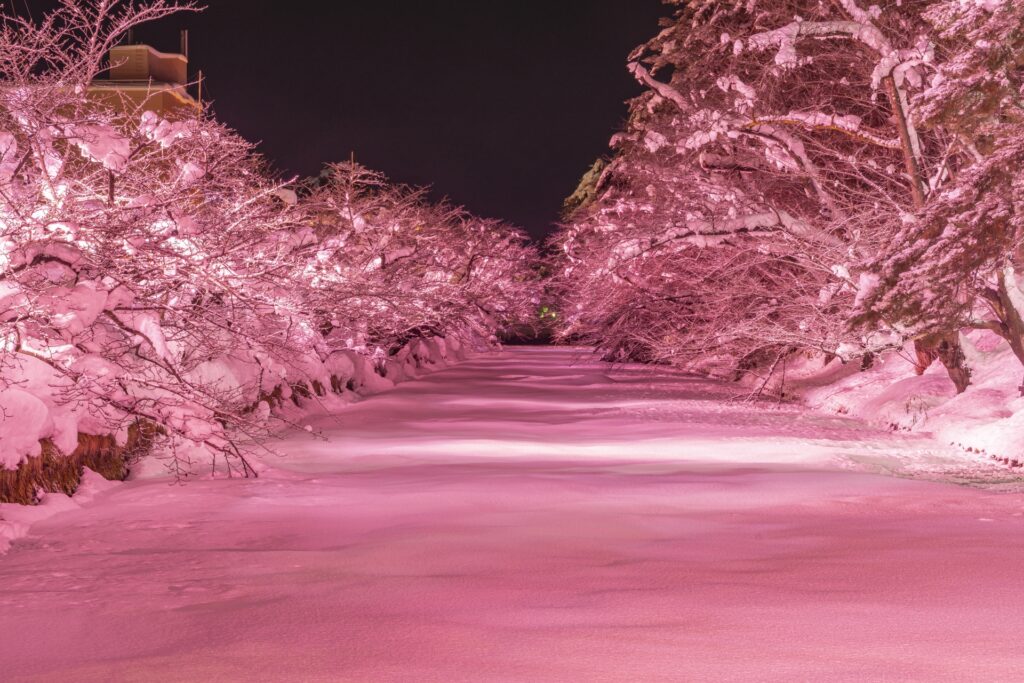
In recent years, Hirosaki has been making the most of its snowy climate by putting on “Winter Cherry Blossom Illuminations” that light up the castle grounds with pink lights at night. The illumination is held for roughly three months, far longer than the ephemeral blossoms themselves.
Takada Castle Park in Joetsu City, Niigata Prefecture
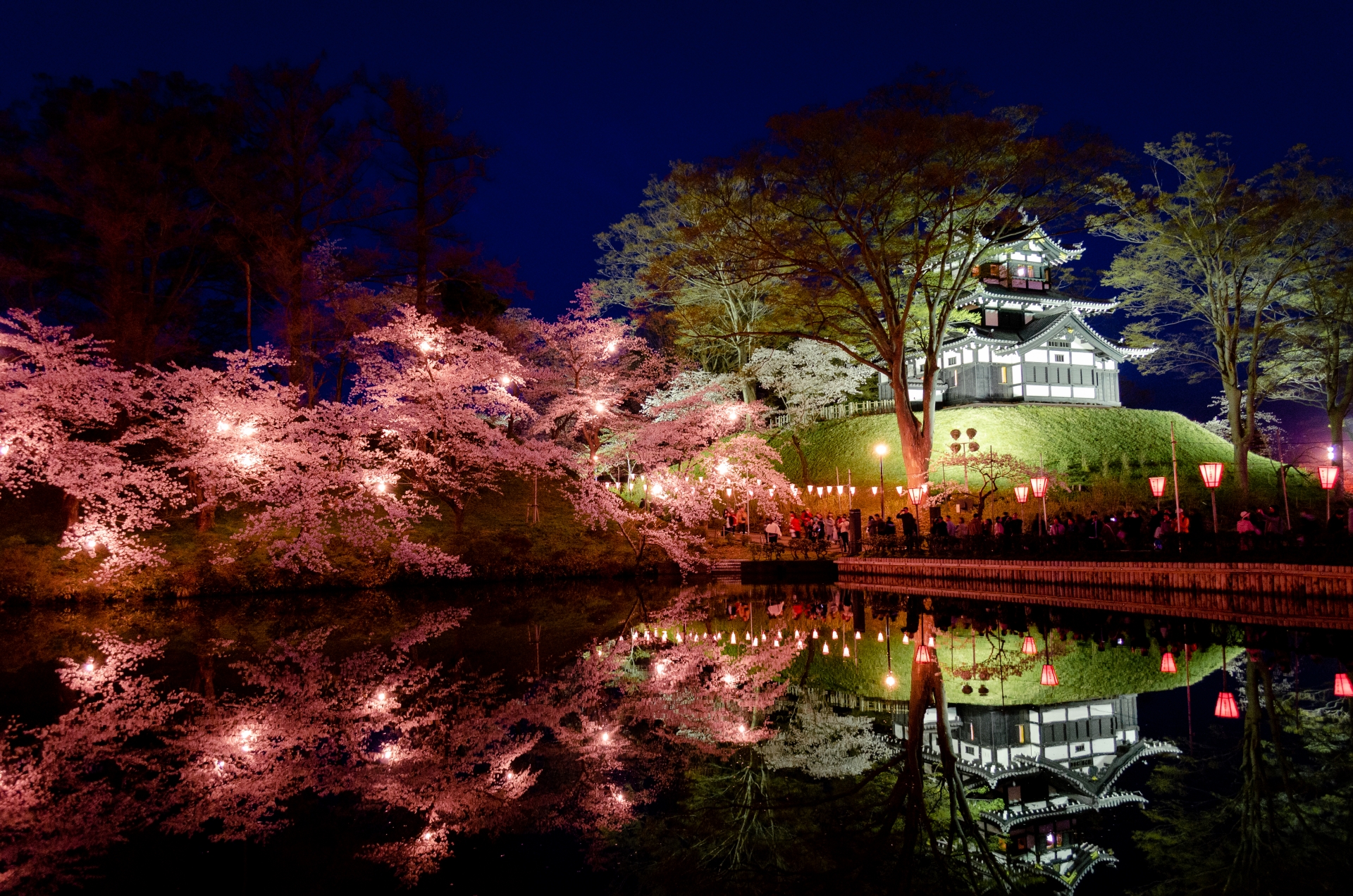
Another of Japan’s top three yozakura spots is Takada Park in Niigata Prefecture, where roughly 4,000 cherry trees are bathed in illuminations and lantern light at night. During the day, the view of cherry trees against a backdrop of snow-capped mountains is stunning as well. For reference, in 2026, Takada Park’s cherry blossom viewing festival was held from April 6–22.
Kyoto City
For sheer volume of scenic locations and yozakura illumination events, it’s hard not to mention Kyoto. While Japan’s ancient capital can certainly get crowded (move over, Meguro River!), finding peaceful moments under the cherry blossoms at night can help you form a deeper connection with this wonderful city. Kyoto’s cherry trees typically bloom in late March and early April.