
In Tetsuko Kuroyanagi’s memoir, Totto-chan: The Little Girl at the Window, her elementary school headmaster would tell students that he wanted to see “something from the ocean and something from the hills.” While he was referring to the students bringing a balanced lunch, this has become my personal motto for my cycling and hiking adventures in Japan. The perfect weekend getaway for me involves setting out on foot and/or on two wheels to explore places that offer dramatic views of both the water and the mountains. Fortunately, one of my go-to adventures offers a full day of each.
Taking the superhero train to the sacred trail
I head to the mountains first. Mt. Ishizuchi in Ehime Prefecture on Shikoku holds the distinction of being both one of the seven sacred peaks and one of the Hyakumeizan, or “100 mountains” of Japan. As I board my limited express train in Okayama, I am immediately reminded of the blend of the ancient and the modern that always keeps life in Japan interesting.
Here I am, on my way to a sacred mountain known as one of the ancient centers of Shugendo (mountain asceticism), yet the exterior of my train is adorned with images of Anpanman, the beloved children’s superhero. Google-sensei informs me that the creator of the character, Takashi Yanase, was born in Kochi, one of the four prefectures on Shikoku. Mystery solved.
The winding road from Iyo-Saijo Station to the base of Mt. Ishizuchi gets narrower and narrower as we move further from civilization, reminding me that it’s not always a bad thing to use public transportation instead of getting everywhere by bike. As the bus pulls up to Ishizuchi Ropeway, I’m tempted to stay on until the last stop and do a full climb of the mountain. But I humbly admit that my legs aren’t as young as they used to be, and I make the painful decision to shell out 1,050 yen to be whisked up to 1,300 meters in less than 10 minutes.
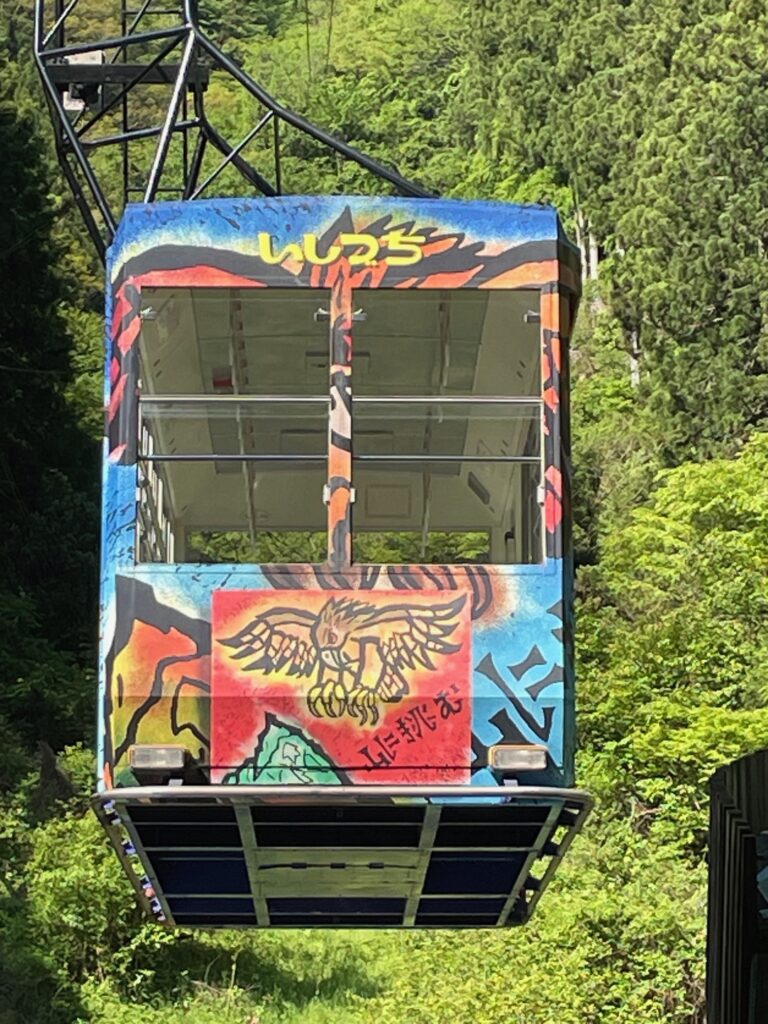
With the limited bus schedule to and from the mountain, only particularly fit hikers should attempt the full round-trip hike in a single day.
Hoping to avoid having to take the ropeway down later in the day, I immediately hit the trail and reach Ishizuchi Shrine Jojusha in about 20 minutes. First built more than 1,300 years ago, Ishizuchi Shrine is a complex made up of four different shrines scattered along various points of this sacred mountain. From inside the hall of the shrine, I catch a stunning glimpse of the highest peak of Mt. Ishizuchi, reminding me that I still have a hard climb ahead to reach the top of Shikoku.
Choose your own adventure
Climbing Mt. Ishizuchi involves more decision-making than your typical daily hike. The mountain is believed to have first been summited in the 7th century by En no Gyoja, the founder of Shugendo. Shugendo practitioners believe that enlightenment is achieved through rigorous physical and mental training deep in the mountains.
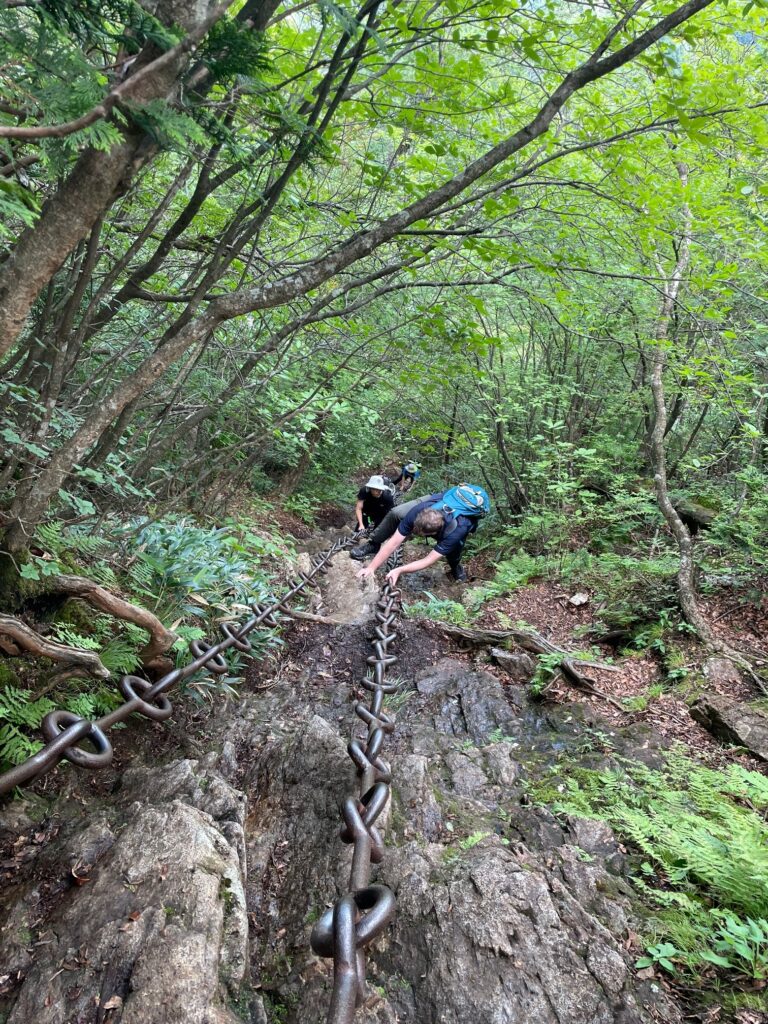
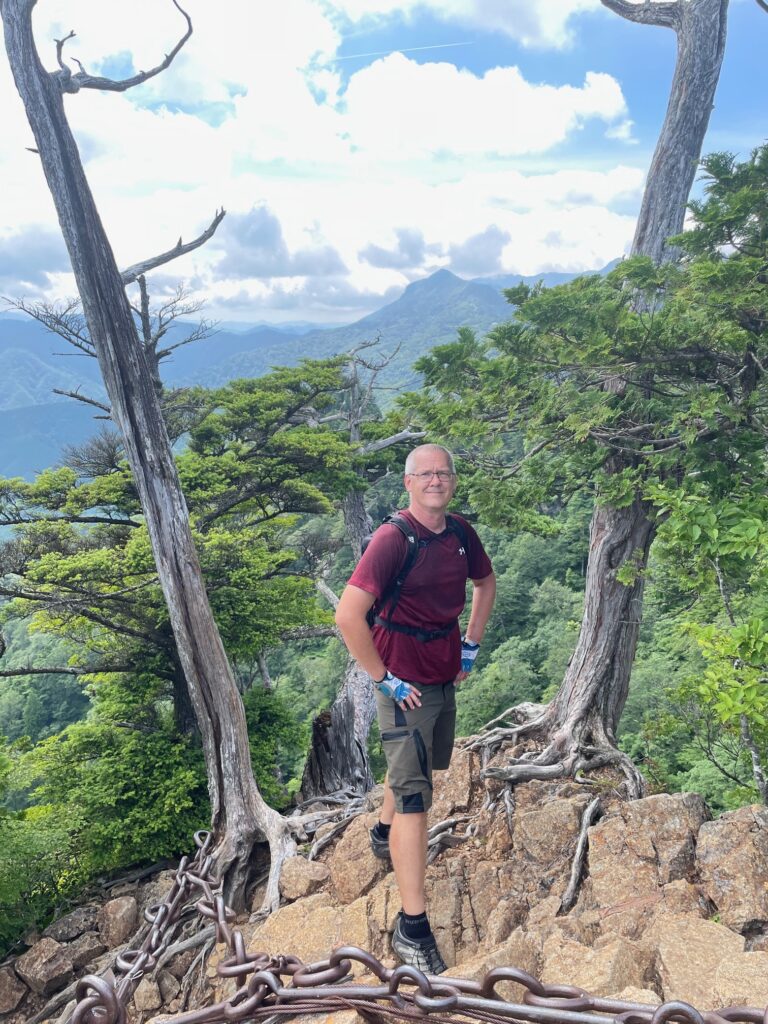
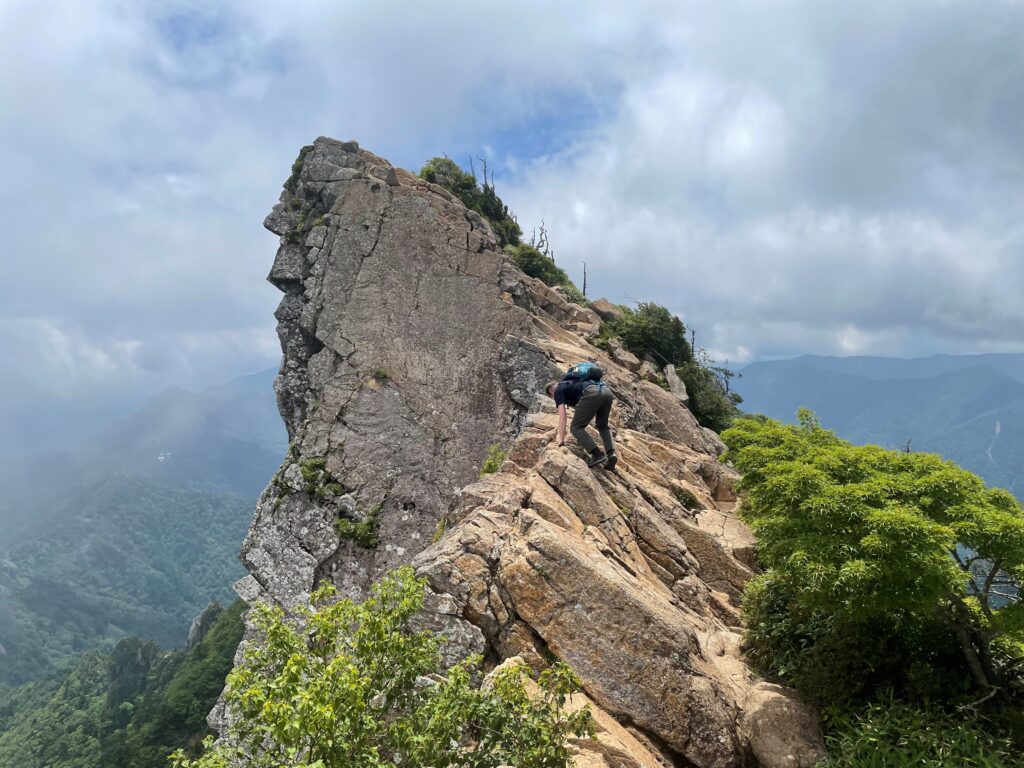
Evidence of Mt. Ishizuchi’s importance as a sacred mountain is revealed in a series of steep rocky sections climbed with the help of kusari, or iron chains. There are four such sections (including a set of “trial chains”), ranging in length from 33 meters to 68 meters. I am again reminded that Japan is a land of contradictions.
It is a safety-first society with a dizzying number of rules and regulations (I’m not complaining!). Yet anyone is free to climb these iron chains on the side of a mountain with zero supervision or safety equipment. It’s important to note that all of these sections are optional, with the majority of hikers following the standard trail. You can still reach the summit of Mt. Ishizuchi using only your feet, and either approach is equally rewarding.
On top of Shikoku, looking down on creation
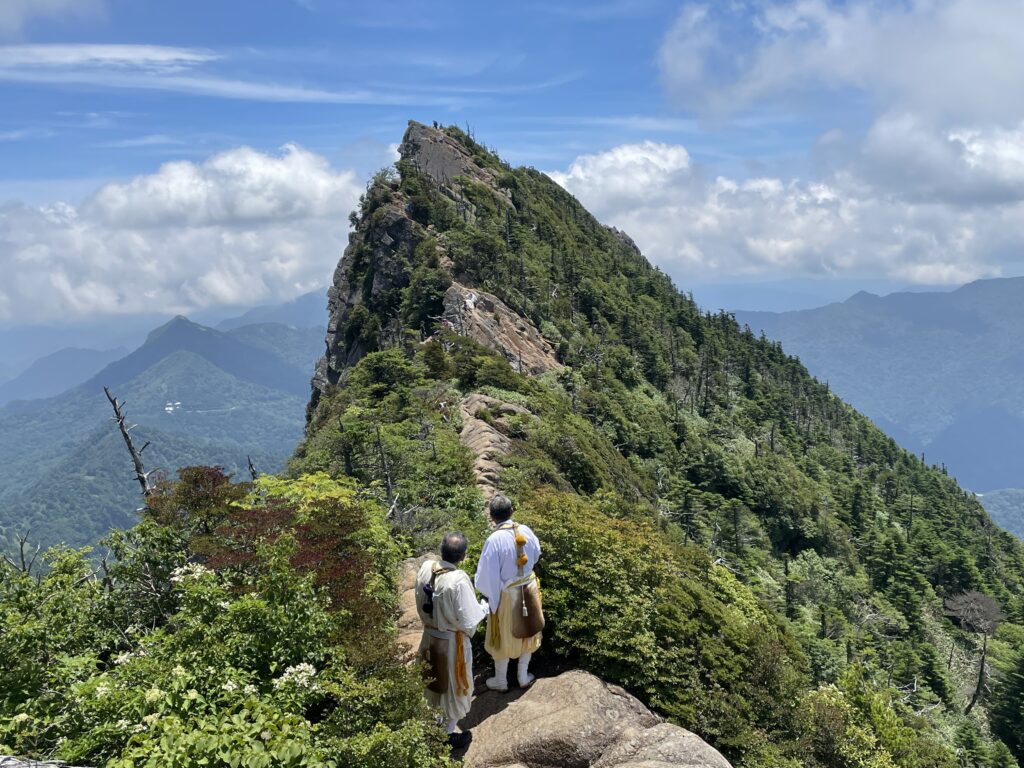
As Ishizuchi Shrine is actually a series of different shrines, Mt. Ishizuchi also has several peaks. It’s a humbling experience to think you have just summited the highest mountain in western Japan, only to realize that the true peak, Mt. Tengu, looms mockingly in the distance. To add to the confusion, the signboards for Mt. Ishizuchi and Mt. Tengu both claim an elevation of 1,982 meters, but since all sources list Mt. Tengu as the highest point, I carry on.
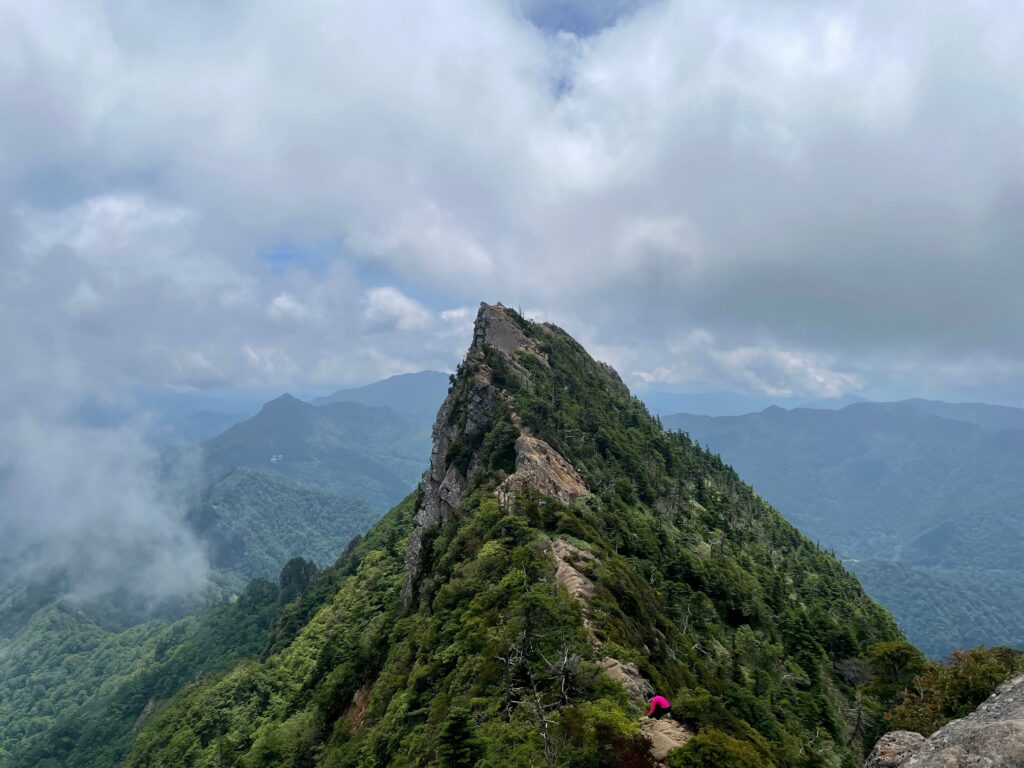
Whether to summit Mt. Tengu as well is your next decision. Although it can be reached in less than 30 minutes, it’s not for the faint of heart, as it involves navigating a precipitous trail, with possible heavy winds and/or limited visibility.
Refueling in Imabari
Back at sea level, a local train takes me to Imabari, the base for one of Japan’s best bike rides, in less than an hour. Seeing pictures from my various journeys, friends have jokingly asked whether I do all this hiking and cycling just to burn off what I eat and drink along the way. I won’t comment on that.
What I can’t deny, however, is that the boom in craft breweries in Japan has made my journeys even more enjoyable. So I make sure to stop by Imabari Machinaka Bakushu, a small brewery and taproom that just opened in 2020. Being in Ehime (“The Kingdom of Citrus”), I opt for a very drinkable Mandarin Orange Hazy IPA.
The brewery has limited food options, but I notice a flyer for Pizzeria Kuroneko. As much as I love sampling regional Japanese cuisine, I can never turn down a good pie, as you can take the man out of New York, but you can’t take New York out of the man. I’m not disappointed: the friendly Australian pizza master puts the exclamation point on a wonderful day by serving up one of the best pizzas I’ve had in Japan.


Following (or not following) the blue line to Honshu
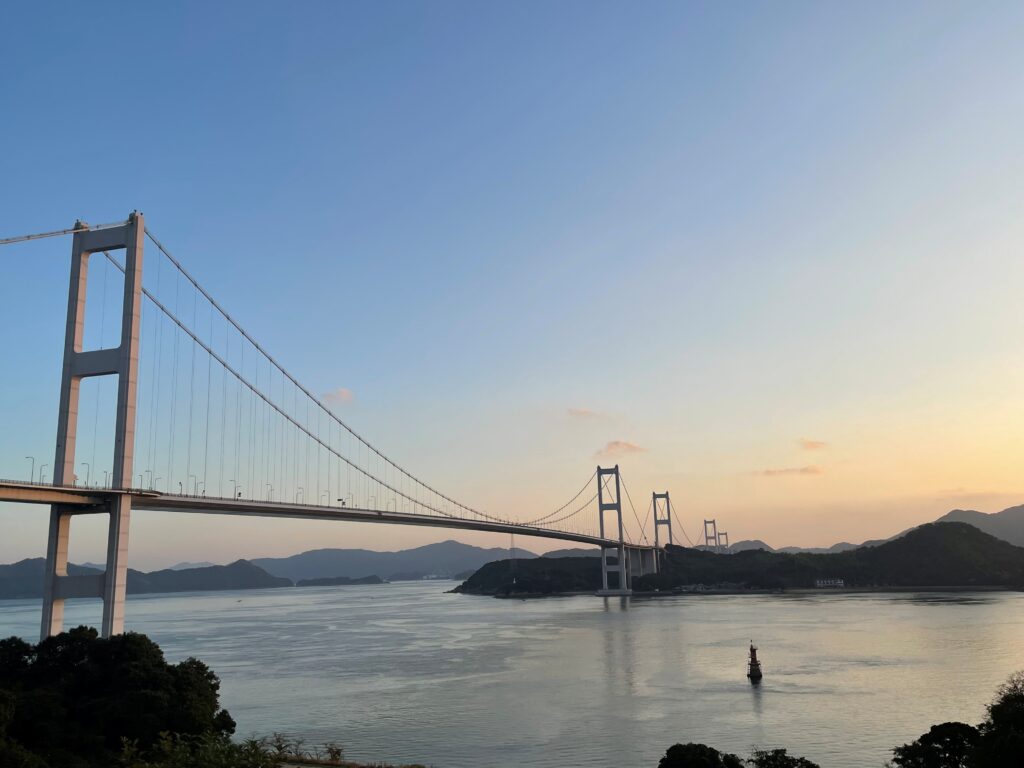
Opened in 1999, the Shimanami Kaido remains one of the premier bike rides in Japan. It has become world-famous for offering the unique opportunity to cycle across a series of bridges connecting six islands while taking in stunning views of the Seto Inland Sea. With the exception of the winding climbs to reach each bridge, the roughly 70-kilometer course is relatively flat, making it suitable for cyclists of almost any level. Additionally, the course is meticulously marked, with cyclists needing only to follow the blue line from Imabari in Ehime Prefecture to Onomichi in Hiroshima Prefecture (with a short ferry ride at the end).
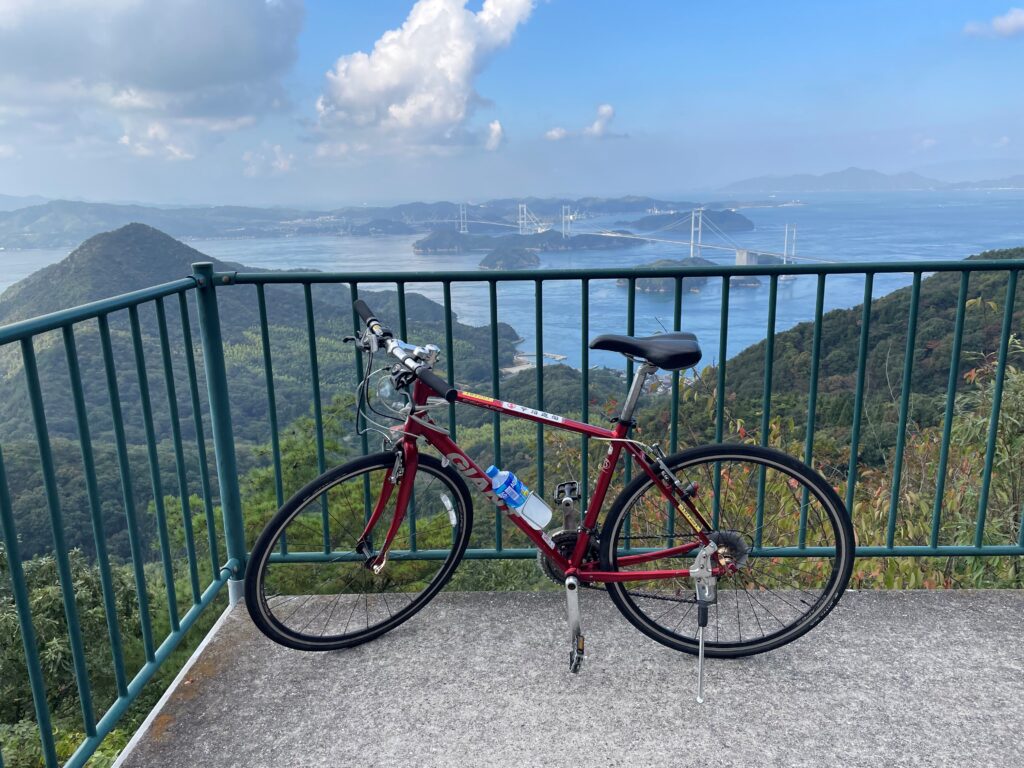
While one can stay on the official route and still enjoy an incredible bike ride, the secret to the Shimanami Kaido is that a little exploring reveals even more majestic views. My first detour is to Kirosan Observatory Park on Oshima Island, a steep climb of over three kilometers. Struggling with the little rental cycle that could, I swap out “I think I can, I think I can” for “I wish I had my own bike!” but I do eventually make it without having to resort to the get-off-and-push-the-bike-up-the-hill walk of shame. I’m rewarded with panoramic views that even allow me to wave to the rugged peak I had stood on less than 24 hours ago.
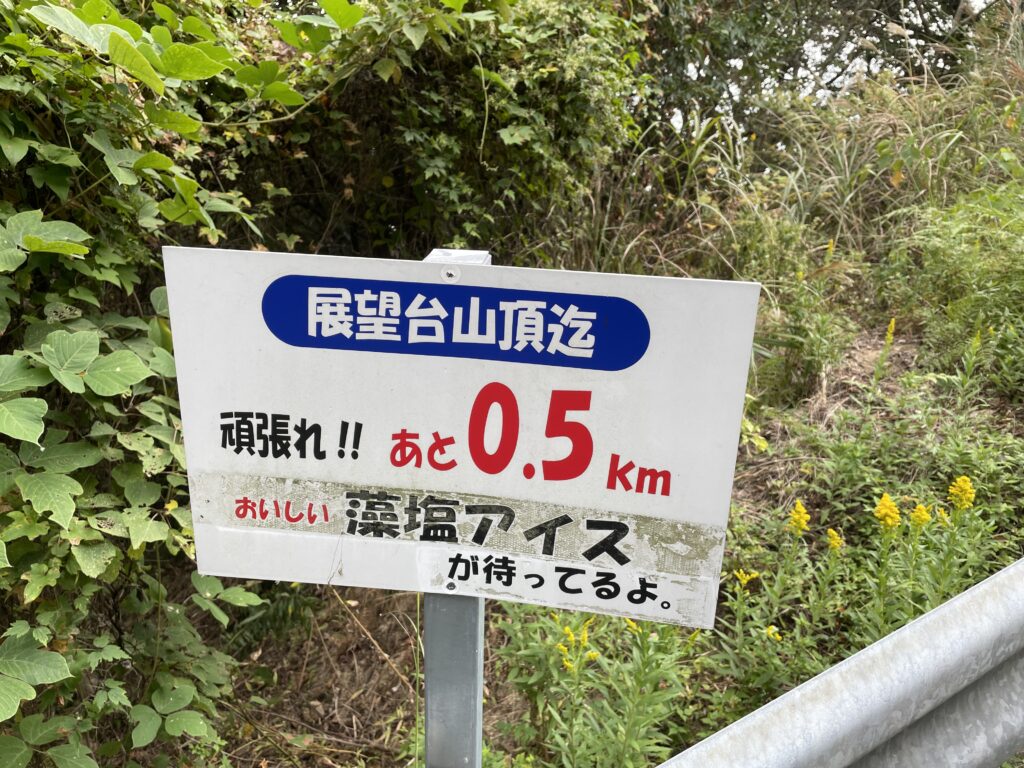
I’m back on the blue line, with the occasional coffee and ice cream pit stop, until I reach the base of Mt. Shirataki on Innoshima Island. While the ride up isn’t as long as Kirosan, reaching the top requires leaving your bike at the parking lot and proceeding on foot for a short but heart-pounding hike. The peak feels much higher than 230 meters as I marvel at the surrounding islands. I also feel a tinge of melancholy upon seeing the Innoshima Bridge, as it marks the final bridge of the ride and signals that another adventure is coming to an end.
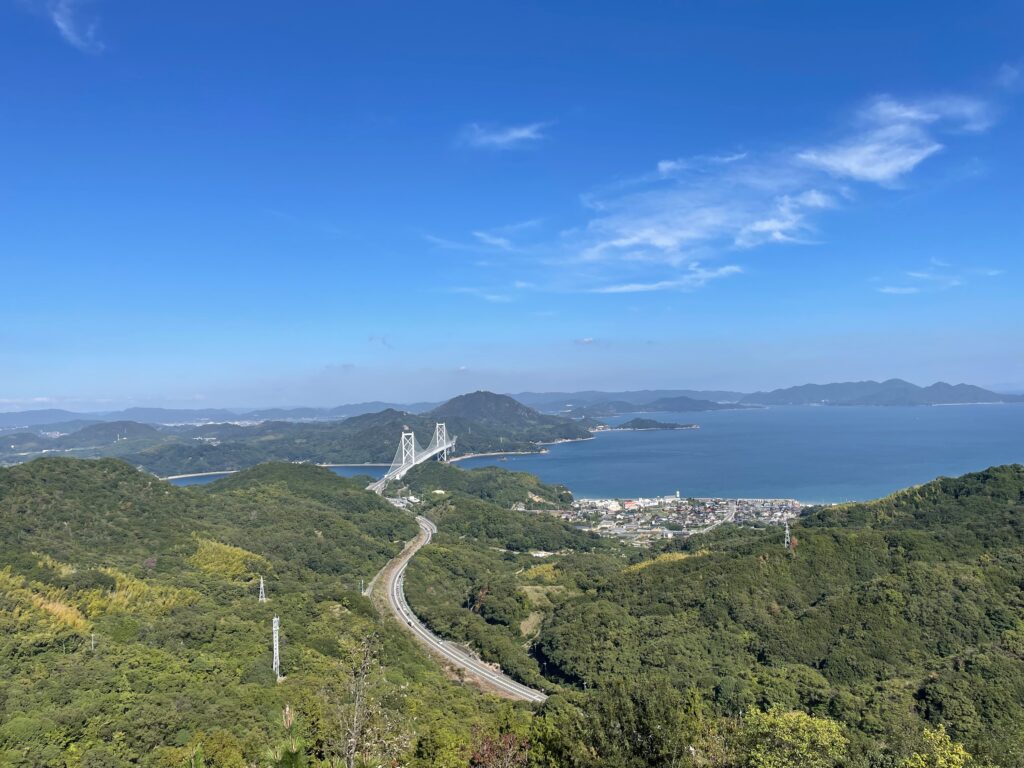
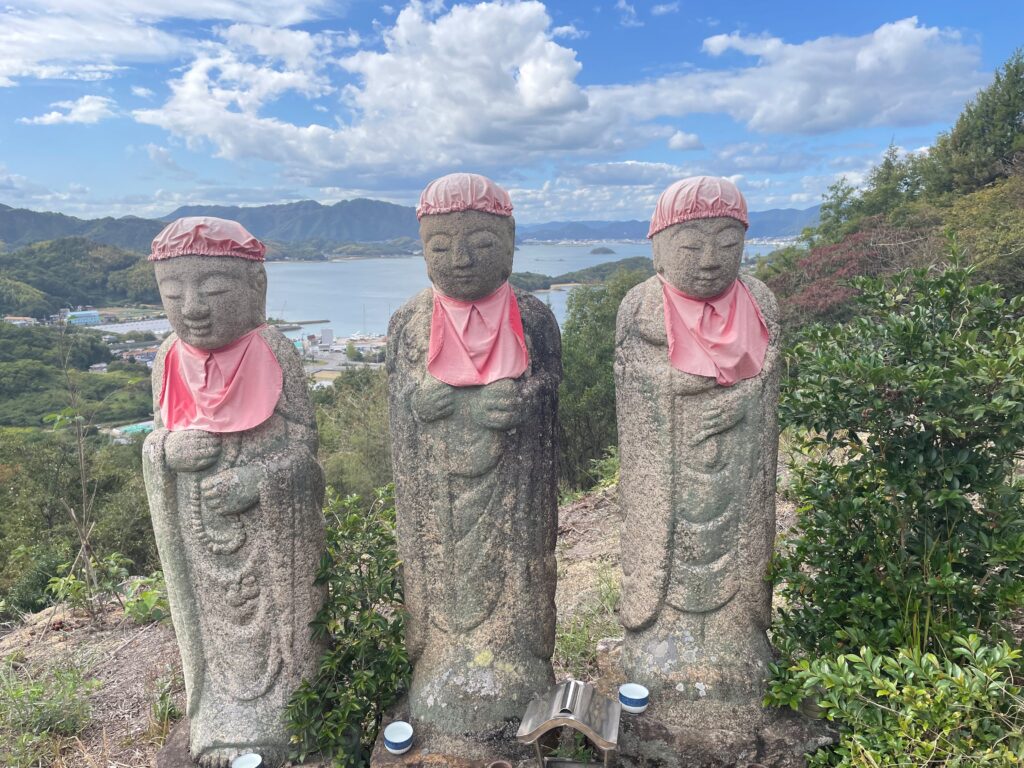
As this wild weekend has already seen me traverse Honshu and Shikoku by limited express train, local train, bus, bicycle, and on foot, why not throw in a short ferry ride? Since cyclists are warned to avoid the Onomichi Bridge due to the lack of a proper cycling lane, I part with 110 yen and complete the journey with a five-minute ride on the Mukaishima–Onomichi ferry, daydreaming about my next Japan adventure. I’m not sure what that will be yet, but it will surely feature something from the ocean and something from the hills.