
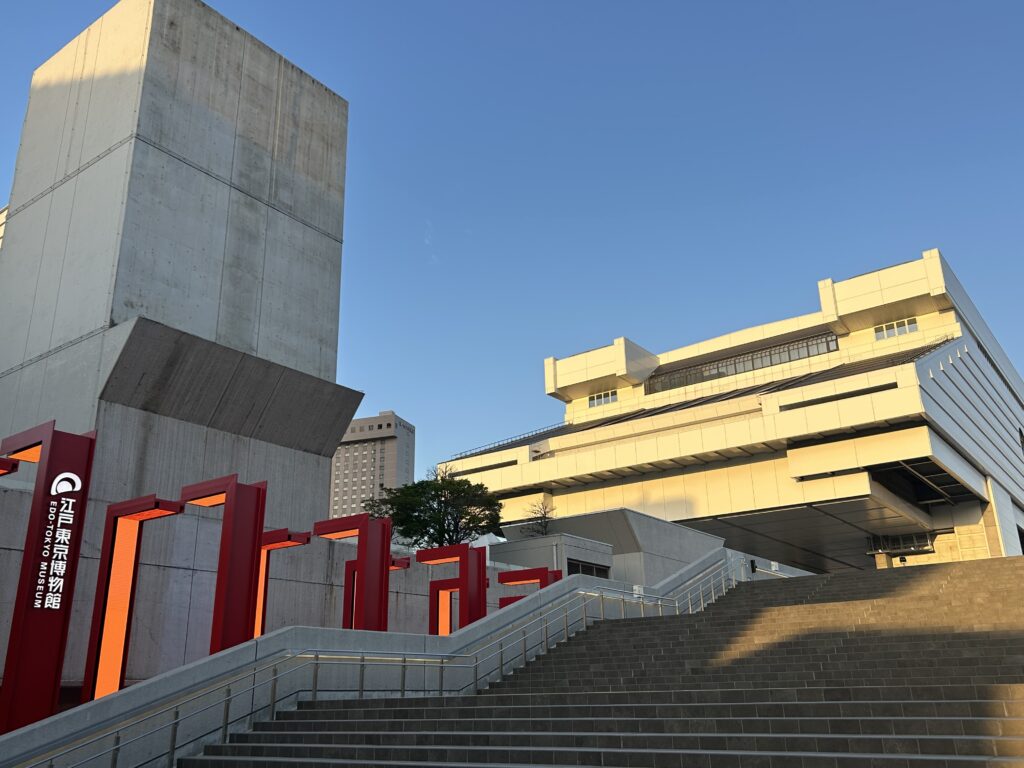
The Edo-Tokyo Museum first opened in March 1993 and had been closed for renovation for the past five years. On March 31, 2026, it reopened as a slicker, slightly more twenty-first-century version.
The scope of this museum is in its name. It contains information and exhibits on the centuries when the city was known as Edo, as well as the history of the city’s modern iteration: Tokyo.
The museum is quite comprehensive in its coverage, examining various aspects of daily life for different elements of Japanese society across the centuries. It is a great introduction to what is today one of the largest and most important cities in the world.
The museum sits next to Kokugikan, Japan’s primary sumo stadium, near Ryogoku Station, and is housed in a massive structure that resembles the AT-ATs from the Star Wars movie The Empire Strikes Back.
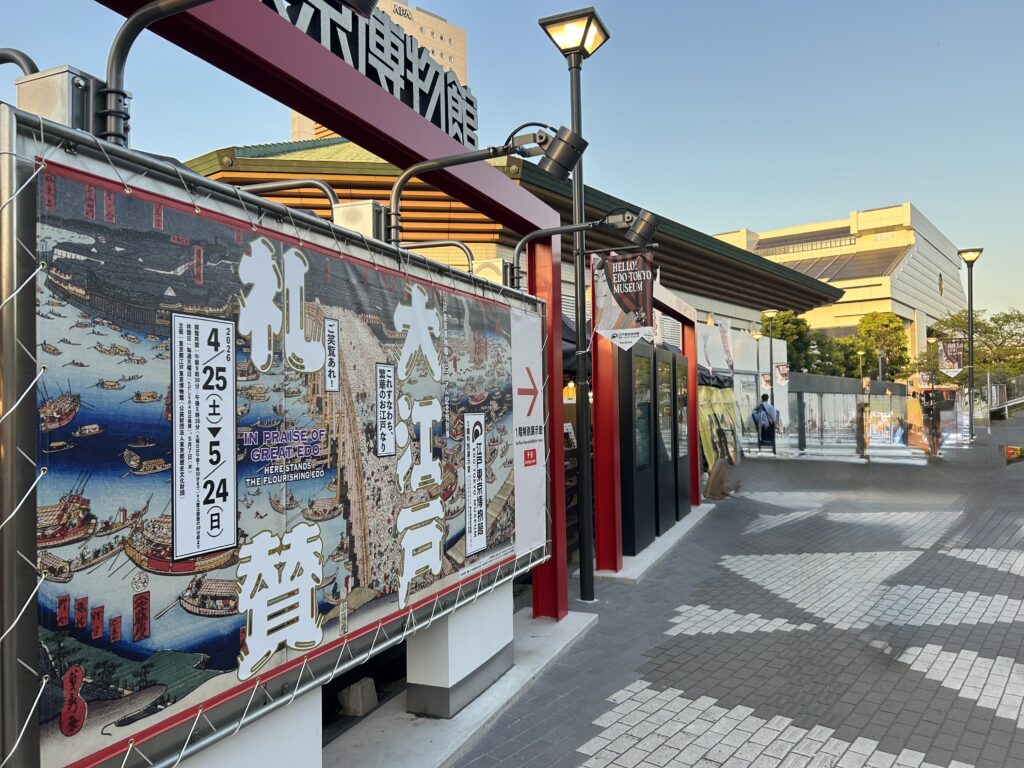
One aspect of the museum’s renovation was the relocation of ticket sales to the ground level. Sadly, this has left several broad staircases to the next level redundant, and they now sit roped off from general use. Hopefully, the museum’s operators will eventually come up with a way to overcome this unsightly situation.
On the bright side, as part of the modernization, it is now possible to purchase tickets online in advance and bypass the ticket lines, although entry through the ground floor remains necessary.
From the ground-floor ticket lobby, elevators whisk visitors to the sixth floor, where the permanent exhibition begins with a replica of Nihonbashi, the bridge at the center of old Edo from which all distances in Japan are measured.
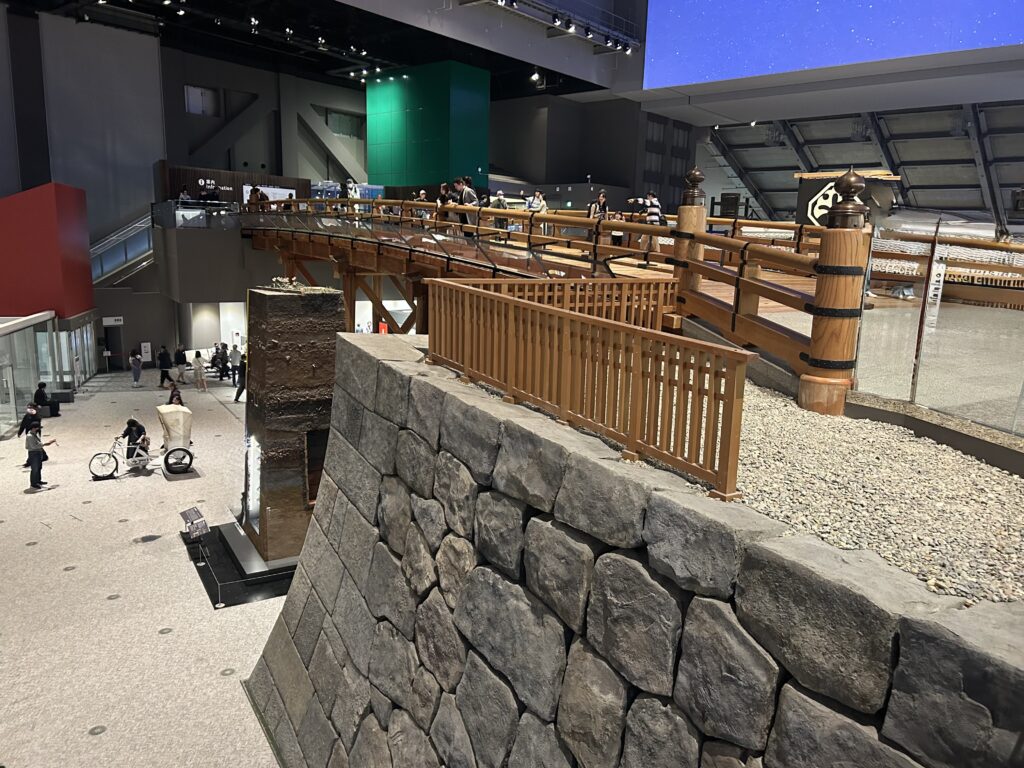
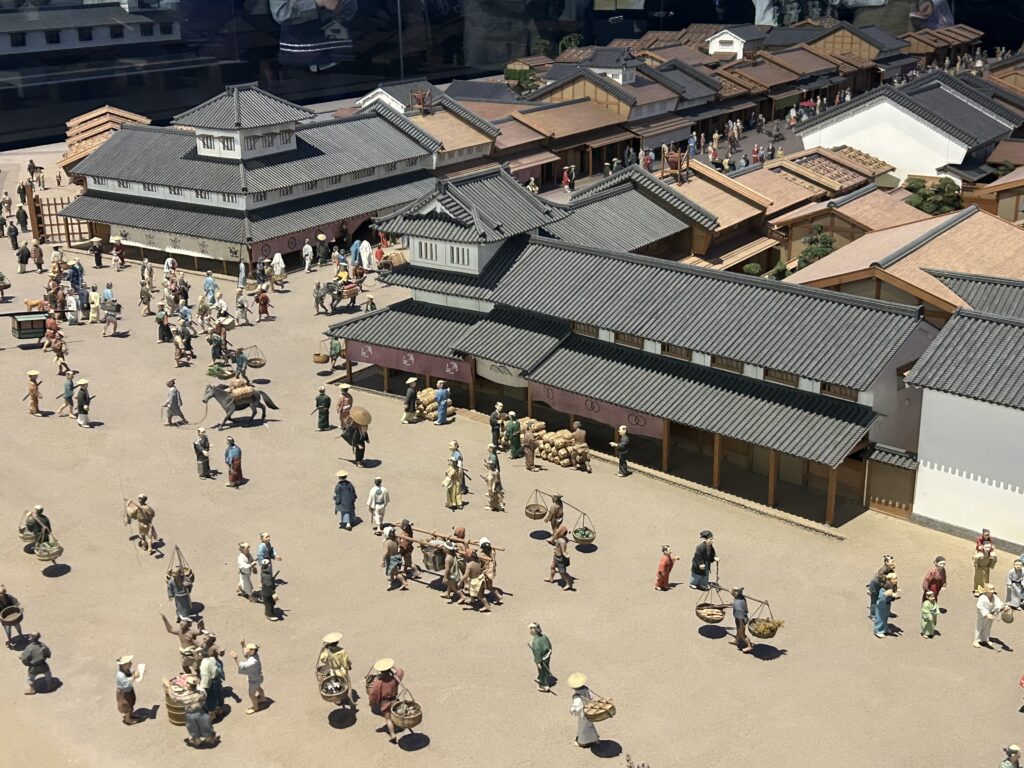
As you cross the bridge, you can see below a replica of an old Edo building on the left and a replica of a late nineteenth-century Tokyo building on the right, both part of the exhibits one floor down. Linger to take in the view, but also to download the museum’s free audio guide onto your phone (available in multiple languages).
The exhibits just across the bridge take visitors back to the “samurai days” at the end of Japan’s Warring States Period (1467–1600). After his victory at the Battle of Sekigahara in October 1600, Tokugawa Ieyasu made Edo, already central to his fiefdom, his seat of power. This marked the beginning of Edo’s ascendency.
All of this is explained through charts, graphs, artifacts (including several suits of samurai armor), and dioramas that can be viewed while listening to the audio guide’s explanations.
Visitors then descend one level to life-size reproductions of working-class living quarters from the Edo Period (1603–1868). Peeking into these rooms, visitors can see how children were educated, how laundry was done, where people relieved themselves and disposed of their trash, and even how childbirth was handled.
The exhibits also explain the city’s social welfare system and how it coped with various natural disasters, especially fires in the largely wooden city.
The city’s food and water distribution, education, entertainment, religious life, festivals, and artistic endeavors across the Edo Period, as the city grew and rose in importance, are all explained through the museum’s displays.
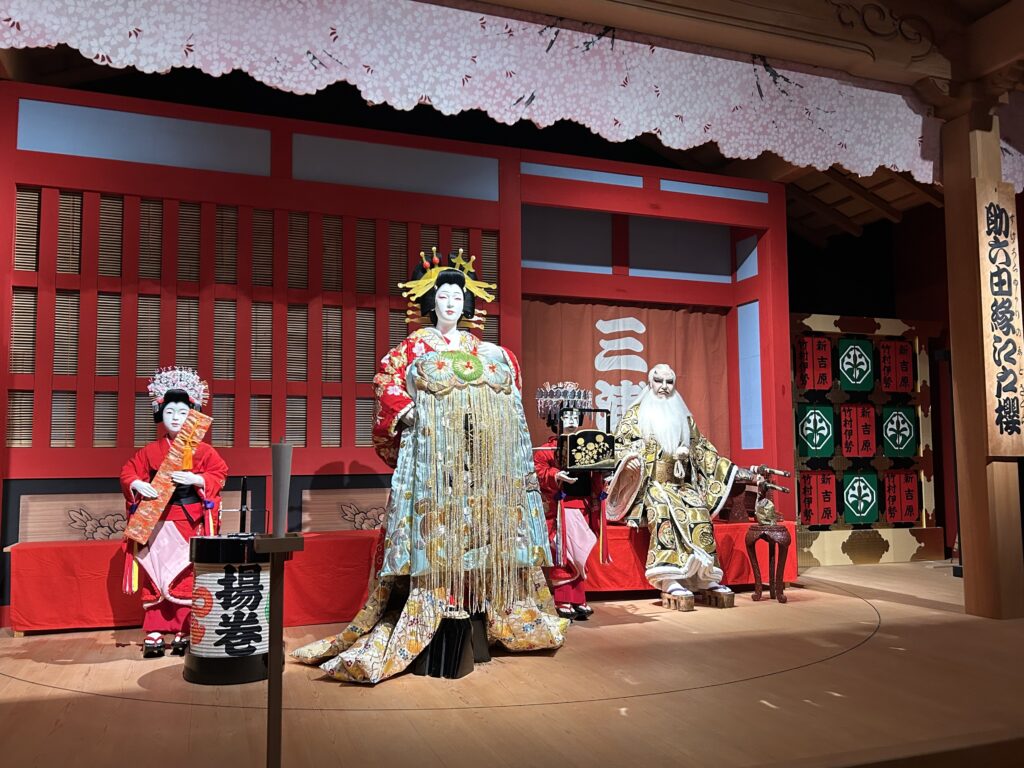
The social and political disruptions at the end of the Edo Period, which resulted in the restoration of imperial rule and rapid modernization and westernization, also led to Edo being renamed Tokyo as it became the nation’s official capital.
The museum’s exhibits then shift focus to how the city modernized, highlighting changes in architecture—both commercial and residential—dress, education, entertainment, and even how people worked.
While fires repeatedly devastated old Edo, modern Tokyo has faced different disasters, including the Great Kanto Earthquake of 1923 and the firebombing of the city in 1944–45 during World War II. Various exhibits, including film footage, depict the impact of these disasters and the city’s recovery.
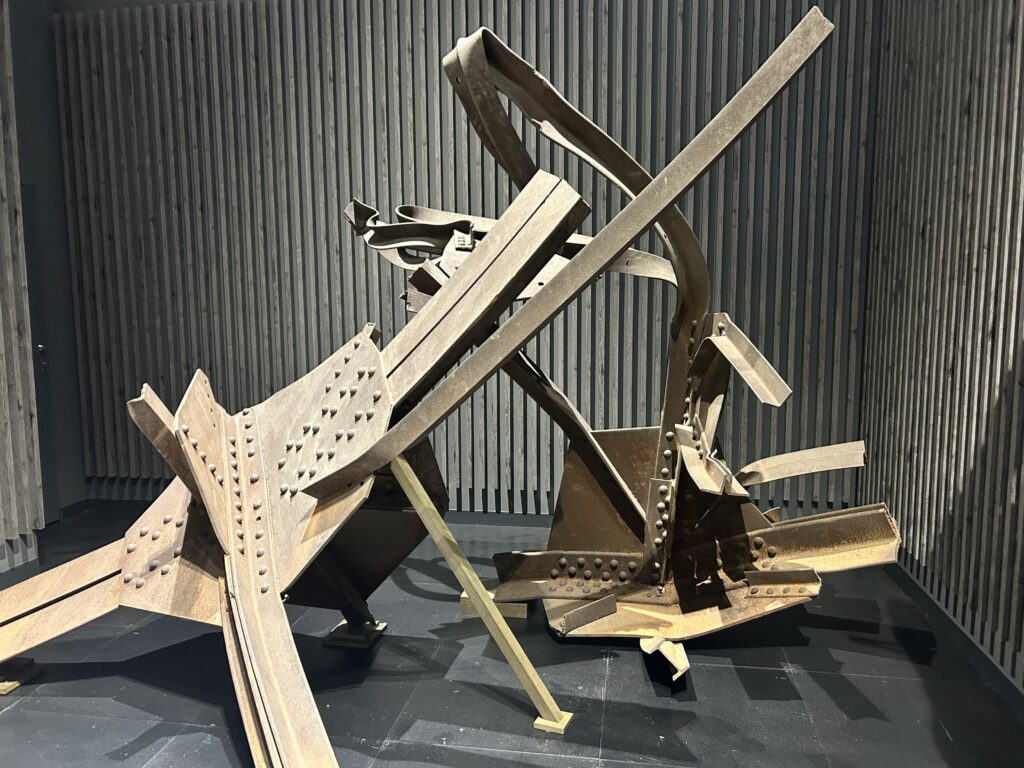
Life-size reproductions of pre-war and post-war urban working-class living quarters provide an interesting contrast to their Edo Period counterparts, and to each other.
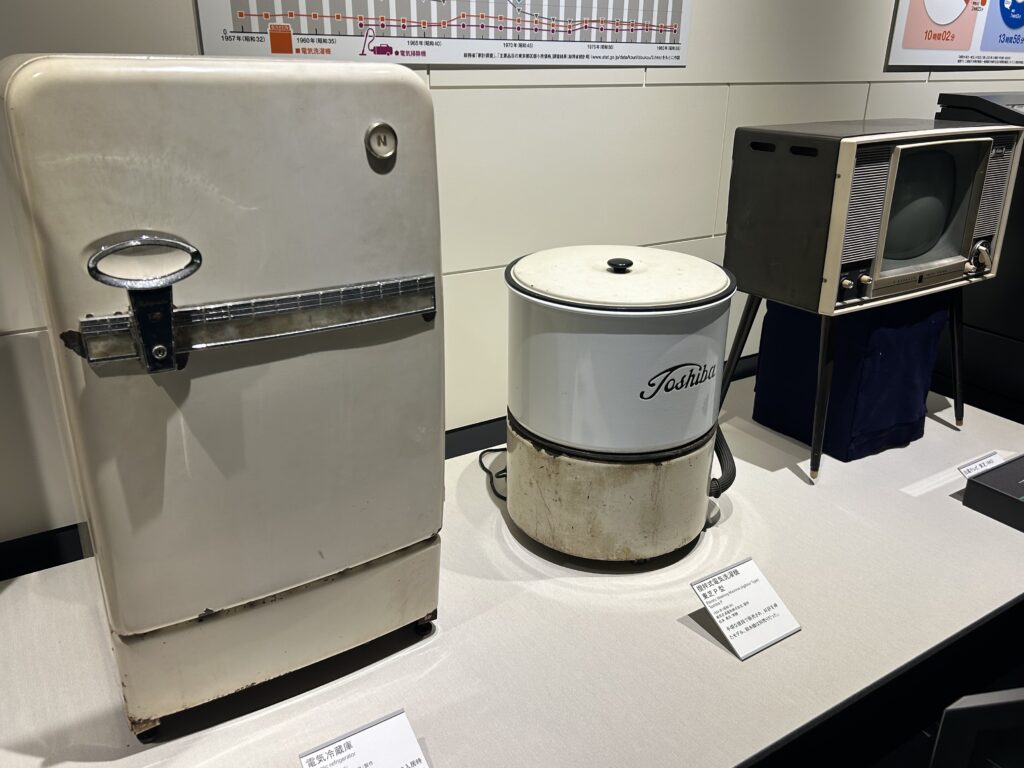
Exhibits on Tokyo’s remarkable economic growth during the post-war period of the twentieth century and its social impact include a decade-by-decade display of dress, tools, hobbies, entertainment, and even school lunches.
Dotted throughout the museum are opportunities for hands-on experiences: sitting in a palanquin, a rickshaw, or on a penny-farthing, for example. Some mechanized displays, including kabuki staging, nineteenth-century dancing, and a streetcar moving through a diorama, operate for a few minutes several times an hour according to posted schedules.
To fully absorb the extensive information the museum imparts requires at least half a day, if not a full day. Fortunately, it is possible to leave the museum and return later the same day by asking for a re-entry ticket at the service desk on the sixth floor (after entering the museum but before crossing the Nihonbashi replica). Nearby meal options include a pleasant Japanese restaurant and a small coffee shop on the museum’s ground level, as well as the various yatai (street food stalls) and restaurants near Kokugikan and Ryogoku Station.
- Hours: 9:30–17:30 (19:30 on Saturdays). Last entry is 30 minutes before closing.
- Closed on Mondays (except national holidays falling on a Monday, when the museum closes on Tuesday instead).
- Admission to the Permanent Exhibition: JPY 800 (adults), JPY 400 (seniors with ID), JPY 480 (university students), JPY 300 (high school students).
- Admission to Special Exhibitions varies depending on the exhibition.