Shokai — An introduction, in Nara Park
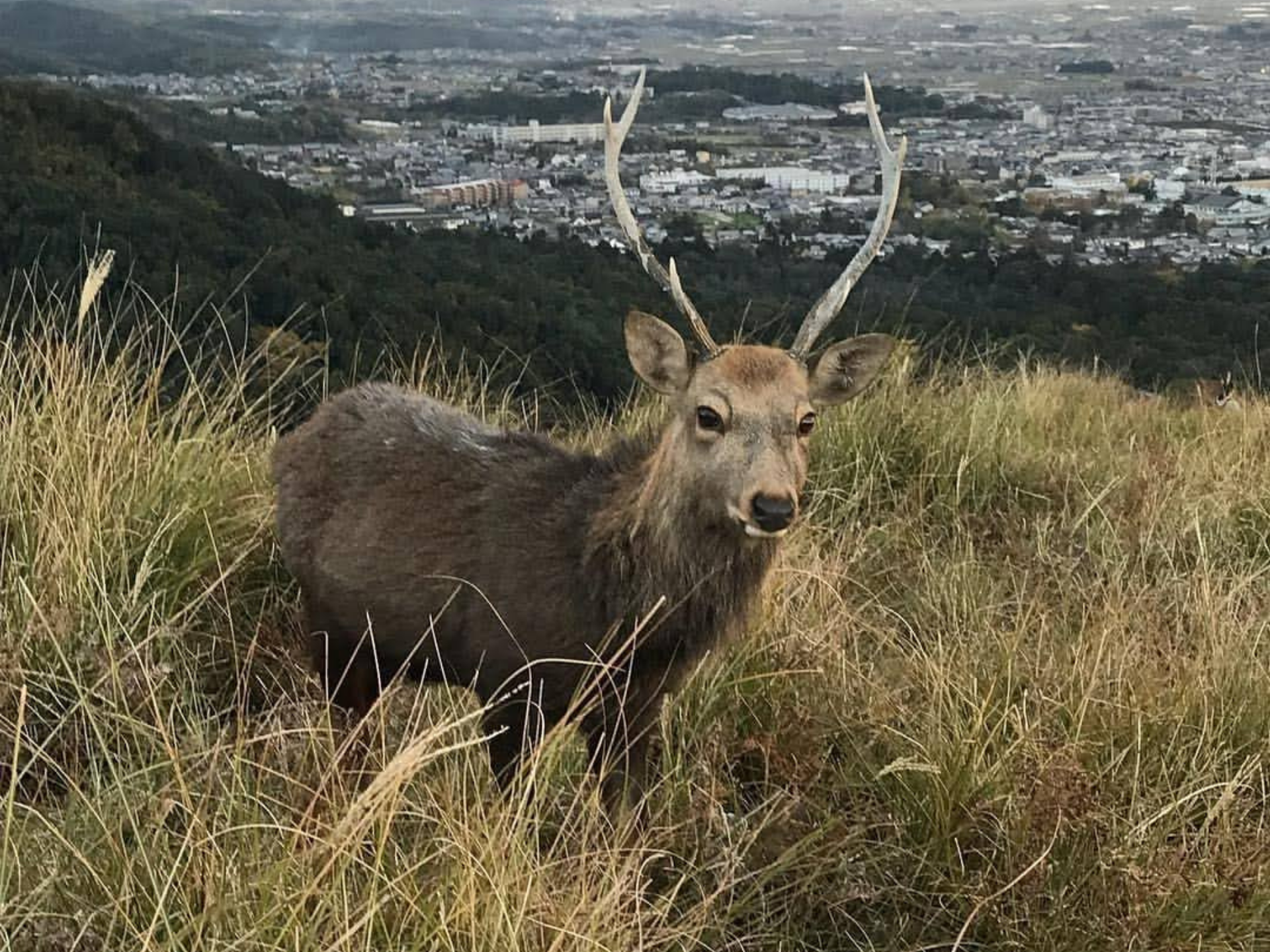
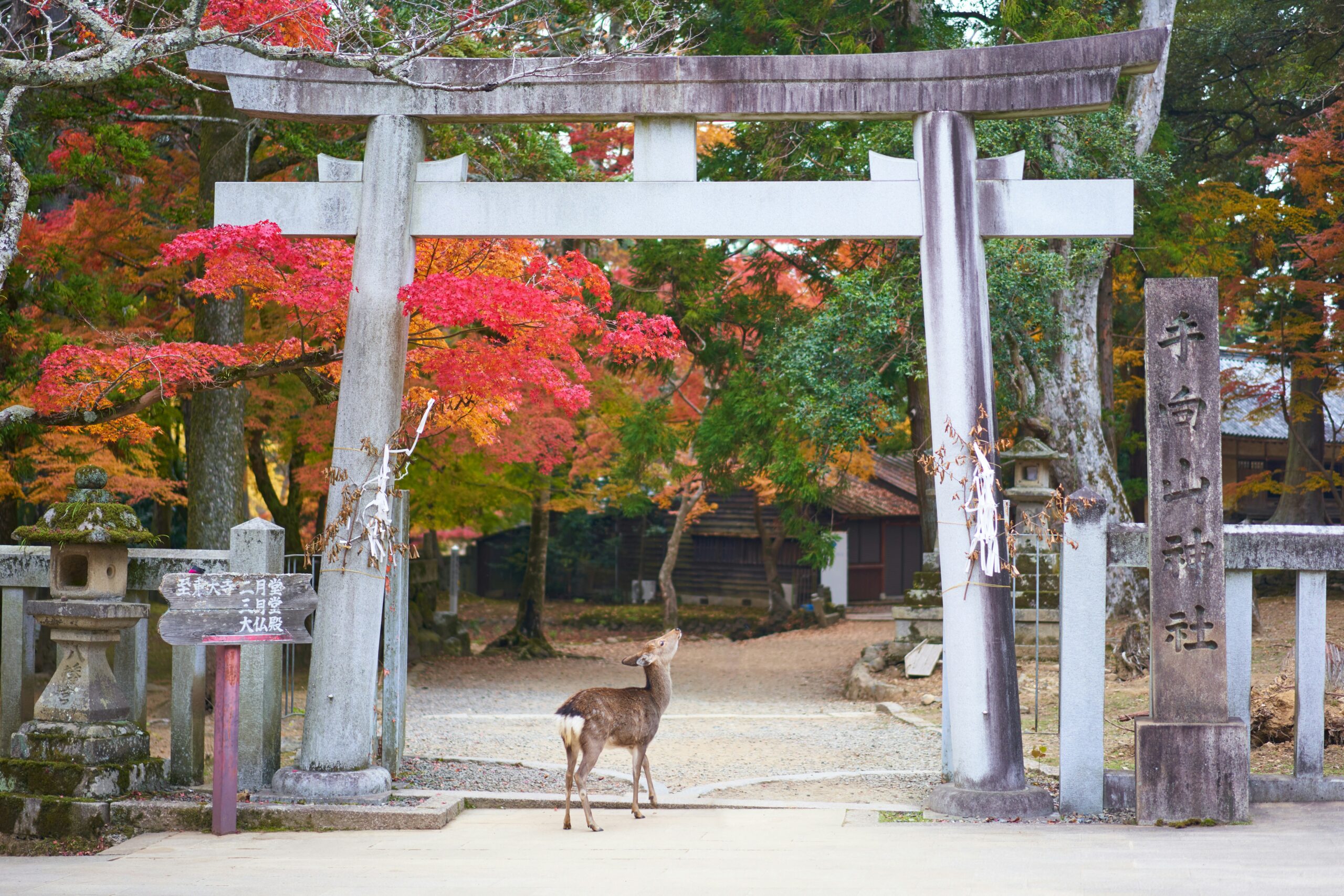
One fall in Nara’s famous deer park, I was surprised I could get this close to a wild stag. I spent about 20 minutes with him, taking a few more photographs and just standing there with my new acquaintance. His herd was down the mountain, off to the left of this picture, with a few does and their fawns and at least one other stag. The incline was steep enough that I didn’t go down to them; he might have been protective. I figured he was the one keeping watch. I’ll call him Shiro.
A little later, a couple of tourists came up and tried to approach him. He stood his ground, lowered his antlers, and stomped. They staggered back, frightened, and set their deer crackers on the ground rather than feed this wild buck by hand. I thought about the difference between their reaction and mine. I was living in Japan by then, and I’d learned the basic thing: wild animals need distance and are best admired from afar.
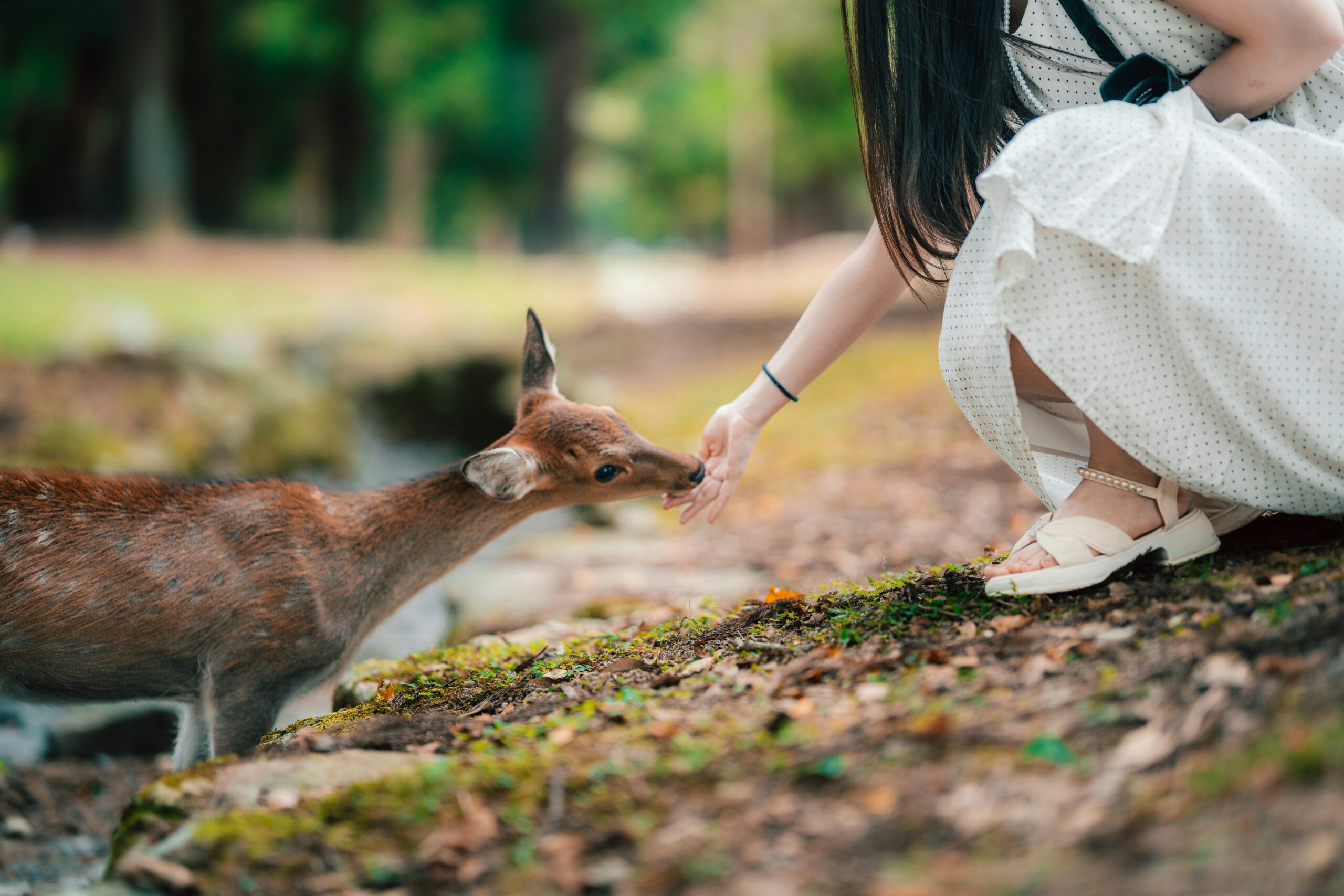
Down in the park, the other deer were nothing like their free-range cousin. Shiro was wild; he did not bow to humans. The deer below do. The gesture is different from his: a dip of the head with no stomping. The ones near the station and along the paths have their social graces memorized like a tea-ceremony instructor. They bow for crackers. It is charming and a little uncanny: coexistence carried so far that the wild has learned our manners.
Jobs for deer
If Japan’s population keeps declining, perhaps it’s time to bring the deer into civilized society. Give it time and they’ll be teaching kindergartners to bow properly — and, in the end, teaching internationals the full ritsurei (a standing bow) for every social and business occasion. Eshaku (a light bow for casual interactions): mind your antlers. Saikeirei (a deep bow expressing the highest respect, gratitude, or apology): do not shake your antlers sideways. A certain Shiro I once knew did exactly that and offended some visitors.
From there, the plan writes itself. A deer police force, funded by taxpayers’ rice crackers, deployed to bear country — to the dens and the sites of past attacks — to keep the bears inside human law. And if you doubt deer are equal to the work, remember Yakul, Ashitaka’s steadfast elk in Princess Mononoke: professional, uncomplaining, and deer-adjacent. The answer was there all along. The deer will simply teach the bears our manners.
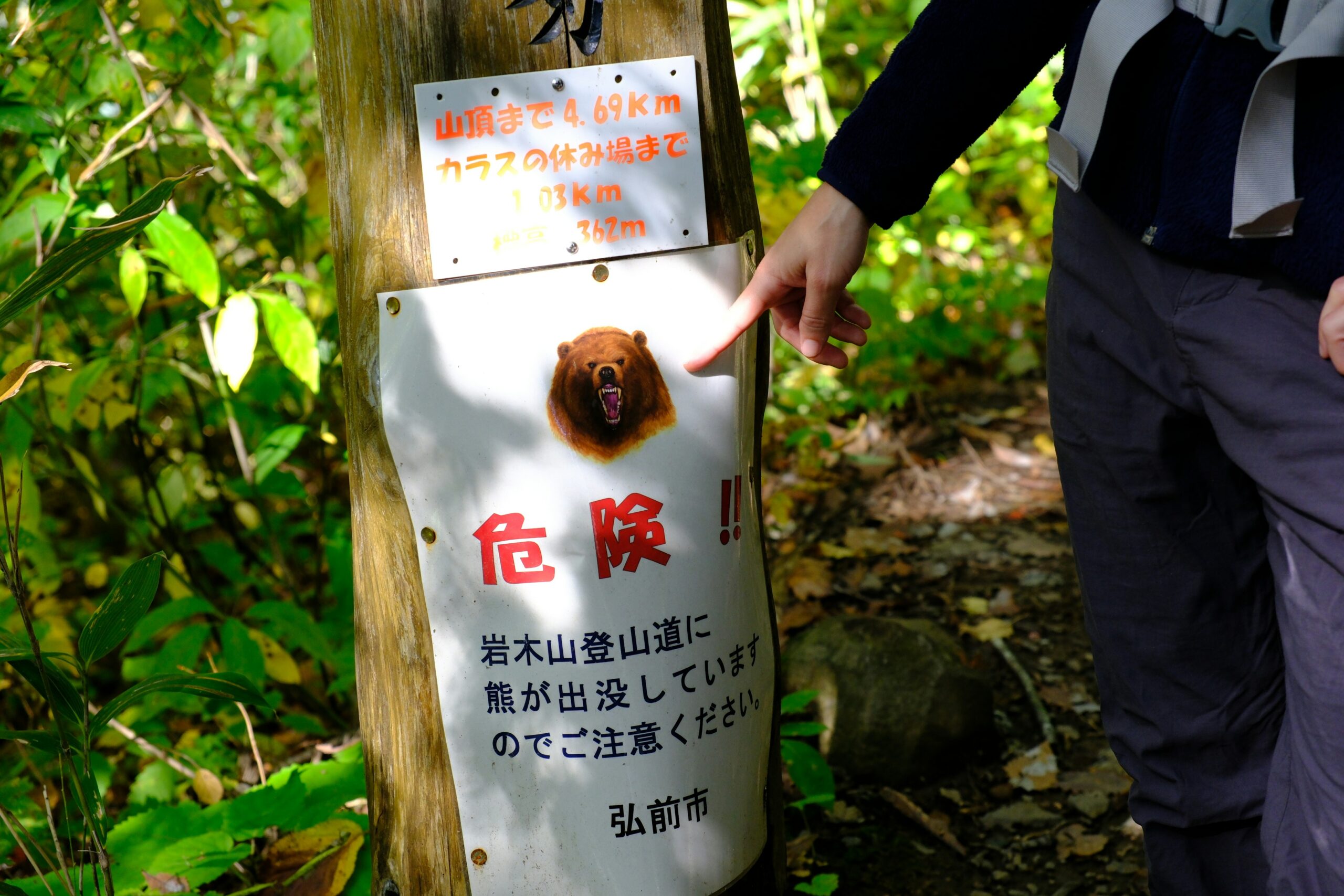
Then the joke ends. Since April 2025, a record 238 people have been killed or injured by bears across Japan, with 13 losing their lives — the worst toll since records began in 2006. Sightings ran to nearly 36,800 between April and October, almost double the year before; even the mountain fringes of Tokyo logged 142. In November, soldiers from the Self-Defense Forces were sent into Akita to set traps. Barred by law from shooting the bears themselves, they could only build the cages and haul the carcasses away. Hunters culled some 14,000 bears in a single year, roughly 12,000 black and 2,000 brown.
And the people the bears killed were mostly rural residents, many of them elderly farmers, mushroom foragers, and others in the northern prefectures. They are the same people my deer were going to protect.
The bare ursine facts
Why now? The bears live on the autumn mast: acorns, beechnuts, and chestnuts, gorging in fall to build the fat that carries them through hibernation. When the nut crop is good, they stay deep in the mountains; when it fails, and it fails more often as the climate warms, hungry bears come downhill. This is not an invasion. It is starvation.
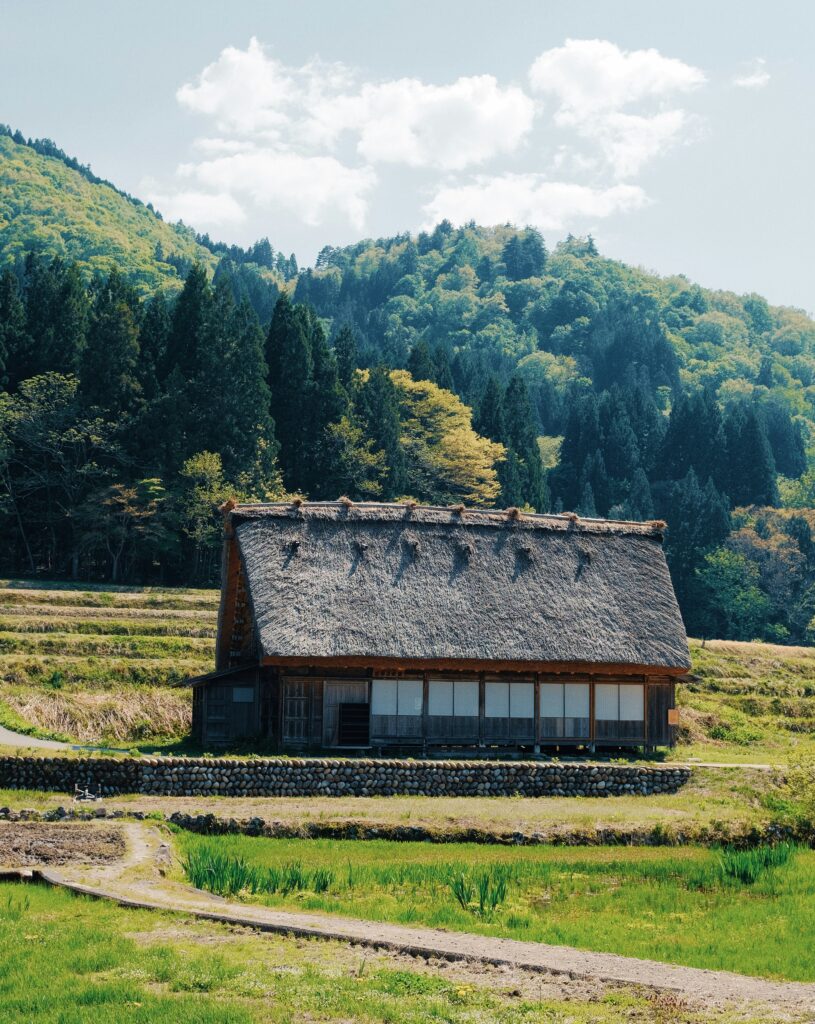
Perhaps one major factor behind the attacks is this: rural Japan now lacks the people to run its mountain villages — the settlements that sit at the border of the wilds, the okuyama, where the bears live. Traditional Japan organized its mountainsides as a three-part gradient: village, satoyama, and okuyama. The satoyama was the middle band, where arable land met the mountain wild — the buffer people kept between the human world and nature. It is the same balance you see in Princess Mononoke, where the conflict between the two is always present, never resolved.
But in the people’s absence, a whole generation of bears has grown up without ever learning to fear us. No one is cutting the grass; there are no hunters, no dogs, and no smell of human work in the hills. They come down bolder each year. The boundary cannot be rebuilt the way the crisis is being fought now: soldiers and hunters can hold a line for a season, but they cannot maintain a satoyama, and paying them to is fiscally impossible. That work would have to be community-driven and volunteer-run, carried by some genuine love of the land, which, as rural Japan keeps emptying, is far easier said than done.
And here is the hard question, the one with no clean answer: are there simply more bears than there should be? And who gets to decide that number? The Asiatic black bear is listed as Vulnerable. This crisis is, in part, a conservation success: the bears recovered after decades of protection, their numbers climbing while ours fell. So the animal now killing farmers is one we spent decades saving. There is no comfortable way to hold that.
If Mononoke was about satoyama and bears?
There is a deeper loss under all of it. The satoyama was never a paradise. Princess Mononoke is right that the friction between people and the wild is permanent. What the old villages kept was not harmony but the yearly, unglamorous work of holding the line. Our modern frame has little place for that work because we have come to speak of nature as a resource to be managed — a line item, a population figure, a cull. Somewhere, we mislaid the older language, the one that treated the mountain as something you coexisted with.
We have lost our relationality to nature, and it is not unique to Japan. But it is a strange thing to lose here, of all places, in a culture whose seasons and gods and aesthetics are built on intimacy with the natural world.
So perhaps the answer is not policy, which I doubt can be rewritten in time, but people. Organize citizen scientists and hunters to remake the rural landscape themselves — a modern application of satoyama that does not ask anyone to abandon the city for a job that will most likely never be funded. Whether enough hands would take it up, as the countryside keeps emptying, I don’t know. But a few of them tending a hillside, doing the small work the elders did, is not nothing. And it leaves the real question open: what would it take for us to live beside the bear again — not above it and not at war?