
If you love Japanese food, you definitely know all about the soft and chewy mochi. Mochi is an incredibly versatile ingredient that can be enjoyed in both savory and sweet ways, so it’s easy to understand why it’s widely beloved.
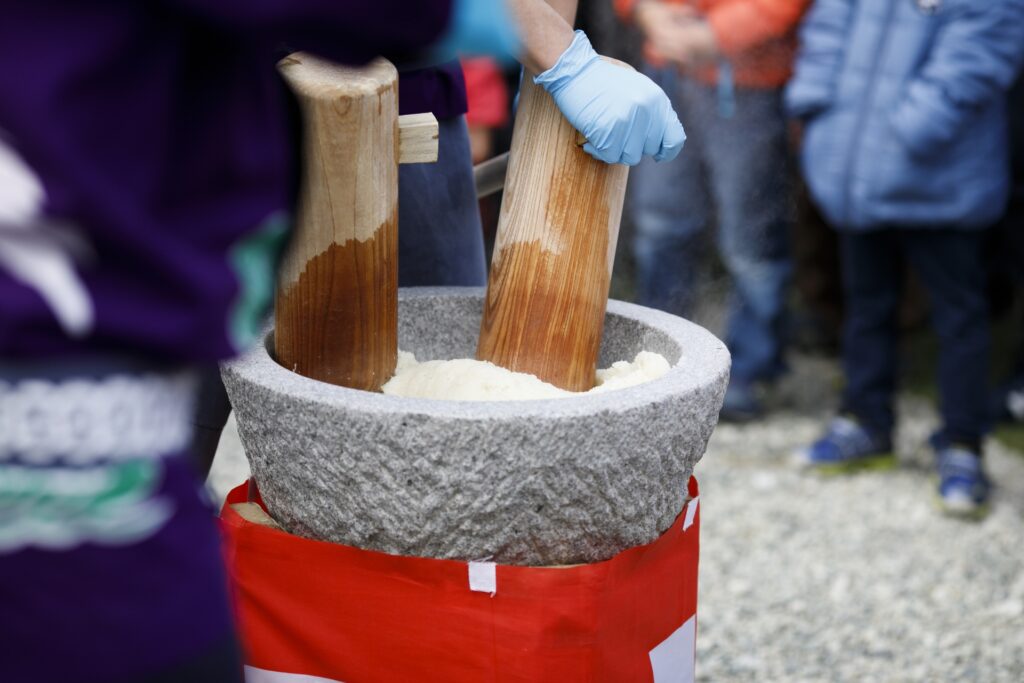
Mochi traditions
Mochi is made by pounding steamed glutinous rice into a smooth dough, which can then be enjoyed with some soy sauce, sprinkled with kinako (roasted soybean powder), filled or wrapped with anko (sweet red bean paste), etc.
The act of pounding rice into mochi is called mochitsuki, a tradition that dates back more than 1,000 years. During the autumn harvest season and New Year’s, communities often come together to share the joy of making and eating mochi.
Some mochi preparations are seasonal, like sakura mochi: mochi and red bean wrapped in a pickled cherry tree leaf (eating the leaf is optional). Other preparations are regional, such as Kyoto’s famous triangular nama yatsuhashi mochi or mochi topped with zunda (sweetened and vibrantly green soybean mash), a favorite in northeastern Japan.
Where to find mochi
Sometimes local temples and shrines host mochitsuki events at New Year’s for anyone to join, so I recommend doing a quick search if you are in Japan over the holidays. It’s a quintessential Japanese experience!
At other times of the year, some of the best mochi can be found at wagashi-ya, traditional Japanese confectionary shops. You can find stand-alone wagashi-ya in cities, but another easy place to look is the sweets section of department stores (usually on the basement floor) or major train stations. Various kinds of mochi are usually laid out in glass cases, so it’s easy to order even if you don’t quite know what you are buying — just go with whatever catches your eye!