Eighty years. It sounds like a lifetime away, and yet in Hiroshima it feels like yesterday’s memory lingering in the air. What war once reduced to rubble and shadow has now been transformed into the very soul of the city. This summer, on the eightieth anniversary of the war’s end, I set out for Hiroshima—to meet a city that was reborn from devastation.
First stop: Streetcars & the Atomic Bomb Dome
The first sound I heard stepping out of Hiroshima Station was the streetcars.
Back in August 1945, the bomb destroyed the entire city. Yet just three days later, the trams were running again—a miracle of steel, wheels, and stubborn hope. Locals still see them as a symbol of recovery.
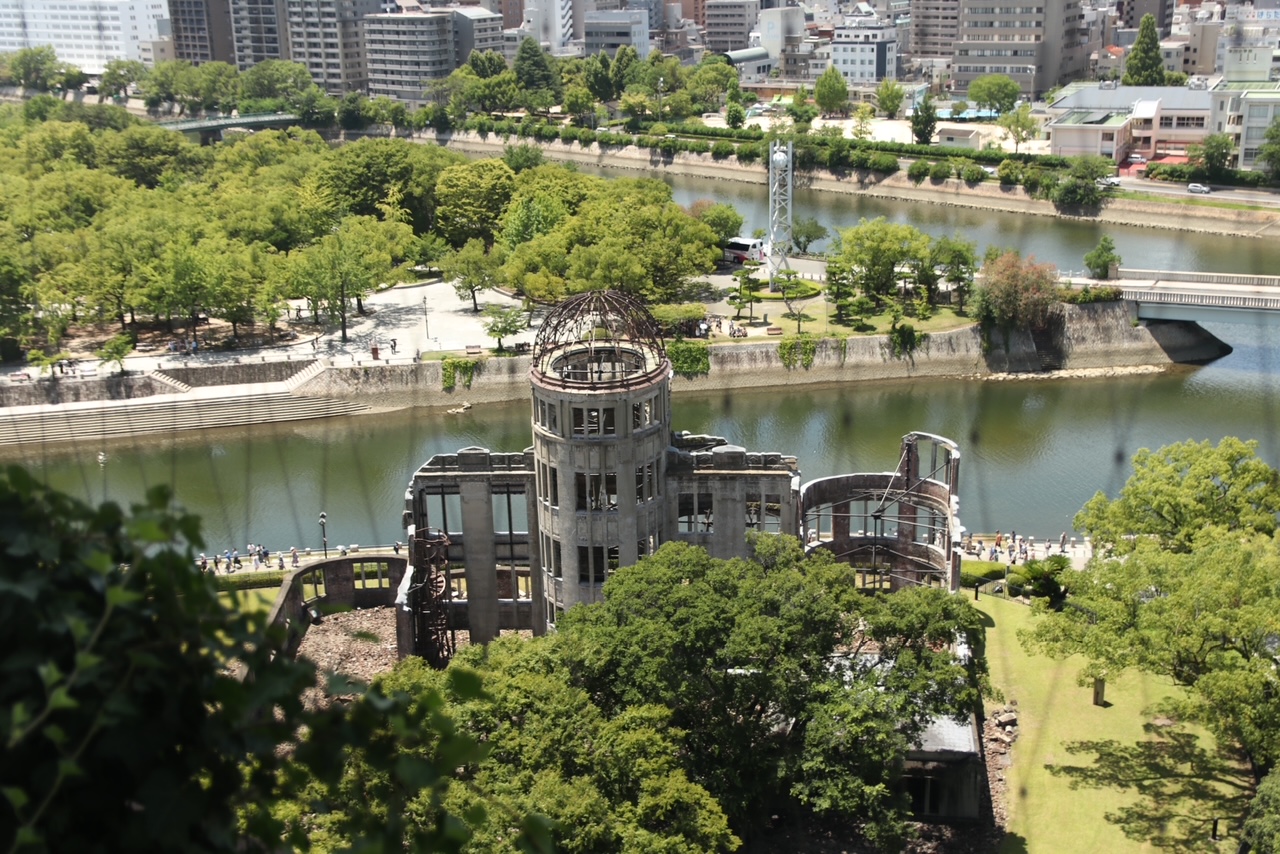
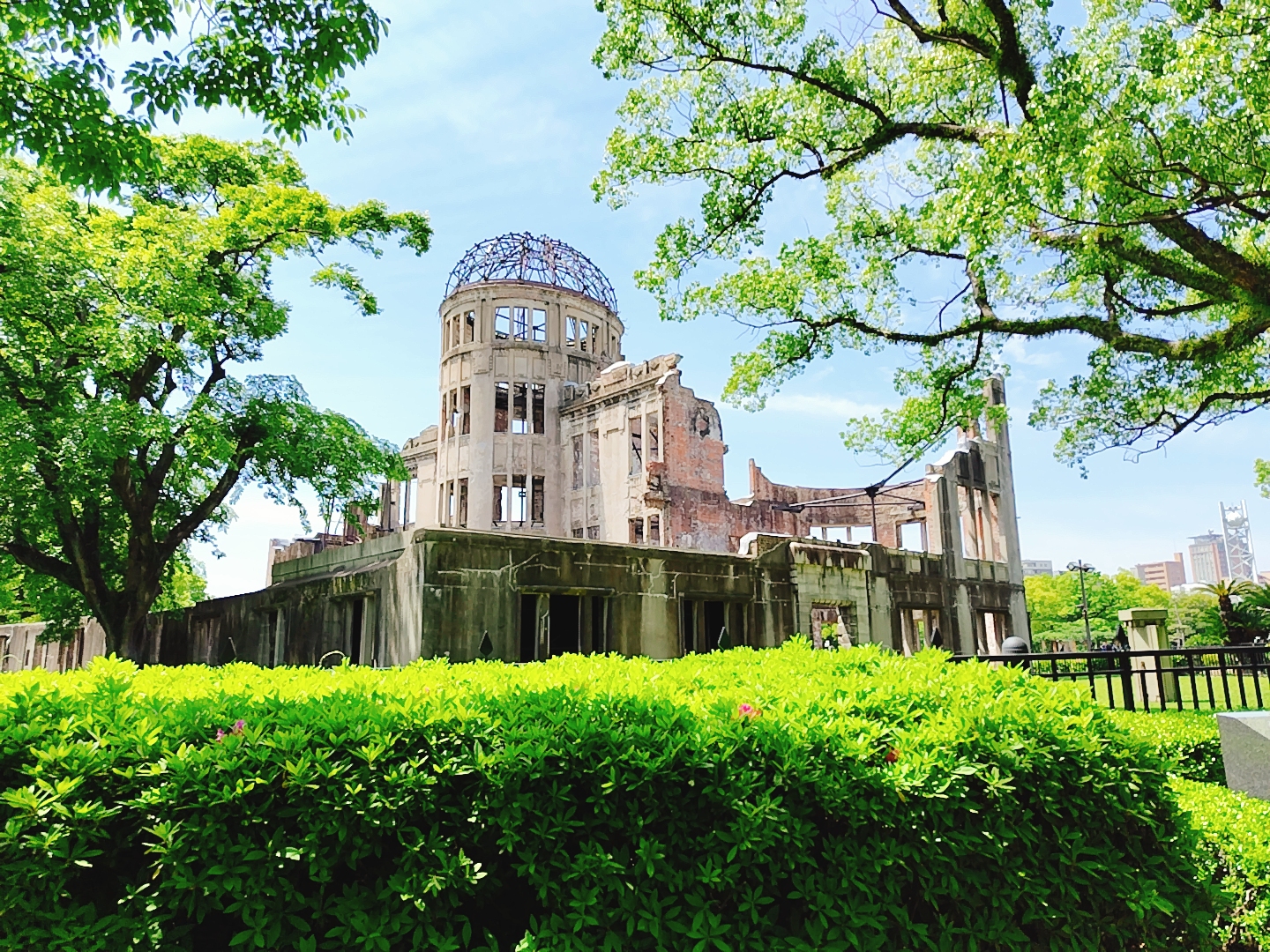
I rode this living piece of history straight to the Atomic Bomb Dome. Once the Prefectural Industrial Promotion Hall, it now stands in ruins just 160 meters from ground zero.
Facing it, time feels suspended. I could almost hear the silence of that morning in 1945. These broken walls are perhaps the most eloquent, wordless protest against nuclear weapons.
Travel tip: If you’re arriving at Hiroshima Station, hop on the streetcar bound for Genbaku Dome-mae (Atomic Bomb Dome Stop). Riding the same line locals did in 1945 makes the experience even more moving.
Second stop: Orizuru Tower
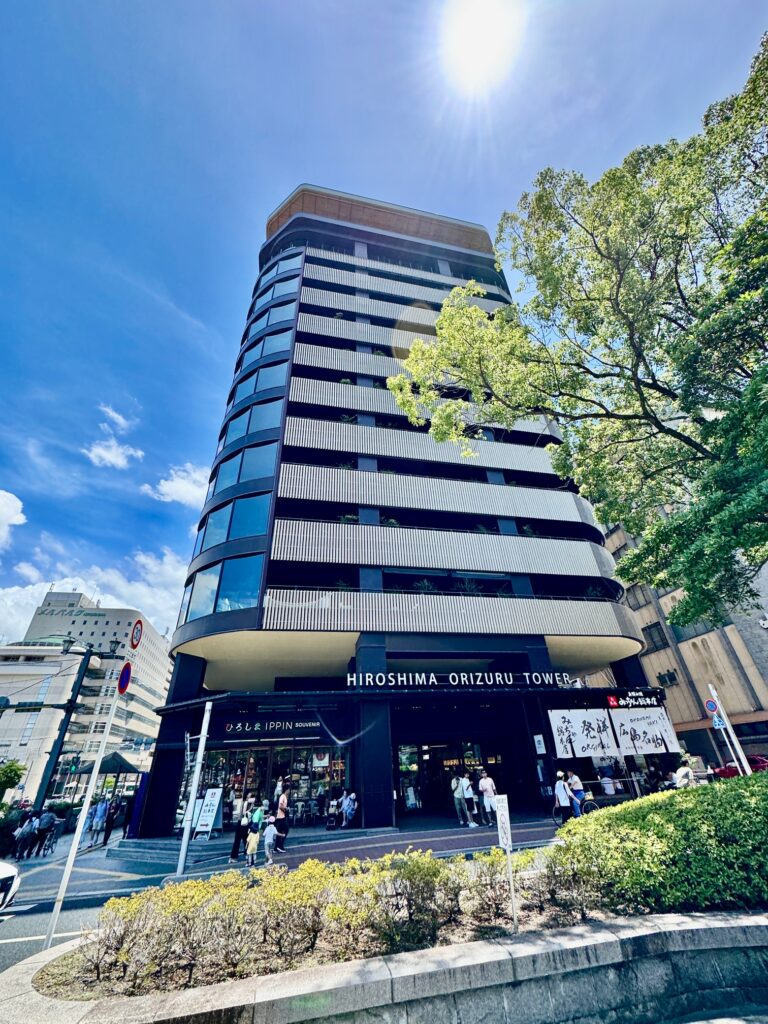
Right beside the Dome is Orizuru Tower—a softer, warmer corner of the city.
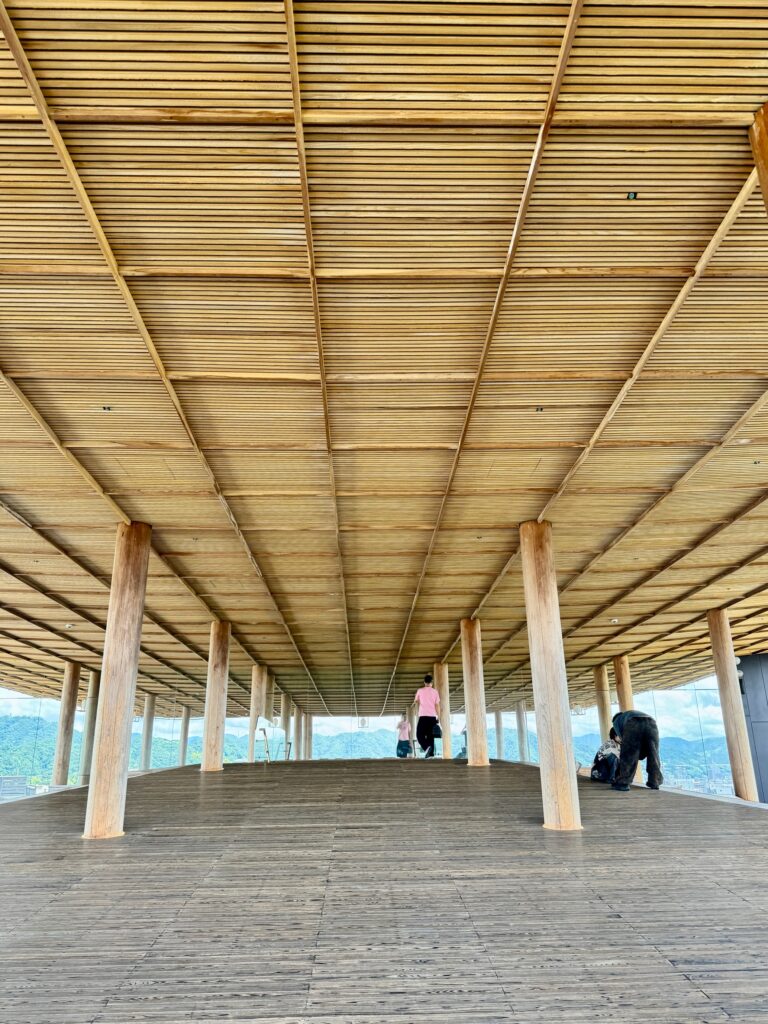
On the ground floor, you’ll find shops packed with local souvenirs, a cafe, and even vegan-friendly ice cream. My summer pick? The chilled lemon soda—tart, refreshing, and exactly what you need in the Hiroshima heat. Climb up to the 12th-floor observation deck, built entirely of wood, and it feels like stepping into a forest cabin. From here, the city unfolds in layers: the Dome below, framed by Hiroshima’s modern skyline. Order a coffee, lean back against the wooden beams, and let the city’s two faces—war and rebirth—sit quietly together in your view.
Travel tip: Skip the elevator for at least part of the way. Walking up gives you glimpses of exhibits and art along the stairs.
Third stop: Hiroshima Peace Memorial Museum
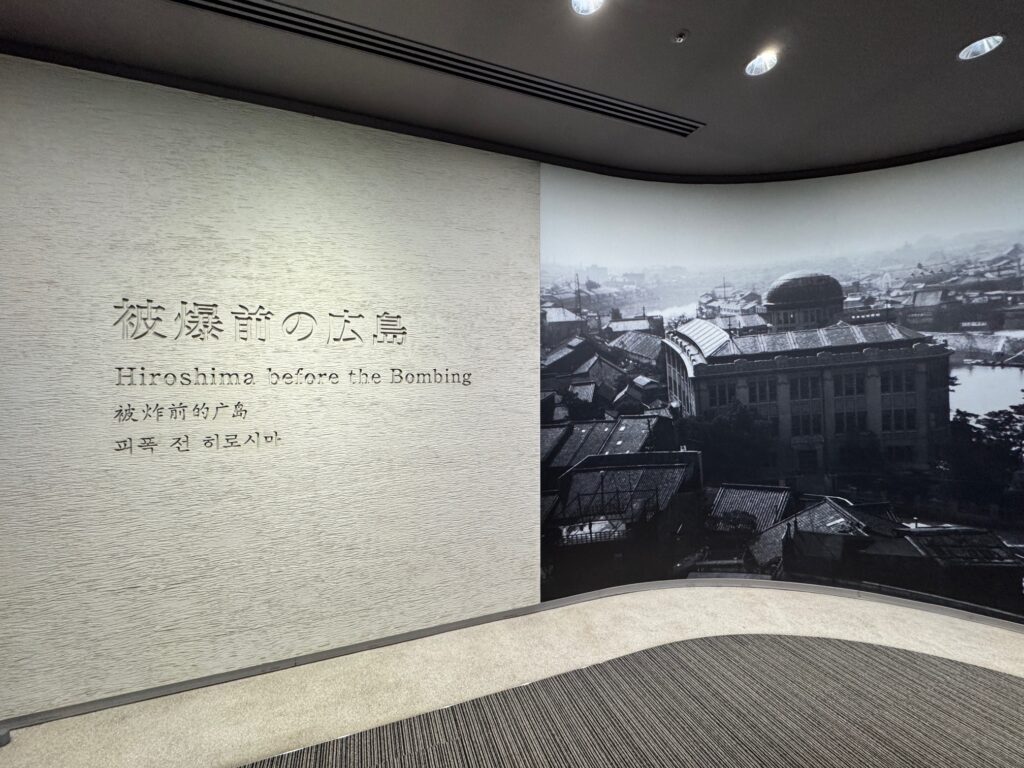
This is the heaviest place on the journey—the Hiroshima Peace Memorial Museum. Designed by architect Kenzo Tange in 1955, its minimalist concrete lines rise toward the sky, as if to carry the voices of those who were lost upward. It is more than a building; it’s a city’s epitaph. Inside, the exhibits guide you on a journey you will never forget.
Hiroshima before the bomb: photos of bustling streets, children running, a city alive.
The moment of impact: models and videos show the instant of 8:15 a.m., when a flash swallowed everything.
Artifacts and voices: melted glass bottles, scorched clothing, a child’s tricycle—no longer objects, but testimonies.
The aftermath: the smoke may have cleared, but radiation’s shadow lingers across generations.
Walking out, the sky above Hiroshima looks unchanged; people go about their day, but something inside you is heavier. Peace is no longer an abstract word. It is something fragile, blood-earned, and too precious to lose again.
Travel Tip: Arrive early in the morning. It’s quieter, and you’ll have time to process the exhibits without rushing.
Fourth stop: Okonomiyaki
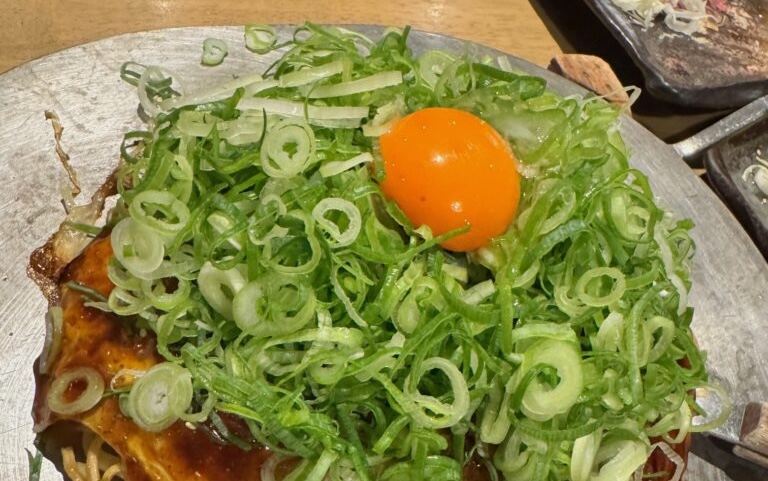
After a full day, it was time to close with taste—because in Hiroshima, food, too, tells a story.
At Negi-an, a beloved izakaya, the Hiroshima-style okonomiyaki arrives sizzling: crispy yakisoba noodles layered with scallions, cabbage, and egg. Bite into it, and it’s pure happiness. This dish was born in the hardship of postwar Japan, evolving from the simple issen yoshoku (an inexpensive street snack).
Today, it carries not just flavor, but the spirit of survival. Eating it here feels like witnessing another layer of the city’s rebirth.
Travel tip: Locals often say you can’t truly understand Hiroshima until you’ve eaten its okonomiyaki. Give it a try.
Epilogue: A city that breathes peace
Hiroshima is a city that turned ruins into life. The tram bells, the silent Atomic Bomb Dome, the Peace Memorial Museum’s whispers, the steam rising from a hot plate of okonomiyaki—together, they carry a message:
May peace endure upon this earth. May there never be war again.